Oyster Mushrooms
15 tips in Species Guides
By Andrew Langevin · Founder, Nature Lion Inc · Contributing author, Mushroomology (Brill, 2026)
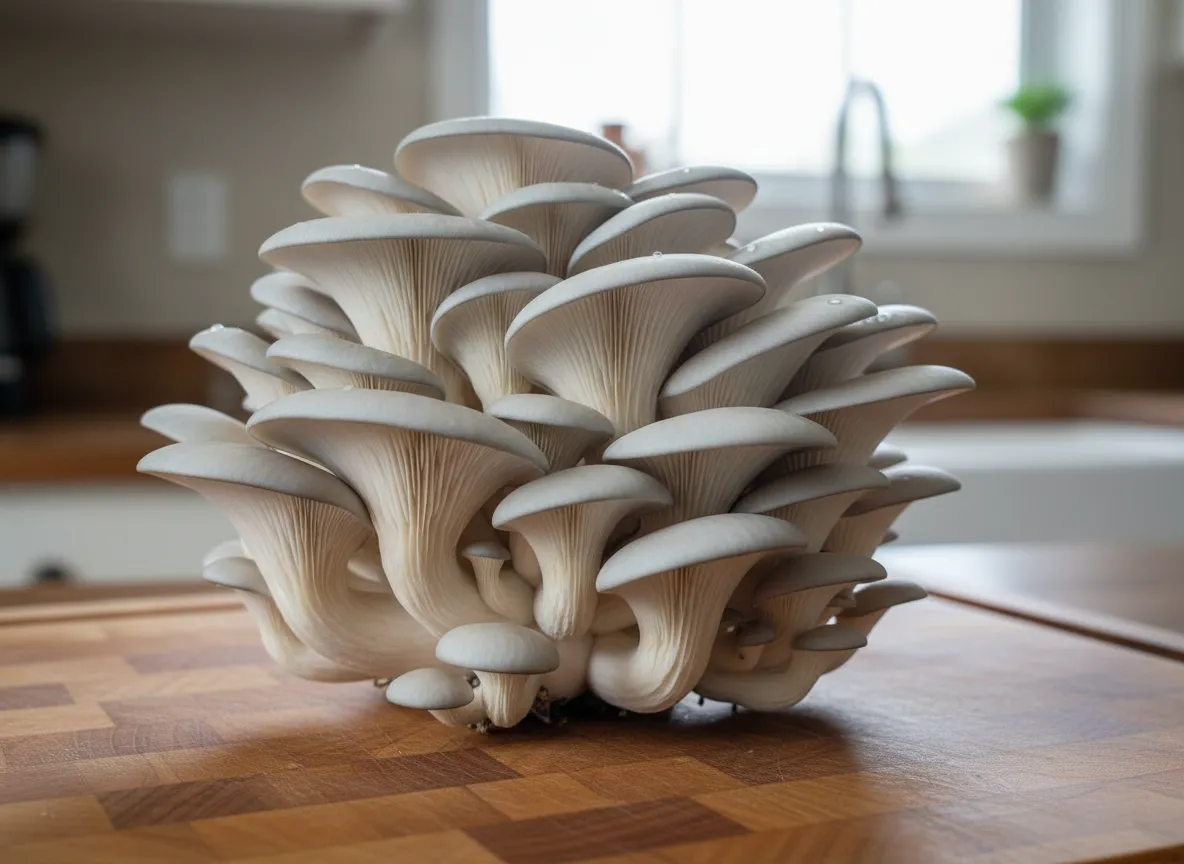
The Pleurotus genus includes several popular cultivated varieties, each with distinct characteristics.
- Blue oyster (P. ostreatus var. columbinus) — the hardiest and most forgiving, thriving at 10-18°C
- Pink oyster (P. djamor) — a tropical species that grows explosively fast but dies below 10°C
- White oyster (P. ostreatus) — the classic grocery store variety, mild-flavored and productive at 10-21°C
- Black oyster (P. ostreatus, dark strain) — dark caps with a meatier texture, prefers cooler conditions of 10-18°C
- King blue oyster — a hybrid producing thicker stems than standard blue oyster, offering better texture for cooking
Each variety has different temperature preferences, growth speeds, and flavor profiles, so choosing the right one depends on your climate and growing environment. Beginners should start with blue oyster for the widest temperature tolerance and most reliable results across a range of substrates and setups.
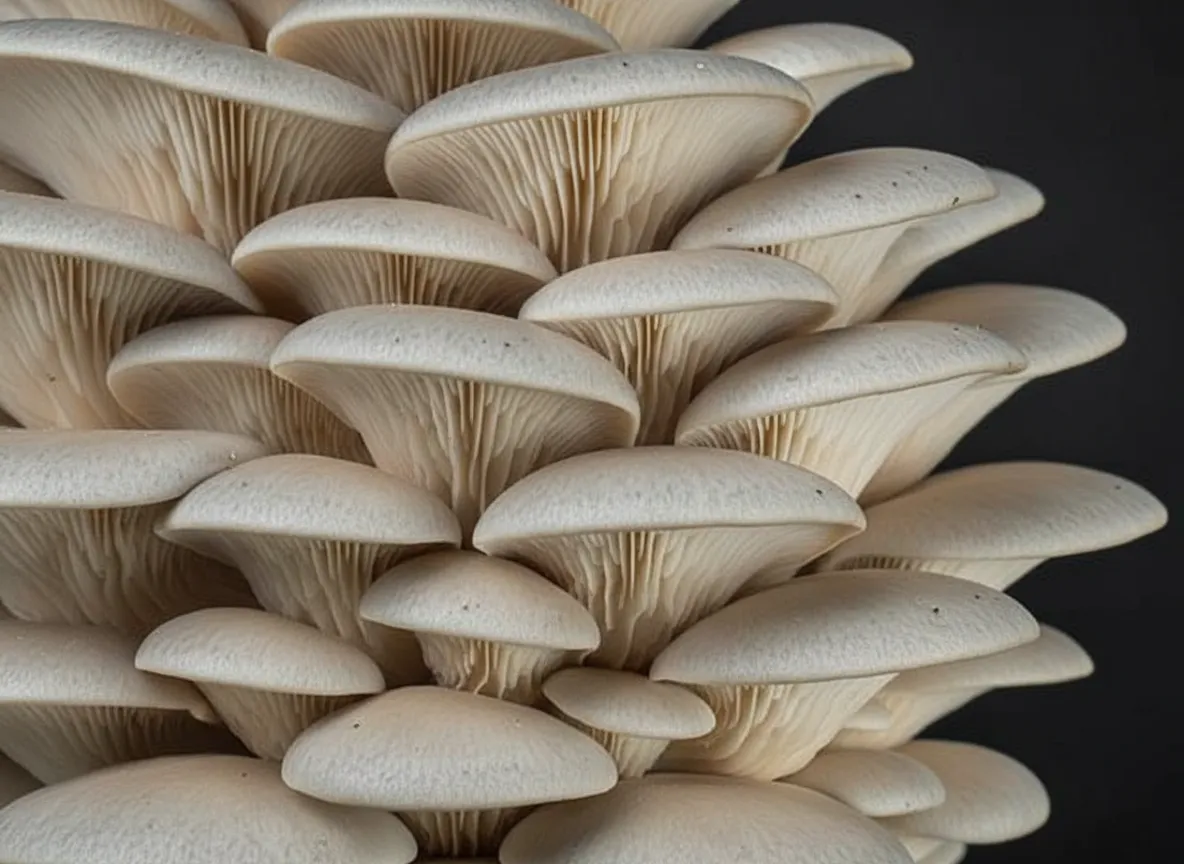
Blue oyster (Pleurotus ostreatus var. columbinus) is the most forgiving oyster variety.
- Colonization: 20-24°C, full colonization in 10-14 days on supplemented sawdust
- Fruiting: 10-18°C, best quality caps at 12-15°C
- Humidity: 85-95% during fruiting
- FAE: HIGH — more than almost any other cultivated species, aim for 4-8 air exchanges per hour
- Substrate: straw, hardwood fuel pellets (HWFP), supplemented sawdust, coffee grounds, cardboard
Insufficient FAE produces long, spindly stems with tiny caps, which is the single most common complaint from new growers. Colonization is aggressive and visible within 2-3 days of inoculation.
This is the go-to species for bucket tek, outdoor log cultivation, and any beginner setup where temperature control is limited.
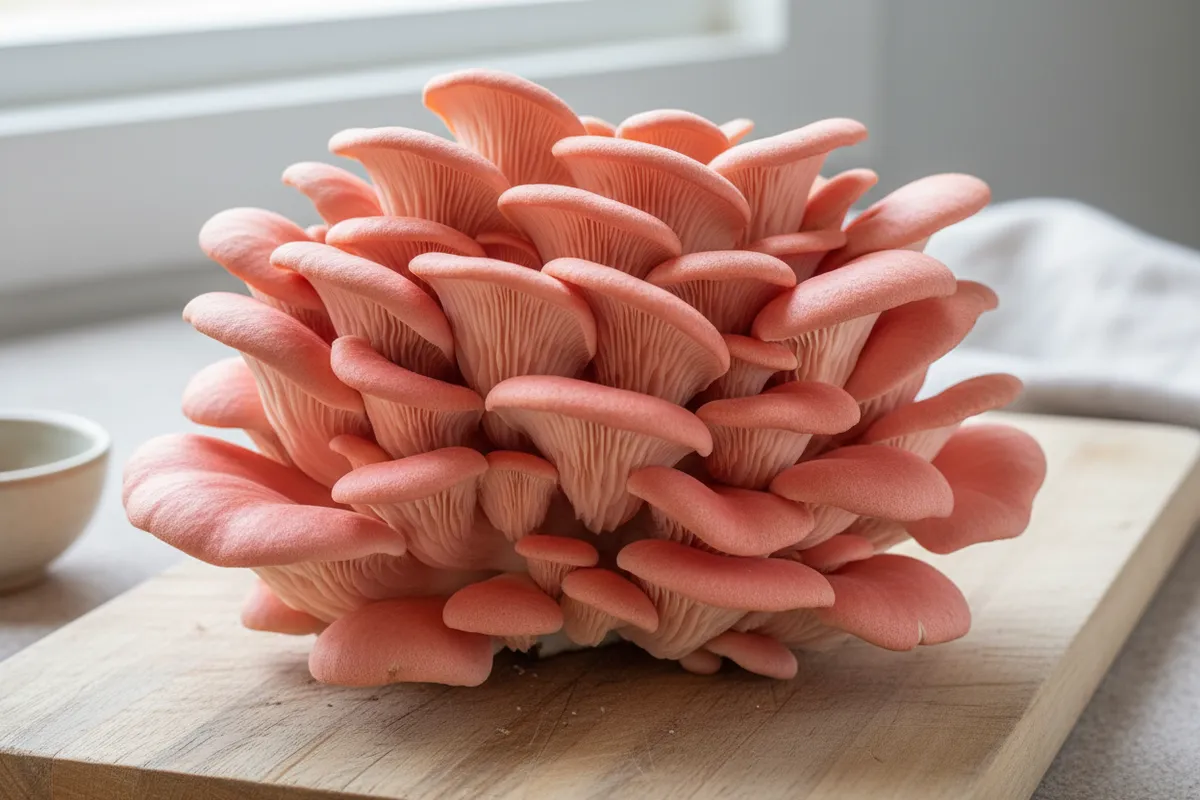
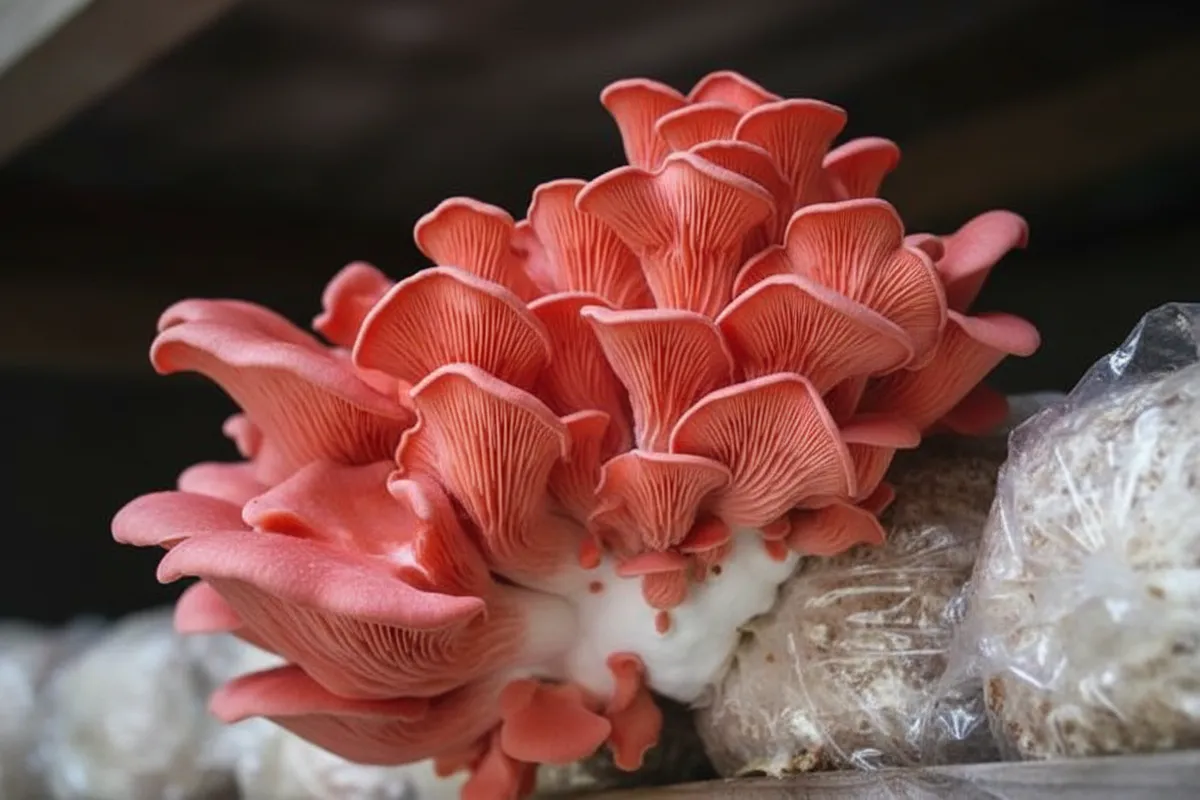
Pink oyster (Pleurotus djamor) is a tropical species that requires warm temperatures at every stage.
- Colonization: 24-30°C, completing in just 7-10 days — one of the fastest colonizers in cultivation
- Fruiting: 18-30°C, best results at 20-25°C
- Humidity: 85-95%
- FAE: high, similar to blue oyster
The critical fact about pink oyster is that mycelium dies below 10°C. You cannot store pink oyster grain spawn in a refrigerator. Shipping pink oyster in winter without a heat pack will kill it. This temperature sensitivity means pink oyster is ideal for summer growing or heated grow rooms, but impossible to fruit in an unheated garage during winter.
Pink oyster fruits extremely fast — pins can appear within 3-4 days of introducing fruiting conditions, with harvest-ready clusters in 5-7 days. The bright pink color fades when cooked to a salmon-beige, and the flavor is mildly seafood-like. Best grown during warm months or in climate-controlled spaces.
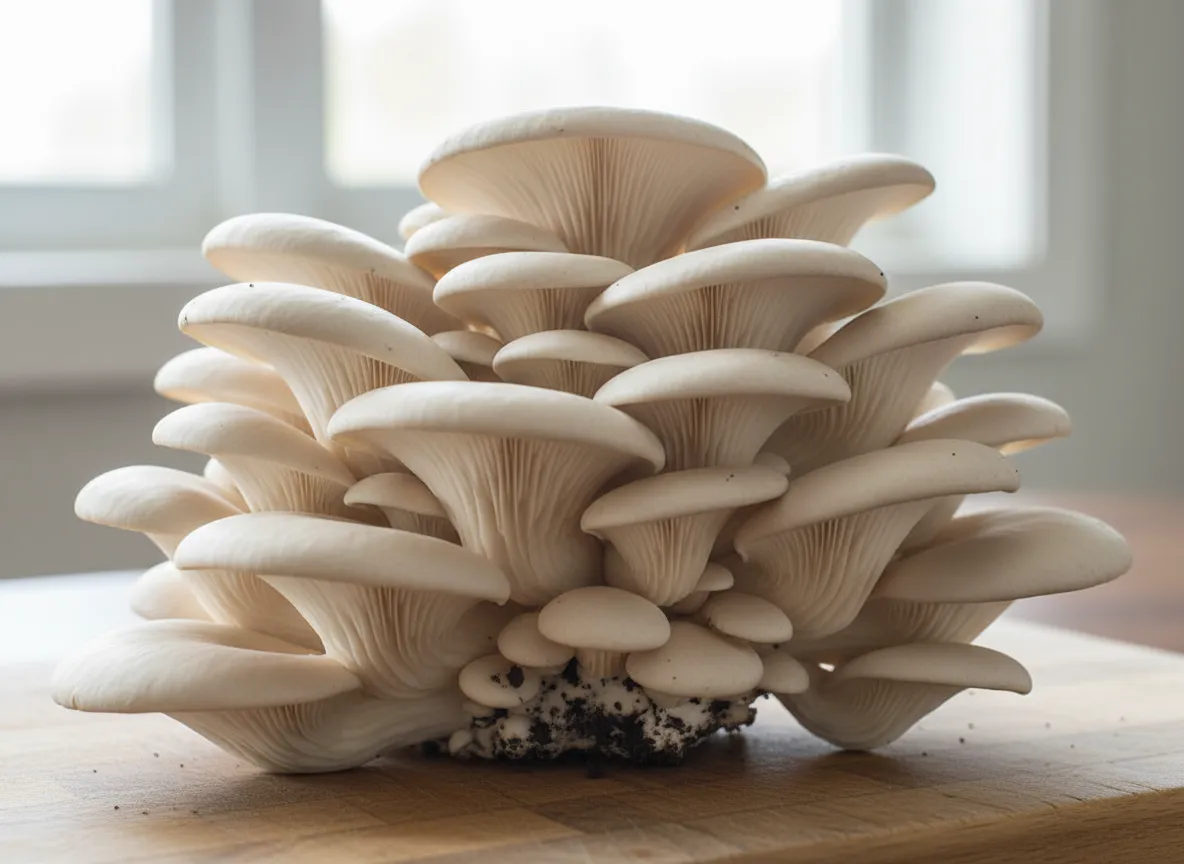
White oyster (Pleurotus ostreatus) is the classic grocery store oyster mushroom with a mild, delicate flavor.
- Colonization: 20-24°C, completing in 12-16 days on supplemented sawdust or straw
- Fruiting: 10-21°C, sweetest spot at 15-18°C
- Humidity: 85-95% during fruiting
- FAE: high, like all oyster species
- Spawn rate: 10-15% by weight
- Substrate: straw, HWFP, supplemented hardwood sawdust, coffee grounds
White oyster produces medium-sized clusters of pale cream to white caps with a subtle anise-like aroma. It is slightly less aggressive than blue oyster during colonization but produces a more marketable mushroom for farmers market sales due to its clean, familiar appearance.
White oyster is an excellent all-around choice for growers who want a mild-flavored, visually appealing mushroom. It handles moderate temperature fluctuations well and produces reliably across multiple flushes.
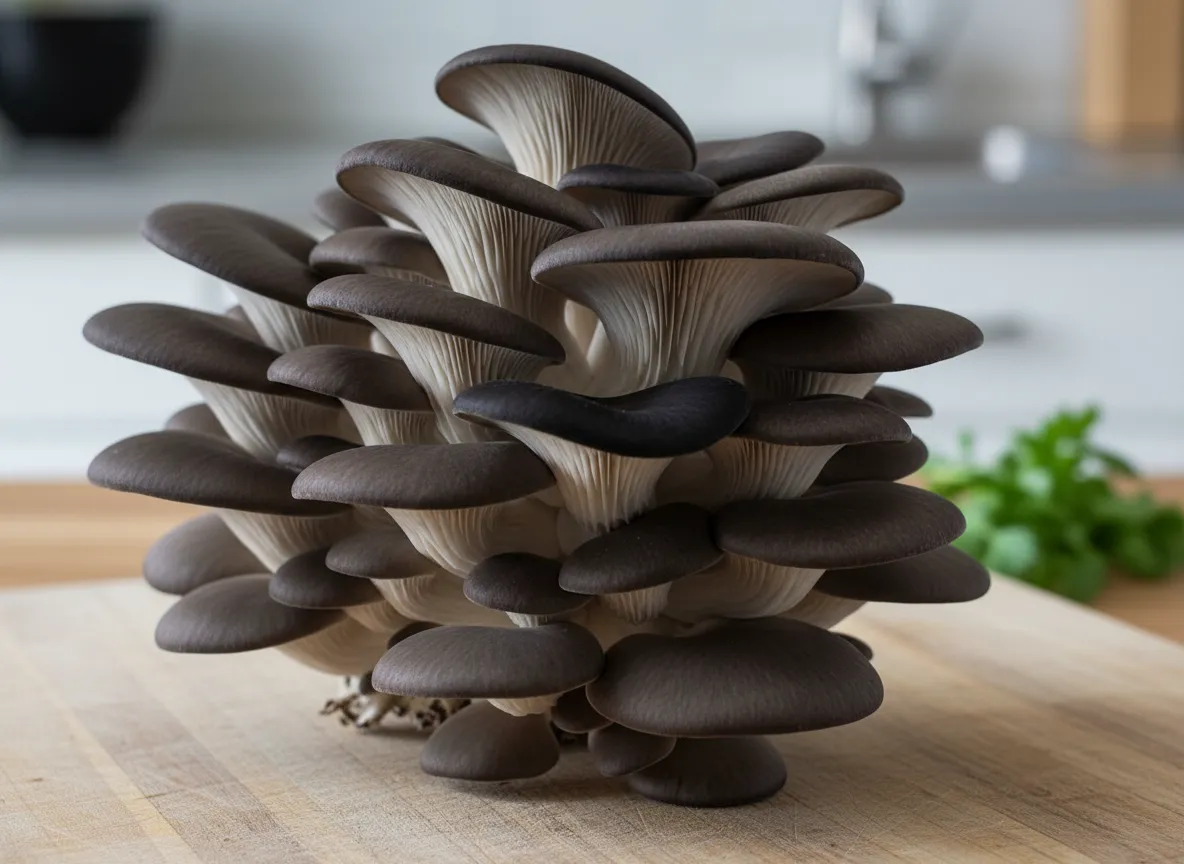
Black oyster (Pleurotus ostreatus, dark strain) produces striking dark grey to nearly black caps that lighten slightly as they mature.
- Colonization: 20-24°C, taking 12-16 days
- Fruiting: 10-18°C — prefers the cooler end of the oyster range; cold temperatures intensify the dark coloring
- Humidity: 85-95%
- FAE: high, consistent with other oyster species
- Substrate: straw, HWFP, supplemented sawdust
- Yield: 1-1.5 lbs per 5 lb block
At warmer fruiting temperatures, caps come out lighter grey rather than true black. Black oyster has a slightly meatier texture and more robust flavor compared to white oyster, making it popular at farmers markets and with chefs who value its dramatic appearance.
The visual appeal of dark-capped oysters commands a premium at market — many growers report selling black oyster for $2-3 more per pound than standard white or grey varieties.
Oyster mushrooms are aggressive decomposers that colonize a wider range of substrates than almost any other cultivated species. Here are the top substrates ranked by reliability:
- Straw (wheat or oat) — the classic oyster substrate, pasteurized by hot water bath at 65-80°C for 60-90 minutes, cheap and widely available
- Hardwood fuel pellets (HWFP) — self-pasteurizing when hydrated with boiling water, extremely convenient and consistent
- Coco coir and vermiculite mix — popular for bucket tek, holds moisture well and resists contamination
- Coffee grounds — free from cafes, but must be used within 24 hours of brewing and mixed 50/50 with another substrate to prevent compaction
- Cardboard — works in a pinch, tear into strips and pasteurize
- Supplemented hardwood sawdust (Masters Mix: 50% hardwood pellets, 50% soy hull pellets) — boosts yields by 30-50% but requires pressure sterilization at 15 PSI for 2.5 hours
For beginners, HWFP with a simple bucket pasteurization is the easiest, cheapest, and most reliable method.
The ideal spawn rate for oyster mushrooms is 10-15% by weight of wet substrate. For example, a 5 lb bag of hydrated substrate gets 0.5-0.75 lbs of grain spawn.
- Higher spawn rates (15-20%) — colonize faster and resist contamination better, but cost more in spawn
- Lower spawn rates (5-10%) — save money but slow colonization and increase contamination risk
- For beginners: err on the higher side — 15% provides a good balance of speed and economy
Substrate-specific recommendations:
- Straw: 10-15%, because pasteurization is less precise and faster colonization helps outrun contaminants
- Supplemented sawdust (sterilized): 10% is sufficient because the sterile substrate gives mycelium a clean head start
- Non-sterile substrates like coffee grounds: always use the maximum 15-20% rate to ensure the mycelium dominates before contaminants can establish
Grain spawn types that work well include rye, wheat berries, millet, and oats — oyster mycelium is not picky about grain type.
Bucket tek is one of the simplest and most productive methods for growing oyster mushrooms.
Drill 12-16 holes (10-12mm diameter) around the sides and bottom of a 5-gallon bucket in a roughly even pattern, spaced 10-15cm apart. Pasteurize chopped straw or hydrated HWFP at 65-80°C for 60-90 minutes. Once cooled to below 30°C, layer substrate and grain spawn in the bucket — 5cm substrate, sprinkle spawn, repeat until full. Pack firmly but not too tight. Snap the lid on and place in a dark area at 20-24°C for 10-14 days.
Mycelium will colonize through the substrate and begin pushing out of the drilled holes. Move the bucket to a fruiting area with indirect light, 85-95% humidity, and plenty of FAE. Mist the holes 2-3 times daily. Mushroom clusters will emerge from the holes within 5-7 days.
Each bucket produces 1-2 lbs per flush, with 2-3 flushes possible over 4-6 weeks. Re-soak the bucket in cold water for 12-24 hours between flushes.
Grow bag fruiting is the commercial standard for oyster production. Use autoclavable polypropylene bags (unicorn bags or equivalent) with a filter patch. Fill with 2-5 lbs of hydrated, pasteurized or sterilized substrate mixed with grain spawn at 10-15% rate. Seal the bag and allow full colonization at 20-24°C for 10-16 days.
Once fully white, cut an X-shaped slit (5-8cm across) in the bag where you want mushrooms to fruit — typically 1-2 slits per bag. Place the bag in your fruiting chamber with 85-95% humidity, 10-18°C (for blue oyster), and good FAE. Mist near the slits but avoid pooling water directly on pins.
Mushroom clusters will form at the slits within 5-7 days. Harvest when cap edges begin to flatten but before they fully upturn. After harvest, mist the interior of the slit, reseal loosely with tape, and wait 7-14 days for the next flush.
Expect 2-3 productive flushes per bag with diminishing yields each round.
Harvest oyster mushrooms when the cap edges begin to flatten out from their initial curled-under position, but before they fully upturn and become wavy. This is typically 5-7 days after pins first appear. At this stage, caps are firm, flavorful, and have the best shelf life.
If you wait too long — once caps are fully flat or turned upward — the mushrooms become papery, release heavy spore loads, and deteriorate quickly. Spore drop is a clear sign you waited too long: a white powder coating surfaces around your grow.
Harvest entire clusters by twisting and pulling at the base, or cut with a clean knife. Do not pick individual mushrooms from a cluster — this damages the remaining pins. Morning harvest, before misting, gives the driest and longest-lasting mushrooms.
Oyster mushrooms go from perfect to past-prime in about 24-48 hours, so check your grows daily once pins appear.
Oyster mushrooms are among the highest-yielding cultivated species. On a standard 5 lb (2.3 kg) supplemented sawdust block, expect 1-2 lbs (0.5-0.9 kg) total yield across 2-3 flushes. That is a biological efficiency (BE) of roughly 75-150%, where 100% BE means you harvested the same weight in fresh mushrooms as the dry weight of substrate used.
- First flush: 60-70% of total yield
- Second flush: 20-25%
- Third flush: 10-15%
On straw, yields can be even higher — straw-grown oyster mushrooms regularly hit 100-200% BE in optimal conditions. Bucket tek with 5 lbs of dry straw produces 2-4 lbs of mushrooms total.
Factors that increase yield: supplemented substrates (adding soy hulls or wheat bran), optimal spawn rate (15%), maintaining perfect humidity (90-95%), and harvesting at the right time to encourage strong subsequent flushes. Cooler fruiting temperatures produce denser, meatier mushrooms with slightly lower total weight but better quality.
Oyster mushrooms earn the title of best beginner species for several compelling reasons.
- They colonize aggressively — mycelium is visible within 2-3 days and full colonization completes in 10-14 days, outrunning most contaminants
- They tolerate imperfect sterile technique, growing happily on pasteurized (not sterilized) substrates where most other species would fail
- They fruit across a wide temperature range (10-30°C depending on variety), so you don't need precise climate control
- They grow on almost anything organic — straw, sawdust, coffee, cardboard, paper, cotton
- The fruiting trigger is simple: increase FAE and humidity
- They produce visually dramatic clusters that are satisfying and unmistakable
- They are delicious and versatile in the kitchen
- They produce multiple flushes, so even if your first harvest is small, more are coming
The only real challenge with oyster mushrooms is providing enough FAE — they need more fresh air than most species, and inadequate airflow is the number one beginner problem.
Fresh oyster mushrooms have a relatively short shelf life of 5-7 days when stored properly. Store them in a paper bag (not plastic) in the refrigerator at 2-4°C. Paper allows moisture to escape, preventing the slimy deterioration that happens in sealed plastic containers. Never wash oysters before storage — moisture accelerates decay. Brush off any substrate debris with a dry paper towel.
Signs of deterioration include slimy texture, darkening edges, and a sour or fishy smell.
For longer preservation:
- Dehydrating: slice to 6mm thickness and dry at 50-60°C for 4-6 hours until cracker-dry. Dried oysters rehydrate quickly and store for 6-12 months in airtight containers.
- Freezing: saute first, then freeze — cooked oysters freeze much better than raw ones, lasting 3-6 months without significant quality loss.
For farmers market sales, harvest in the morning and display on ice to maximize freshness.
Oyster mushrooms produce more spores than virtually any other cultivated species, and this creates a genuine health hazard if ventilation is inadequate. During peak sporulation (when caps flatten and begin upturning), oyster clusters release millions of microscopic spores per hour into the surrounding air.
Repeated inhalation of these spores causes mushroom worker's lung (hypersensitivity pneumonitis), a serious allergic respiratory condition with symptoms including coughing, wheezing, shortness of breath, and flu-like illness. Commercial oyster farms require industrial ventilation and sometimes respirators for workers.
Key safety measures:
- Never fruit oyster mushrooms in a bedroom or sealed room
- Harvest before caps fully flatten to minimize spore release
- Wear an N95 respirator when working around fruiting oysters at any scale beyond a single block
- Install an exhaust fan venting outside through ducting for any dedicated grow room
Ensuring your fruiting area has excellent airflow venting spore-laden air away from living spaces is essential.
Oyster mushrooms are the best species for first-time growers — they colonize fast, tolerate imperfect conditions, and produce generous harvests. Here is the complete beginner method using bucket tek, which requires no pressure cooker.
Step-by-step bucket tek:
- Get supplies — a 5-gallon bucket with lid, 2-3 lbs of grain spawn (blue oyster recommended for beginners), chopped straw or aspen shavings, and a drill with a 12mm bit.
- Drill holes — drill 8-12 holes around the bucket in two rows, spaced evenly. These are where mushrooms will fruit.
- Pasteurize substrate — fill a large pot or the bucket itself with chopped straw, add hot water at 65-80°C (150-175°F), and soak for 60-90 minutes. Drain thoroughly — the straw should be damp but not dripping.
- Layer spawn and substrate — alternate 5cm layers of straw with handfuls of grain spawn, starting and ending with straw. Pack firmly. Use the entire bag of spawn.
- Seal and colonize — snap the lid on and place in a warm, dark location at 21-24°C for 10-14 days. You will see white mycelium spreading through the straw.
- Fruit — once fully colonized (the straw is mostly white), move to indirect light with fresh air. Mist the holes 2-3 times daily. Mushrooms emerge from the holes within 5-10 days.
- Harvest — pick when cap edges begin to flatten but before they turn upward. Twist and pull the cluster from the hole.
Expected results:
- First flush: 1-2 lbs of mushrooms in 3-4 weeks from start
- Total harvest: 2-4 lbs across 2-3 flushes over 6-8 weeks
- Cost: under $30 for supplies if you already have a pot for pasteurizing
This method works for blue oyster, pearl oyster, pink oyster, and golden oyster — just match the fruiting temperature to the species.
Need more help? Dr. Myco can answer follow-up questions about oyster mushrooms based on thousands of real growing experiences.
Ask Dr. MycoMore in Species Guides
Lion's Mane
13 tips
Shiitake
13 tips
King Oyster
12 tips
Reishi
13 tips
Chestnut & Other Gourmet
15 tips
Mushroom Health & Medicinal Benefits
17 tips
Cooking & Preparation
16 tips
Enoki, Maitake & Cordyceps
14 tips
Mushroom Alternate Names & Varieties
17 tips
Mushroom Supplement Guide
18 tips
Common Mushroom Varieties
20 tips
Rare & Specialty Cultivatable Species
16 tips