Mushroom Alternate Names & Varieties
17 tips in Species Guides
By Andrew Langevin · Founder, Nature Lion Inc · Contributing author, Mushroomology (Brill, 2026)
King trumpet is simply another name for king oyster mushroom (Pleurotus eryngii), one of the most versatile gourmet species in cultivation. This single mushroom has accumulated a remarkable number of aliases across different culinary traditions.
Common names for the same species:
- King trumpet — referencing its trumpet-like shape when mature
- King oyster — the most widely used English name, emphasizing its membership in the oyster family
- Eringi (エリンギ) — the Japanese name, from the species name eryngii
- French horn mushroom — used in some European markets
- Trumpet royale — a commercial branding name
- Boletus of the steppe — an older European folk name
The many names exist because this mushroom is popular across Asian, European, and North American cuisines simultaneously. Growing parameters are the same regardless of what you call it: colonization at 21-24°C on supplemented hardwood, fruiting at 12-18°C with elevated CO2 for thick stem development, and harvest when caps are still slightly convex.
Eringi is the Japanese name for king oyster mushroom (Pleurotus eryngii), derived directly from the Latin species name. In Japan, eringi is one of the most popular cultivated mushrooms, widely available in supermarkets and used extensively in everyday cooking.
Why the Japanese name matters:
- Japan is a major producer of this species, and Japanese cultivation techniques have refined commercial production worldwide
- Eringi is sliced and used in stir-fries, hot pots, grilled yakitori, and tempura — its firm texture holds up to any cooking method
- Japanese growers developed strains optimized for thick stems and small caps, which is now the global commercial standard
- The name appears on packaging in Asian grocery stores throughout North America
Culinary characteristics that make eringi popular in Asian cuisine:
- Dense, meaty stem that slices into scallop-like rounds
- Mild, slightly sweet flavor that absorbs seasonings well
- Almost no shrinkage during cooking compared to other mushrooms
- Excellent shelf life of 7-10 days refrigerated
If you see eringi at an Asian market, it is identical to king oyster or king trumpet — buy whichever is freshest and most affordable.
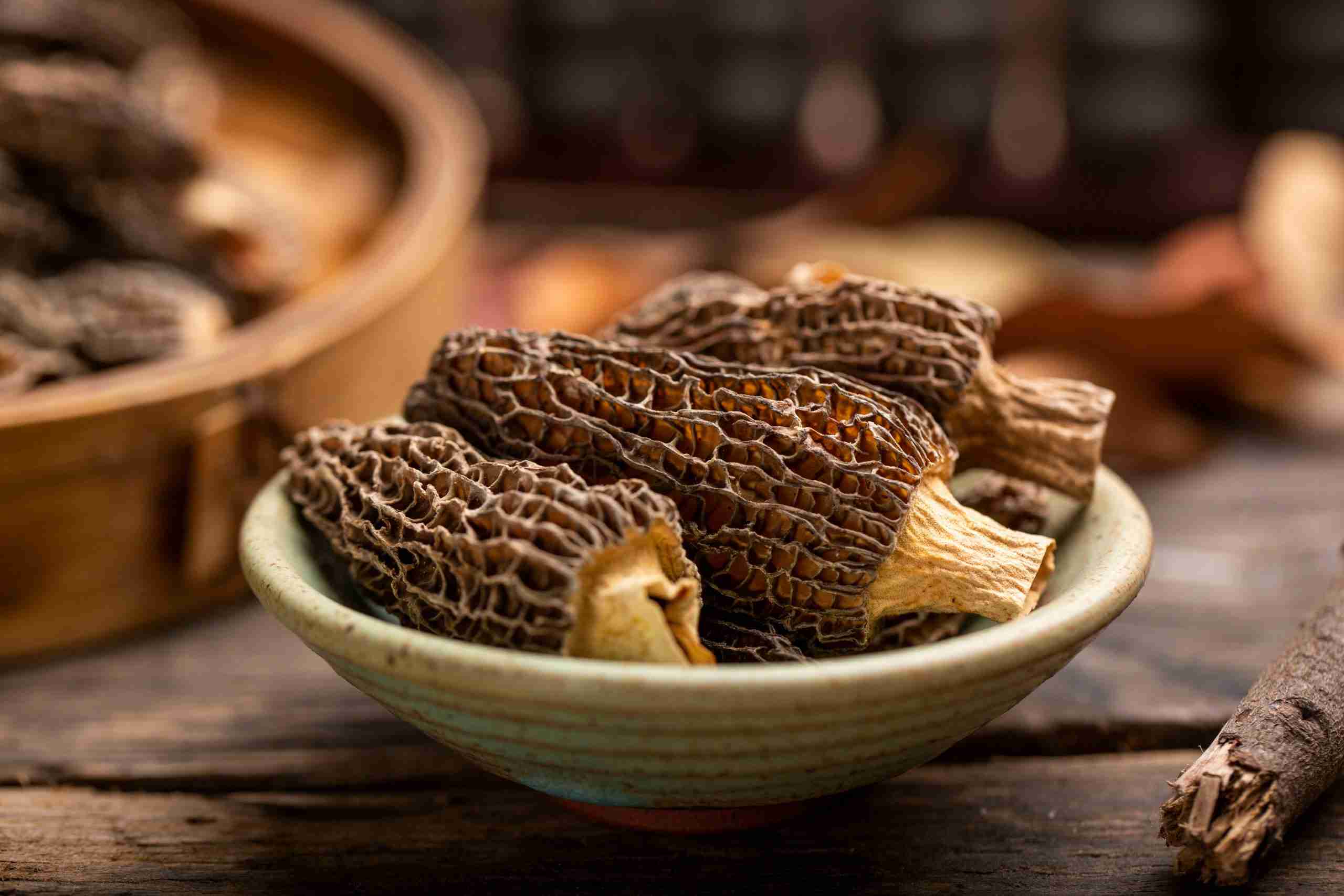
Sponge mushroom is a common folk name for morels — prized wild mushrooms in the genus Morchella. The name comes from the distinctive honeycomb or sponge-like texture of the cap, which is covered in a network of pits and ridges that resemble a natural sponge.
Why morels are called sponge mushrooms:
- The cap surface has deep, irregular pits separated by raised ridges, creating a honeycomb pattern
- When sliced open, the entire mushroom is completely hollow from cap to stem — like a sponge with air pockets
- The porous texture soaks up butter and sauces during cooking
Key facts about sponge mushrooms:
- Multiple species exist — black morels (M. elata), yellow morels (M. esculenta), and others
- They are primarily foraged, not cultivated — commercial morel cultivation remains extremely difficult and unreliable
- Season is spring only, typically April through June depending on region
- They are mycorrhizal and saprobic, associated with dying elms, ash, tulip poplar, and wildfire burn areas
Always slice a sponge mushroom lengthwise to confirm it is completely hollow inside. False morels (Gyromitra species) have brain-like caps and chambered interiors — they contain dangerous toxins.
Ling zhi (灵芝) is the Chinese name for reishi mushroom (Ganoderma lucidum), one of the most revered medicinal fungi in traditional Chinese medicine (TCM). The name translates roughly to "spiritual mushroom" or "mushroom of immortality," reflecting its 2,000+ year history as a symbol of health and longevity in Chinese culture.
Ling zhi in traditional Chinese medicine:
- Classified as a superior tonic in the oldest Chinese pharmacopoeia, the Shennong Bencao Jing (circa 200 CE)
- Used to calm the mind, nourish the heart, and support the immune system in TCM practice
- Historically reserved for royalty and nobility due to its rarity in the wild
- Associated with the "three treasures" of Chinese medicine: jing (essence), qi (energy), and shen (spirit)
Modern research connections:
- Contains triterpenoids (ganoderic acids) and polysaccharides (beta-glucans) studied for immune modulation
- The same bioactive compounds regardless of whether you call it ling zhi, reishi, or Ganoderma lucidum
- Cultivated commercially on hardwood logs or supplemented sawdust worldwide
Ling zhi and reishi are the exact same organism — the Chinese name is simply older and carries deeper cultural significance in Asian medicine traditions.
Ganoderma lucidum is the scientific (Latin) name for reishi or ling zhi, the famous medicinal polypore mushroom. Understanding the genus helps clarify the relationships between several important medicinal species that are often confused or mislabeled in the supplement industry.
The Ganoderma genus includes several notable species:
- *G. lucidum* — the classic reishi, originally described from Europe, growing on hardwoods. Produces a kidney-shaped, varnished reddish-brown cap
- *G. tsugae — hemlock varnish shelf, native to North America, growing almost exclusively on eastern hemlock. Very similar in appearance and chemistry to G. lucidum*
- *G. multipileum — a tropical species previously confused with G. lucidum*, common in commercial cultivation in Asia
- *G. sessile* — a North American species growing on hardwoods, often sold as "reishi" in local markets
- *G. lingzhi — recently separated from G. lucidum*, this is likely the species most commonly cultivated in China and sold commercially
Taxonomy in this genus is actively debated. Many products sold as G. lucidum are actually G. lingzhi or other related species. For home cultivation, the practical differences are minimal — all Ganoderma species grow on supplemented hardwood at 20-25°C and produce similar medicinal compounds.
*Trametes versicolor is the scientific name for turkey tail mushroom, one of the most common and well-researched medicinal fungi in the world. The Latin name translates to "of several colors" (versicolor*), perfectly describing its multicolored concentric bands of brown, tan, gray, blue, and green.
Why it is called turkey tail:
- The fan-shaped, banded fruiting bodies resemble the fanned tail feathers of a wild turkey
- Multiple overlapping brackets grow in rosettes on dead hardwood, enhancing the feathered appearance
- The common name is used almost universally in English-speaking countries
Medicinal significance:
- Contains polysaccharide-K (PSK) and polysaccharopeptide (PSP), two compounds extensively studied for immune support
- PSK is an approved adjunct cancer therapy in Japan (brand name Krestin), used alongside conventional treatment since the 1970s
- One of the most clinically studied medicinal mushrooms worldwide
- Rich in beta-glucans that modulate immune function
Turkey tail is extremely easy to cultivate on supplemented hardwood sawdust or logs, colonizing aggressively at 20-24°C. It is also one of the most common wild mushrooms globally, found on dead hardwood in virtually every temperate forest.
*Hericium erinaceus is the scientific name for lion's mane mushroom, the cascading white-toothed fungus prized for both its lobster-like culinary qualities and its remarkable neurosupportive compounds. The genus name Hericium* comes from the Latin for "hedgehog," referencing the spiny teeth that hang from the fruiting body.
The Hericium genus includes several related species:
- *H. erinaceus* — lion's mane, the most commonly cultivated, producing a single globular mass of long hanging teeth
- *H. coralloides* — comb tooth or coral tooth, producing branching coral-like structures with short teeth, found wild on hardwoods
- *H. americanum — bear's head tooth, similar to H. coralloides* but with longer teeth and more branching, native to North America
- *H. abietis* — a western North American species found on conifers
What makes H. erinaceus scientifically significant:
- Contains hericenones (in the fruiting body) and erinacines (in the mycelium) that stimulate nerve growth factor (NGF) production
- Active research into applications for cognitive decline, nerve injury recovery, and neuroprotection
- One of few mushrooms with peer-reviewed human clinical trials showing cognitive benefits
All *Hericium* species are edible and share similar medicinal properties, though H. erinaceus is the most studied and most widely cultivated.
Blue grey oyster is the same species as blue oyster mushroom — Pleurotus ostreatus var. columbinus. The color variation between blue, grey, and blue-grey is primarily determined by fruiting temperature, not genetics. This confuses many beginners who think they are different varieties.
How temperature affects blue oyster color:
- Cold fruiting (10-14°C): Caps develop deep steel-blue to navy coloring — the classic "blue oyster" appearance
- Moderate fruiting (14-18°C): Caps are blue-grey, a blend of blue tones fading to grey at the edges
- Warm fruiting (18-22°C): Caps become pale grey to almost white, losing nearly all blue pigmentation
The blue pigment is temperature-sensitive and breaks down at higher temperatures. The same bag of spawn can produce dramatically different-looking mushrooms depending on your fruiting temperature. This is why photos from different growers show such wide color variation.
Other factors affecting color:
- Light exposure — more light intensifies coloring slightly
- Strain genetics — some strains hold blue color better at warmer temps
- Age at harvest — caps lighten as they mature and expand
For the deepest blue color, fruit at 10-14°C with good indirect light. The mushroom tastes the same regardless of color, but deep blue caps are more visually appealing at farmers markets and command higher prices.
*Morchella esculenta is the scientific name for the yellow or common morel, arguably the most sought-after wild mushroom in North America. The species name esculenta* means "edible" in Latin — a direct acknowledgment of this mushroom's culinary importance dating back to the original taxonomic description.
The Morchella genus includes several important species:
- *M. esculenta* — yellow morel, the classic blonde to golden morel with rounded pits and pale ridges
- *M. elata* — black morel, with elongated pits and dark ridges, fruits earlier in spring
- *M. punctipes* — half-free morel, where the cap attaches only at the very top of the stem
- *M. importuna* — a species associated with wood chips and landscaping mulch
- *M. rufobrunnea* — a landscape morel found in gardens and disturbed ground
Key facts about M. esculenta:
- Fruits in spring when soil temperature reaches 10-15°C, typically 1-2 weeks after black morels
- Associated with dead and dying elms, ash, tulip poplar, and old orchards
- Completely hollow when sliced lengthwise — the essential safety check
- Commercial cultivation remains extremely difficult despite decades of research — nearly all morels sold are wild-harvested
Recent DNA studies have dramatically revised morel taxonomy, splitting what was once called M. esculenta into multiple distinct species. For foragers, the practical identification remains the same: honeycomb cap, hollow interior, spring fruiting.
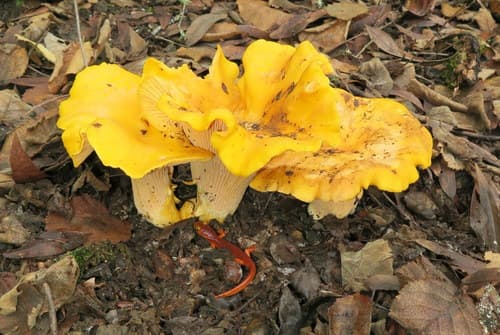
Golden chanterelle (Cantharellus cibarius) is considered the "gold standard" of wild edible mushrooms worldwide. The name cibarius means "relating to food" in Latin, and this species has been prized in European cuisine for centuries. It is one of the most recognized and commercially valuable wild mushrooms on the planet.
Why golden chanterelles are so highly valued:
- Distinctive fruity, apricot-like aroma that is unique among wild mushrooms
- Rich, peppery, slightly nutty flavor that intensifies with cooking
- Firm, meaty texture that holds up beautifully in sautees, cream sauces, and egg dishes
- Commercial prices of $15-30 per pound fresh, making them one of the most expensive commonly foraged mushrooms
Identification essentials:
- Golden yellow to egg-yolk orange cap and stem
- False gills — blunt, forking, vein-like ridges rather than thin blade-like gills
- White flesh when cut open (not orange throughout)
- Grows singly or scattered on forest floor near oaks, beeches, and conifers
The difference from winter chanterelle (Craterellus tubaeformis): winter chanterelles are smaller, browner, with a hollow stem and more vein-like undersurface, fruiting later into fall and early winter. Golden chanterelles cannot be cultivated commercially — they form mycorrhizal partnerships with living trees that have never been successfully replicated at scale.
A bright pink mushroom growing on trees is almost certainly pink oyster (Pleurotus djamor), one of the most visually striking cultivated mushrooms. In the wild, pink oyster is native to tropical and subtropical regions of Asia, Africa, and the Americas, where it grows on dead or dying hardwood.
Why pink oyster is so distinctively colored:
- The vivid flamingo-pink to salmon color comes from carotenoid pigments in the cap tissue
- Color is most intense in young, fresh specimens and fades to pale pink-beige when cooked
- The intensity varies with light exposure — more light produces deeper pink coloring
- UV light can slightly intensify pigmentation during fruiting
Critical temperature sensitivity:
- Pink oyster mycelium dies below 10°C — this is the key fact that separates it from all other oyster species
- It cannot survive winter outdoors in temperate climates
- Spawn cannot be refrigerated for storage like other species
- Fruiting range is 18-30°C, making it ideal for summer growing or heated spaces
Growing characteristics:
- Fastest colonizer of all oyster species — full colonization in 7-10 days
- Fruits explosively, with pins appearing 3-4 days after introducing fruiting conditions
- Grows on straw, hardwood sawdust, coffee grounds, and virtually any cellulose-rich substrate
If you find a wild pink shelf mushroom on trees in a temperate climate, it is likely a different species — possibly a young chicken of the woods or another polypore. True pink oyster does not survive cold winters outdoors.
Chicken mushroom is the common shorthand for chicken of the woods (Laetiporus sulphureus and related species), a large, brightly colored bracket fungus that grows on dead or dying hardwood trees. The name comes from its remarkable resemblance to cooked chicken in both texture and flavor when prepared properly.
Key identification features:
- Bright orange to salmon cap surface with sulfur-yellow edges and pore surface underneath
- Grows in overlapping shelf-like brackets directly on wood — no stem
- Young specimens are moist, succulent, and flexible; older ones become dry and chalky
- No gills — the underside has tiny pores
- Can grow to enormous sizes, with individual clusters weighing 5-25 kg
Important distinctions:
- Chicken of the woods (Laetiporus) grows on trees and is orange/yellow
- Hen of the woods (Grifola frondosa / maitake) grows at the base of trees and is grey-brown — completely different species
- These two are frequently confused by name despite looking nothing alike
Safety notes:
- Some people experience gastrointestinal upset, particularly from specimens on conifers, eucalyptus, or yew
- Always cook thoroughly and try a small portion your first time
- Harvest only young, tender edges with moist, flexible margins
Chicken of the woods is considered one of the safest mushrooms for beginner foragers due to its unmistakable appearance — no other bracket fungus combines bright orange caps with a sulfur-yellow pore surface.
*Coriolus versicolor is an outdated scientific name for turkey tail mushroom, now correctly classified as Trametes versicolor*. You will still see the old name frequently in older research papers, supplement labels, and traditional medicine references, which creates confusion for consumers and growers alike.
The naming history:
- Originally described as Boletus versicolor by Linnaeus in 1753
- Reclassified as Coriolus versicolor in the mid-20th century
- Currently accepted name is *Trametes versicolor* based on modern molecular taxonomy
- Some researchers have also used Polyporus versicolor — another synonym for the same organism
Why the old name persists:
- Many clinical studies on PSK and PSP used the name Coriolus versicolor, and these papers are still widely cited
- Supplement manufacturers in Asia and Europe sometimes use Coriolus on product labels
- Traditional medicine texts reference the older classification
- The Japanese pharmaceutical product Krestin (PSK) was developed and approved under the Coriolus name
Regardless of which name appears on the label, it is the same mushroom — a thin, leathery, multicolored bracket fungus with concentric zones and a white pore surface underneath. The medicinal compounds (PSK, PSP, beta-glucans) are identical. When purchasing supplements, focus on extraction method and beta-glucan content rather than which Latin name is used.
Chaga is not technically a mushroom — it is a sclerotium, a dense mass of fungal mycelium (Inonotus obliquus) that erupts through the bark of living birch trees and hardens into an irregular, charcoal-like growth called a conk. The actual mushroom (fruiting body) of Inonotus obliquus only appears after the host tree dies and is rarely seen.
How to identify chaga:
- Exterior: Jet black, deeply cracked, extremely hard — resembles a chunk of burnt charcoal stuck to the tree
- Interior: Rich golden to dark orange-brown color with a corky texture — this is the key confirmation feature
- Host tree: Almost exclusively on living birch trees in northern boreal and temperate forests
- Size: Ranges from fist-sized to basketball-sized, growing slowly over 10-20 years
- Texture: Rock-hard, requiring a hatchet or heavy knife to harvest
Common confusion points:
- Birch burls are solid wood throughout with no orange interior — not chaga
- Other tree cankers lack the distinctive black exterior and orange interior combination
- Chaga on non-birch trees is a different organism and should not be harvested for medicinal use
Harvest sustainably by taking no more than one-third of the conk, leaving the rest to continue growing. Never harvest from dead birch trees — the beneficial compounds decline rapidly after the host dies.
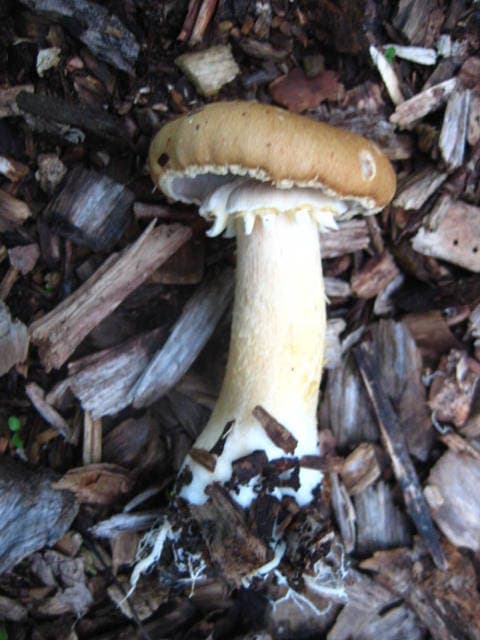
Wine cap (Stropharia rugosoannulata) is a large, beautiful outdoor mushroom also known as king stropharia and garden giant. It earns these names honestly — caps can reach 30 cm across with a rich burgundy-red color, and it thrives in garden beds, wood chip paths, and composted woody debris with minimal care.
Why wine cap is unique among cultivated species:
- Grows outdoors in garden beds rather than in controlled indoor environments — one of the only gourmet species that thrives this way
- Decomposes wood chips and mulch, improving soil health while producing edible mushrooms
- Extremely low maintenance once established — inoculate a wood chip bed and harvest for 2-4 years
- Large, meaty mushrooms with a mild, potato-like flavor and firm texture
Growing wine caps outdoors:
- Substrate: fresh hardwood chips, straw, or a mix of both, laid 10-15 cm deep in a shaded garden bed
- Inoculation: mix sawdust spawn into the wood chip layer at 10-15% rate
- Season: inoculate in spring after last frost, harvest in late summer through fall
- Temperature: fruits at 15-25°C, triggered by rain and temperature fluctuations
- Identification: Confirm with the dark purple-brown to black spore print and the distinctive grooved ring on the stem
Wine cap is the ideal species for gardeners who want mushrooms without building a grow room. It partners beautifully with vegetable gardens, permaculture food forests, and orchard understories.
Morchella is the scientific genus name for morel mushrooms, the most sought-after wild edible fungi in the world. When someone searches for "Morchella mushroom," they are looking for morels — the honeycomb-capped spring mushrooms that command $30-80 per pound dried and inspire a near-obsessive foraging culture across North America and Europe.
Key species within the genus Morchella:
- *Morchella esculenta* — the yellow or common morel, with rounded pits and pale ridges, fruiting mid-spring
- *Morchella elata* — the black morel, with elongated vertical pits and darker ridges, fruiting earlier in spring
- *Morchella punctipes* — the half-free morel, where the cap attaches only at the very top of the stem
- *Morchella importuna* — a landscape morel that fruits in wood chip beds and disturbed urban ground
- *Morchella rufobrunnea* — found in gardens, compost piles, and landscaped areas in warmer climates
Why "Morchella" is searched so frequently:
- Foragers and students use the Latin name to distinguish true morels from toxic false morels (Gyromitra species)
- Scientific names are essential for accurate identification — common names vary regionally
- DNA studies have dramatically revised morel taxonomy in recent years, splitting what were once considered single species into dozens of distinct lineages
All true *Morchella* species share the key safety feature: they are completely hollow when sliced lengthwise from cap to stem base. False morels have chambered, cotton-like interiors. Always slice and verify before consuming any morel.
Pink oyster (Pleurotus djamor) is a tropical gourmet mushroom famous for its stunning flamingo-pink to coral color, explosive growth speed, and bold flavor. It is one of the most visually dramatic species in all of mushroom cultivation and a favorite among beginners and market growers alike.
Key characteristics of pink oyster:
- Color: Vivid coral-pink to hot pink when fresh, fading to salmon-beige when cooked. The pigment comes from carotenoid compounds in the cap tissue
- Growth speed: The fastest colonizer of all oyster species — full colonization in 7-10 days, with pins appearing 3-4 days after introducing fruiting conditions
- Flavor: Bold, meaty, and slightly woody with a bacon-like quality when seared at high heat. More assertive than grey or blue oyster
- Size: Caps reach 3-8 cm across in dense, layered shelf-like clusters
Critical growing requirements:
- Temperature sensitivity is the defining trait — pink oyster mycelium dies below 10°C. It cannot be refrigerated, overwintered outdoors, or shipped in cold weather without heating
- Fruiting range: 18-30°C, making it ideal for summer growing or heated tropical environments
- Substrate: Grows on pasteurized straw, hardwood sawdust, coffee grounds, and virtually any cellulose-rich material
- Humidity: 85-95% during fruiting with strong fresh air exchange
Pink oyster is the perfect summer species when cool-weather varieties like blue oyster struggle with heat. Its short shelf life of 1-2 days means it rarely appears in grocery stores, giving farmers market growers a significant competitive advantage.
Need more help? Dr. Myco can answer follow-up questions about mushroom alternate names & varieties based on thousands of real growing experiences.
Ask Dr. MycoMore in Species Guides
Oyster Mushrooms
15 tips
Lion's Mane
13 tips
Shiitake
13 tips
King Oyster
12 tips
Reishi
13 tips
Chestnut & Other Gourmet
15 tips
Mushroom Health & Medicinal Benefits
17 tips
Cooking & Preparation
16 tips
Enoki, Maitake & Cordyceps
14 tips
Mushroom Supplement Guide
18 tips
Common Mushroom Varieties
20 tips
Rare & Specialty Cultivatable Species
16 tips