Lion's Mane
13 tips in Species Guides
By Andrew Langevin · Founder, Nature Lion Inc · Contributing author, Mushroomology (Brill, 2026)
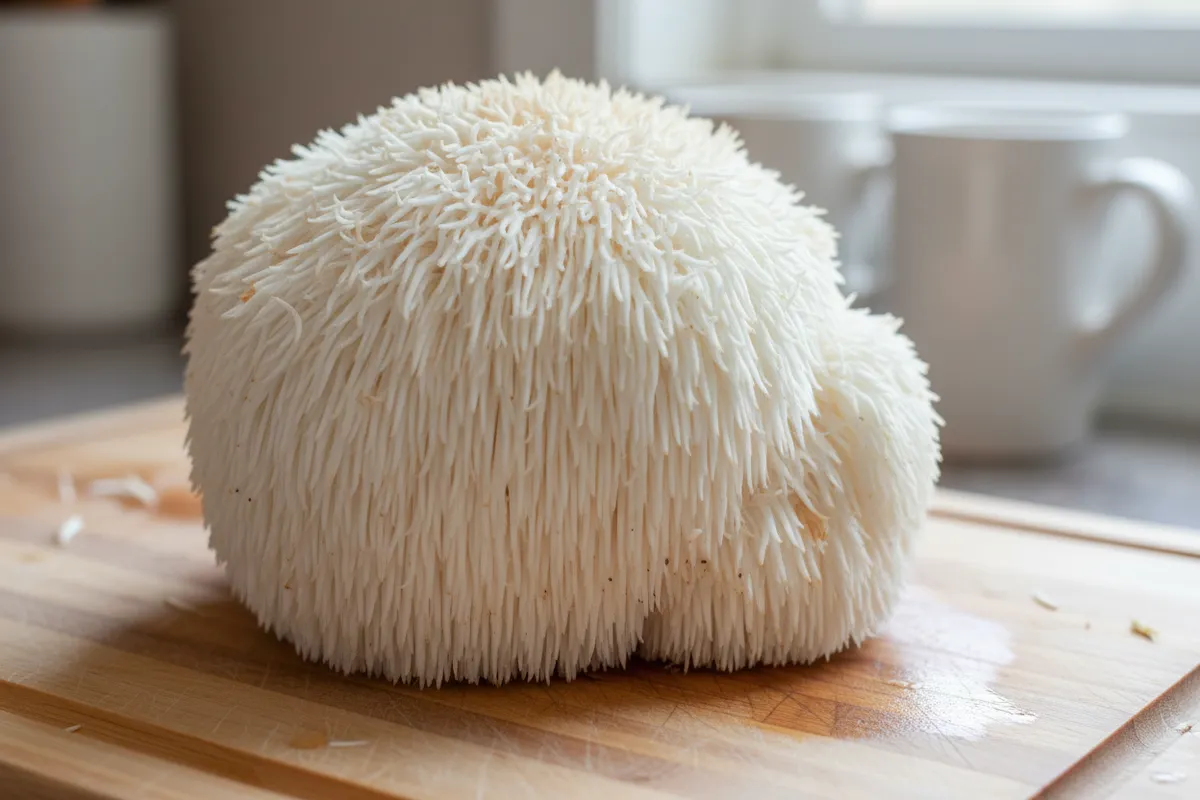
Lion's mane (Hericium erinaceus) is a strikingly beautiful medicinal and gourmet mushroom that grows as a single globular mass of cascading white spines, resembling a white pom-pom or waterfall. It is native to North America, Europe, and Asia, growing on dead or dying hardwood trees in the wild.
What makes lion's mane truly special is its dual value as both a culinary delicacy and a potent medicinal mushroom. Research has identified compounds called hericenones and erinacines that stimulate nerve growth factor (NGF) production, showing promise for cognitive health, neuroprotection, and nerve regeneration.
The flavor is often described as lobster-like or crab-like when seared in butter, making it one of the most prized gourmet mushrooms. In cultivation, lion's mane requires more attention to humidity and substrate than oyster mushrooms, placing it at an intermediate difficulty level. It grows on supplemented hardwood and forms its fruiting body from a single point rather than in clusters.
Growing lion's mane at home is worthwhile for several practical reasons.
- Cost: it is expensive to buy fresh — $12-20 per pound at farmers markets and specialty grocers, when you can find it at all. Most grocery stores don't carry it.
- Freshness: lion's mane deteriorates rapidly after harvest, losing both texture and potency within 3-5 days. Home-grown lion's mane harvested and cooked the same day is incomparably better.
- Quality control: home cultivation ensures you know exactly how it was grown — no pesticides, no heavy metals from unknown substrates.
- Value: a single 5 lb supplemented sawdust block costs $5-10 in materials and produces 0.5-1 lb worth $6-20 at retail.
- Medicinal use: lion's mane mycelium and fruiting bodies both contain beneficial compounds, so even spent blocks can be dried and used for teas and extracts.
The growing process itself is rewarding — watching the cascading teeth develop is one of cultivation's most visually satisfying experiences.
Lion's mane colonization requires patience and attention to detail.
- Colonization temperature: 21-24°C (70-75°F)
- Colonization time: 14-21 days on a 5 lb supplemented sawdust block (some strains up to 28 days)
- Spawn rate: 15-20% — higher than oyster mushrooms — because lion's mane colonizes more slowly and benefits from more inoculation points
- Grain spawn: millet or rye berries work well
Lion's mane mycelium looks distinctly different from oyster or shiitake — it is finer, wispier, and grows more slowly. Don't expect the aggressive rhizomorphic growth you see with oyster mushrooms. The mycelium often appears thin and cobwebby in early colonization, which can alarm beginners who mistake it for contamination.
As colonization progresses, the mycelium thickens and you may see primordia (small tooth-like bumps) forming even before the block is fully colonized. Do not introduce fruiting conditions until at least 80-90% colonization is complete.
Lion's mane fruiting parameters are specific and must be maintained consistently for good results.
- Temperature: 16-20°C (60-68°F), a noticeable drop from colonization temps
- Humidity: 90-95% — the most critical parameter. Even brief drops below 85% cause developing teeth to yellow, dry out, and abort.
- FAE: LOW to MODERATE, distinctly less than oyster mushrooms. Lion's mane prefers slightly elevated CO2 levels. Too much FAE dries out the delicate teeth.
- Light: indirect ambient light on a 12/12 cycle helps direct growth
Lion's mane fruits from a single opening in the bag or container. Cut one X-shaped slit (5-8cm) and the mushroom will form at that opening. Unlike oyster mushrooms, lion's mane produces one large fruiting body per opening rather than a cluster of individual caps.
Maintain conditions consistently for 7-14 days from primordia appearance to harvest-ready mushroom. Mist the air around the mushroom, not directly onto it, to avoid waterlogging the teeth.
Lion's mane performs poorly on unsupplemented substrates that work fine for oyster mushrooms. While oysters fruit happily on plain straw or HWFP, lion's mane requires additional nutrition to produce meaningful yields.
The industry standard is Masters Mix: 50% hardwood pellets and 50% soy hull pellets by weight, hydrated to 60-65% moisture content. This substrate must be pressure sterilized at 15 PSI for 2.5 hours because the soy hull supplement is highly nutritious and will contaminate rapidly if only pasteurized.
The soy hulls provide nitrogen and protein that lion's mane needs to build its dense, meaty fruiting body. Without supplementation, you get tiny, underdeveloped fruit bodies with poor tooth formation.
Alternative supplements:
- Wheat bran: 10-15% by dry weight added to hardwood sawdust
- Oat bran: similar rates
- Enhanced mix: 40% hardwood, 40% soy hulls, 20% oat bran for maximum nutrition
The tradeoff with higher supplementation is increased contamination risk, so sterile technique must be impeccable.
Lion's mane benefits from a higher spawn rate than most species: 15-20% by weight of wet substrate is recommended. For a 5 lb (2.3 kg) supplemented sawdust block, that means 0.75-1 lb (340-450g) of grain spawn.
The higher rate compensates for lion's mane's slower colonization speed compared to aggressive species like oyster mushrooms. More spawn means more inoculation points, faster colonization, and better competition against contaminants during the vulnerable early days.
- Below 15%: colonization may stall or take 4+ weeks, dramatically increasing contamination risk on nutrient-rich supplemented substrate
- Grain spawn on rye berries or wheat berries works best — the larger grain size provides more nutrition per kernel
- Millet works but requires more volume due to smaller grain size
Always break up grain spawn thoroughly and distribute evenly throughout the substrate during mixing. Clumps of spawn create uneven colonization with some areas finishing weeks before others, creating windows for contamination in the slow spots.
Lion's mane mycelium frequently confuses growers who are accustomed to the thick, aggressive growth of oyster or shiitake. Hericium mycelium is characteristically fine, wispy, and almost transparent in early stages. It lacks the ropy rhizomorphic strands typical of oyster mushrooms and instead produces a delicate, cotton-candy-like network that can look alarmingly similar to cobweb mold.
Key differences from cobweb mold:
- Lion's mane mycelium is white (not grey like cobweb)
- It grows slowly over days (not explosively over hours like cobweb)
- It does not dissolve when sprayed with hydrogen peroxide (cobweb does)
As colonization progresses past 50%, the mycelium thickens noticeably and becomes more opaque. Lion's mane mycelium also produces a distinctive sweet, fruity aroma during active colonization — quite different from the earthy smell of most other species.
Some strains produce toothy primordia (tiny proto-mushrooms) on the surface of grain spawn or along bag walls during colonization, which is normal and a sign of vigorous genetics.
Lion's mane is the most humidity-sensitive commonly cultivated species. Its fruiting body is composed of long, delicate teeth (spines) that have an enormous surface-area-to-volume ratio, causing them to lose moisture rapidly when humidity drops. Even a few hours below 85% relative humidity can cause developing teeth to yellow at the tips, dry out, and abort. Once teeth begin drying, the damage is irreversible for that flush.
Maintaining 90-95% humidity consistently requires one of these setups:
- Martha tent with a reptile fogger and humidity controller
- Shotgun fruiting chamber with very frequent misting (4-6 times daily)
- Dedicated grow room with ultrasonic humidification
Set your humidity controller to activate at 90% and cut off at 95%. Avoid pooling water directly on the mushroom — mist the air around it and let fine droplets settle naturally. A common mistake is over-misting directly onto the teeth, which causes waterlogging and bacterial soft rot.
The best setups use an ultrasonic humidifier creating a fine fog that raises ambient humidity without wetting surfaces directly. In dry climates or during winter heating season, this becomes especially challenging.
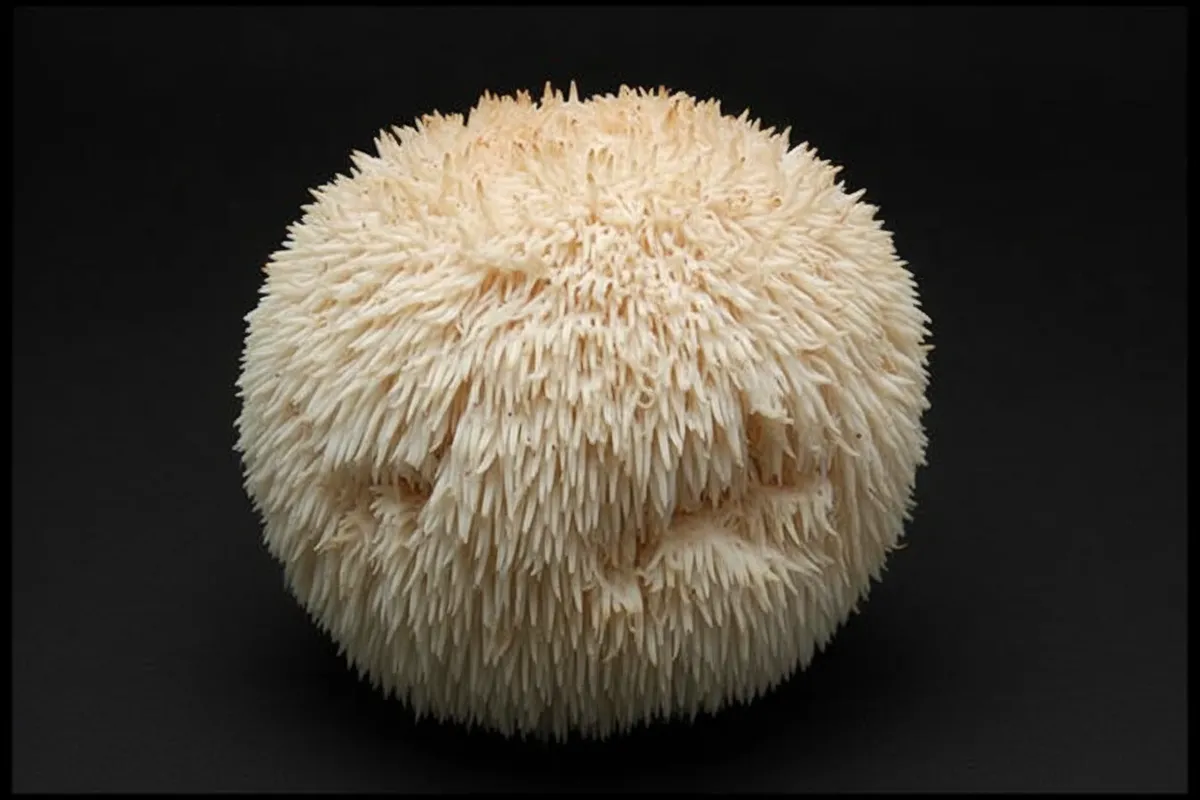
Harvest lion's mane when the teeth (spines) are 1-2 cm long and the mushroom is still bright white. At this stage, the texture is firm and the flavor is at its peak. The teeth should be well-defined, hanging downward like tiny icicles, and the overall shape should be a compact globe or mound.
Do not wait until the teeth are long and drooping (3+ cm) — by this point, the mushroom has begun sporulating, the flavor becomes slightly bitter, and the texture turns spongy. Yellowing at the tooth tips is the first sign you've waited too long. The ideal harvest window is narrow — typically 1-2 days between perfect and past-prime. Check your grows twice daily once teeth begin developing.
Harvest by cutting the entire fruiting body at the base with a clean knife. Do not twist and pull like you would with oyster mushrooms — lion's mane attaches firmly and pulling can damage the mycelium, reducing subsequent flush production.
After harvest, the block will typically produce 1-2 additional flushes from the same opening, with 10-14 days between flushes.
When lion's mane dries out during fruiting, the damage follows a predictable progression. First, the tooth tips turn light yellow. Within hours, the yellowing spreads downward and the teeth become brittle. The entire fruiting body then turns yellow-brown, shrinks, and hardens into a dry, spongy mass. Once this happens, the current fruiting body cannot be revived — the tissue is dead.
However, the mycelium inside the block is usually still alive and can produce another flush. To recover:
- Remove the dried fruiting body
- Seal the slit with micropore tape
- Fix your humidity problem
- Wait 10-14 days for new primordia
To prevent drying:
- Never let humidity drop below 85% for more than an hour
- Use a humidity controller with an ultrasonic fogger, not manual misting alone
- If relying on manual misting, mist at minimum 4-6 times daily during tooth development
- Place a tray of wet perlite beneath the block for passive humidity
- Consider wrapping exposed bag surfaces in plastic wrap to reduce moisture loss from the substrate
Lion's mane yields are modest compared to oyster mushrooms. From a standard 5 lb (2.3 kg) supplemented sawdust block (Masters Mix), expect 0.5-1 lb (225-450g) total yield across 2-3 flushes, roughly 50-75% biological efficiency.
- First flush: the largest single mushroom, typically 150-300g
- Second flush: smaller, around 100-200g
- Third flush: (if it comes) yields 50-100g
Yields depend heavily on strain genetics, substrate nutrition, and how well humidity is maintained. Masters Mix produces significantly better yields than plain hardwood sawdust — expect 30-50% more mushroom weight. Some commercial strains selected for production can push toward 100% BE under ideal conditions.
To maximize yield: use 15-20% spawn rate, maintain 90-95% humidity religiously, keep fruiting temperature at 16-20°C, and harvest at the right time to encourage strong subsequent flushes. Fully submerge the block in cold water for 12-24 hours between flushes to rehydrate the substrate.
Lion's mane has a remarkable lobster-like or crab-cake texture and flavor when cooked properly.
The key technique is the sear: slice the mushroom into 1-2 cm thick steaks, pressing gently to remove excess moisture. Heat a cast iron skillet over medium-high heat with 2 tablespoons of butter or oil. Place the slices in the pan and press down gently with a spatula. Sear without moving for 3-4 minutes until a deep golden crust forms on the bottom. Flip and repeat on the other side. Season with salt, pepper, and a squeeze of lemon. The result should be crispy and golden on the outside, tender and meaty inside.
For a crab cake substitute: shred the mushroom with a fork into fine strands, mix with breadcrumbs, egg, Old Bay seasoning, mayo, and minced onion, form into patties, and pan-fry until golden.
Do not boil or steam lion's mane — water-based cooking destroys its texture and produces a bland, spongy result. Lion's mane absorbs very little oil compared to other mushrooms, making it a naturally lighter dish. Fresh lion's mane is always superior to dried for culinary use.
Growing lion's mane at home is an intermediate-level project that rewards growers with one of the most prized gourmet and medicinal mushrooms. The process requires supplemented hardwood substrate, pressure sterilization, and careful humidity management during fruiting.
Step-by-step method:
- Prepare substrate — mix 80% hardwood sawdust (or hydrated hardwood fuel pellets) with 20% soy hull pellets (Masters Mix) or 15% wheat bran. Hydrate to 60-65% moisture.
- Bag and sterilize — fill autoclavable grow bags with 2-2.5 kg of substrate. Seal with an impulse sealer and sterilize at 15 PSI for 2.5 hours. Cool overnight to room temperature.
- Inoculate — add grain spawn at 15-20% by weight in front of a flow hood or inside a still air box. Seal the bag.
- Colonize — incubate at 21-24°C (70-75°F) in darkness for 14-21 days until the block is fully white.
- Initiate fruiting — cut a single 5cm X-shaped slit in the bag. Move to fruiting conditions: 16-20°C, 90-95% humidity, moderate FAE, and indirect light 12 hours daily.
- Maintain humidity — this is the critical step. Lion's mane teeth dry out rapidly below 85% RH. Use an ultrasonic humidifier with a controller, not manual misting alone.
- Harvest — pick when spines are 1-2cm long and still white, before they yellow. Twist gently or cut at the base.
Key differences from oyster mushrooms:
- Lion's mane needs higher humidity (90-95% vs 85-90%)
- It fruits from a single point rather than shelf-like clusters
- Masters Mix produces 30-50% better yields than straight hardwood sawdust
- Expect 0.5-1 lb total across 2-3 flushes from a 5 lb block
The most common failure is humidity — invest in an automated humidifier setup rather than relying on manual misting.
Need more help? Dr. Myco can answer follow-up questions about lion's mane based on thousands of real growing experiences.
Ask Dr. MycoMore in Species Guides
Oyster Mushrooms
15 tips
Shiitake
13 tips
King Oyster
12 tips
Reishi
13 tips
Chestnut & Other Gourmet
15 tips
Mushroom Health & Medicinal Benefits
17 tips
Cooking & Preparation
16 tips
Enoki, Maitake & Cordyceps
14 tips
Mushroom Alternate Names & Varieties
17 tips
Mushroom Supplement Guide
18 tips
Common Mushroom Varieties
20 tips
Rare & Specialty Cultivatable Species
16 tips