King Oyster
12 tips in Species Guides
By Andrew Langevin · Founder, Nature Lion Inc · Contributing author, Mushroomology (Brill, 2026)
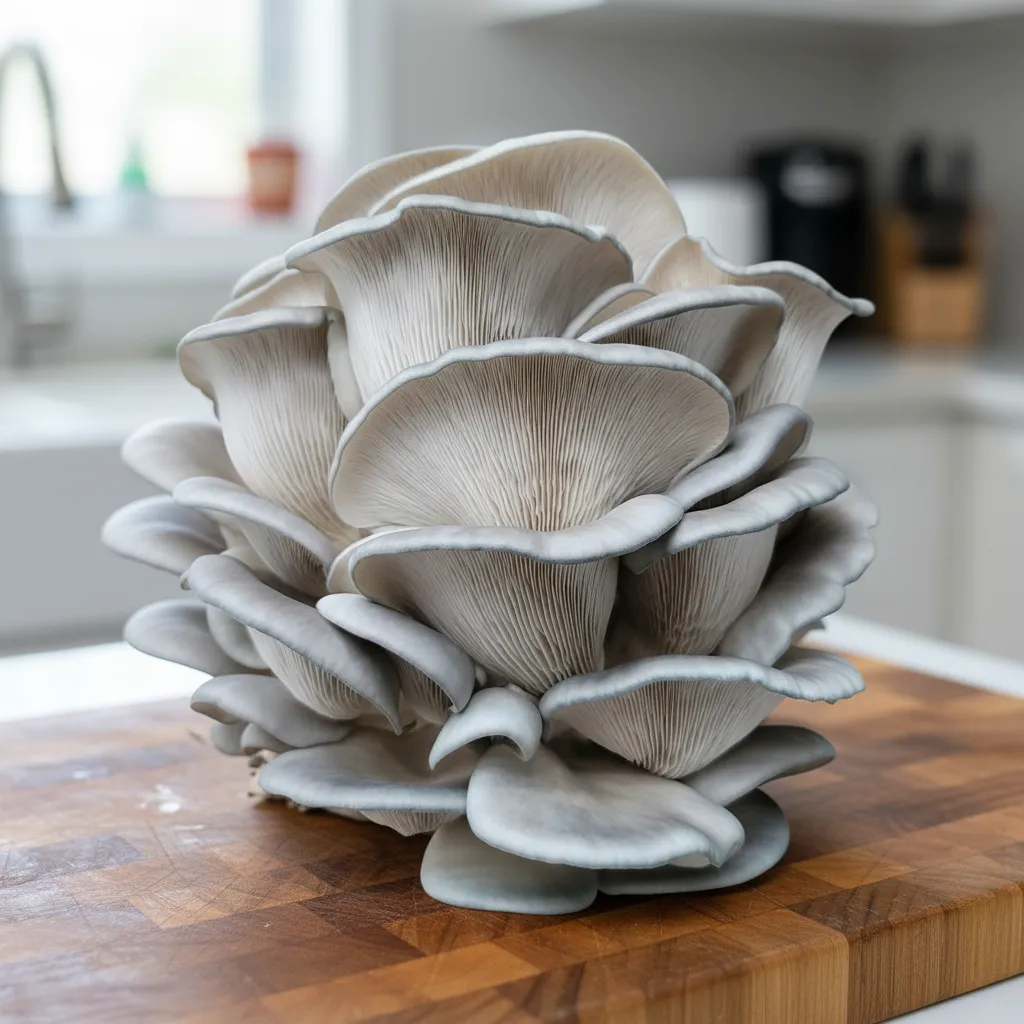
King oyster (Pleurotus eryngii) is the largest species in the oyster mushroom family, but it behaves very differently from common oyster mushrooms. Instead of producing fan-shaped clusters, king oyster grows thick, meaty stems topped with small brown caps. The stem is the prized part — dense, white, and with a texture remarkably similar to scallops or abalone when sliced into thick rounds and seared.
King oyster is one of the most versatile cooking mushrooms, holding its structure in stir-fries, grills, soups, and braises without turning mushy. In Asian cuisine, it is sliced into steaks, scored in a crosshatch pattern, and grilled with soy and sesame. Commercially, king oyster commands premium prices ($8-14 per pound) due to its meaty texture and visual appeal.
In cultivation, king oyster is an intermediate-difficulty species that requires cooler temperatures and more precise environmental control than common oyster mushrooms, particularly regarding CO2 management and substrate supplementation.
King oyster colonization is slower and more methodical than common oyster species.
- Colonization temperature: 21-24°C (70-75°F)
- Colonization time: 21-30 days — roughly twice as long as blue oyster
- Spawn rate: 15-20%
- Grain spawn: rye or wheat berries
- Substrate: supplemented hardwood — Masters Mix (50% hardwood pellets, 50% soy hull pellets), sterilized at 15 PSI for 2.5 hours
King oyster mycelium is white and moderately aggressive, somewhere between the explosive speed of oyster and the patience-testing pace of shiitake. The mycelium produces a noticeable sweet, mushroomy aroma during active colonization. Unsupplemented straw or plain sawdust produces very poor results.
During colonization, keep blocks in darkness at stable temperature. Avoid temperature fluctuations that can trigger premature pinning inside the bag. Once fully colonized, the block needs a significant temperature drop to initiate fruiting.
King oyster requires distinctly cold fruiting temperatures compared to most cultivated species: 10-16°C (50-60°F) for optimal results. This cold requirement is the primary challenge for home growers without climate control.
At these temperatures, king oyster produces the thick, dense, scallop-like stems that make it so prized. The cold slows growth, forcing the mushroom to pack more cells into a smaller space, creating the firm, meaty texture.
When fruited at warmer temperatures (above 18°C), king oyster produces thin, elongated stems with large caps — essentially the opposite of what you want. The mushrooms look more like regular oyster mushrooms and lack the signature dense texture.
Practical approaches for achieving cold temperatures:
- A spare refrigerator set to 12-14°C
- An unheated garage during cooler months
- Seasonal growing: fruit king oyster in fall and winter, switch to warm-tolerant species like pink oyster during summer
A temperature drop of at least 5-8°C from colonization temperature is needed to trigger pinning.
King oyster benefits significantly from a casing layer — a thin layer of non-nutritive material applied to the top surface of the colonized block before fruiting. The casing layer maintains consistent surface moisture, creates a humid microclimate that encourages pinning, and provides a physical surface for primordia to form against. Without casing, king oyster pins unevenly or not at all on many blocks.
The standard casing material is a 50/50 mix of peat moss and vermiculite, hydrated to field capacity (squeeze a handful and a few drops of water should drip out). Adjust pH to 7-8 by adding hydrated lime (calcium hydroxide) at 5% by weight — king oyster prefers a slightly alkaline casing.
Application:
- Apply a 1-2cm layer evenly across the top surface of the fully colonized block after removing the bag or opening the top
- Simpler alternatives: straight vermiculite or a thin layer of damp paper towel
- Mist the casing surface lightly 1-2 times daily until pins appear
After applying the casing, place the block in fruiting conditions at 10-16°C with 85-95% humidity.
King oyster produces best results when fruited exclusively from the top of the block, unlike common oyster mushrooms that fruit from side slits or holes. Top fruiting allows mushrooms to grow vertically, producing the tall, thick stems that define king oyster quality.
When fruited from side holes, king oyster stems grow horizontally and curve awkwardly, resulting in misshapen mushrooms with irregular stem thickness.
The standard technique:
- Remove the top portion of the grow bag (or cut it open across the top)
- Either apply a casing layer or leave the colonized surface exposed
- Place the block upright in the fruiting chamber so mushrooms grow straight up
- Do not cut holes in the sides of the bag
Some commercial growers use rigid containers (bottles or trays) with open tops specifically designed for top-fruiting species like king oyster. The container walls support the developing stems and help maintain moisture around the base. This top-fruiting approach also makes harvesting easier — mushrooms are accessible from above without rotating or repositioning the block.
King oyster stem thickness is directly controlled by CO2 concentration, which is the opposite of what most growers learn with other species. For common oyster mushrooms, high FAE produces proper cap development. For king oyster, LOWER FAE (higher CO2, around 2000-5000 ppm) produces the desirable thick, bulbous stems with small caps.
This happens because elevated CO2 suppresses cap development while the stem continues to expand, redirecting growth energy into stem tissue. Commercial king oyster farms carefully control ventilation to maintain this elevated CO2 sweet spot.
- Too much FAE: thin stems with large caps (oyster-like morphology)
- Too little FAE (above 5000-8000 ppm CO2): growth stalls entirely or produces deformed mushrooms
Home growers can achieve the right balance by keeping fruiting containers partially closed, reducing fan frequency, or using a smaller fruiting chamber with less ventilation. Monitor your results visually: if stems are thin and caps are large, reduce FAE. If growth stalls or mushrooms abort, increase FAE slightly. Finding the balance specific to your setup requires a few flushes of experimentation.
Growing king oyster at temperatures above 18°C produces consistently disappointing results. The mushrooms develop thin, elongated stems with disproportionately large caps — essentially mimicking the growth pattern of regular oyster mushrooms rather than the thick-stemmed form that makes king oyster valuable.
Specific problems at warm temperatures:
- Stems may be only 1-2cm in diameter instead of the desired 3-5cm
- Texture becomes softer and spongier, losing the firm, scallop-like density
- Faster growth means less dense tissue
- Increased bacterial contamination risk on the exposed casing layer and block surface
- Shorter shelf life
If your growing space cannot maintain 10-16°C during fruiting, king oyster may not be the right species for you, or you should limit growing to cooler seasons.
A practical workaround: some growers use a mini-fridge with the shelves removed as a dedicated king oyster fruiting chamber, with a small computer fan for air exchange and a humidity tray at the bottom.
King oyster requires supplemented hardwood substrate and will not produce meaningful yields on unsupplemented materials like plain straw or HWFP that work for common oyster mushrooms.
- Standard substrate: Masters Mix — 50% hardwood fuel pellets and 50% soy hull pellets by weight, hydrated to 60-65% moisture content
- Alternative formula: 80% hardwood sawdust supplemented with 20% wheat bran by dry weight
- Sterilization: pressure sterilized at 15 PSI for 2.5 hours (required — pasteurization is insufficient)
- Optional additive: gypsum (calcium sulfate) at 2-5% by dry substrate weight to improve calcium availability and substrate structure
- Block size: 2-3 kg (5-7 lb) blocks are standard
The higher nutrition level in supplemented substrates provides the energy king oyster needs to build its dense, thick fruiting bodies. Larger blocks retain moisture better during the extended fruiting period but take longer to colonize.
Ensure thorough mixing of spawn throughout the substrate for even colonization.
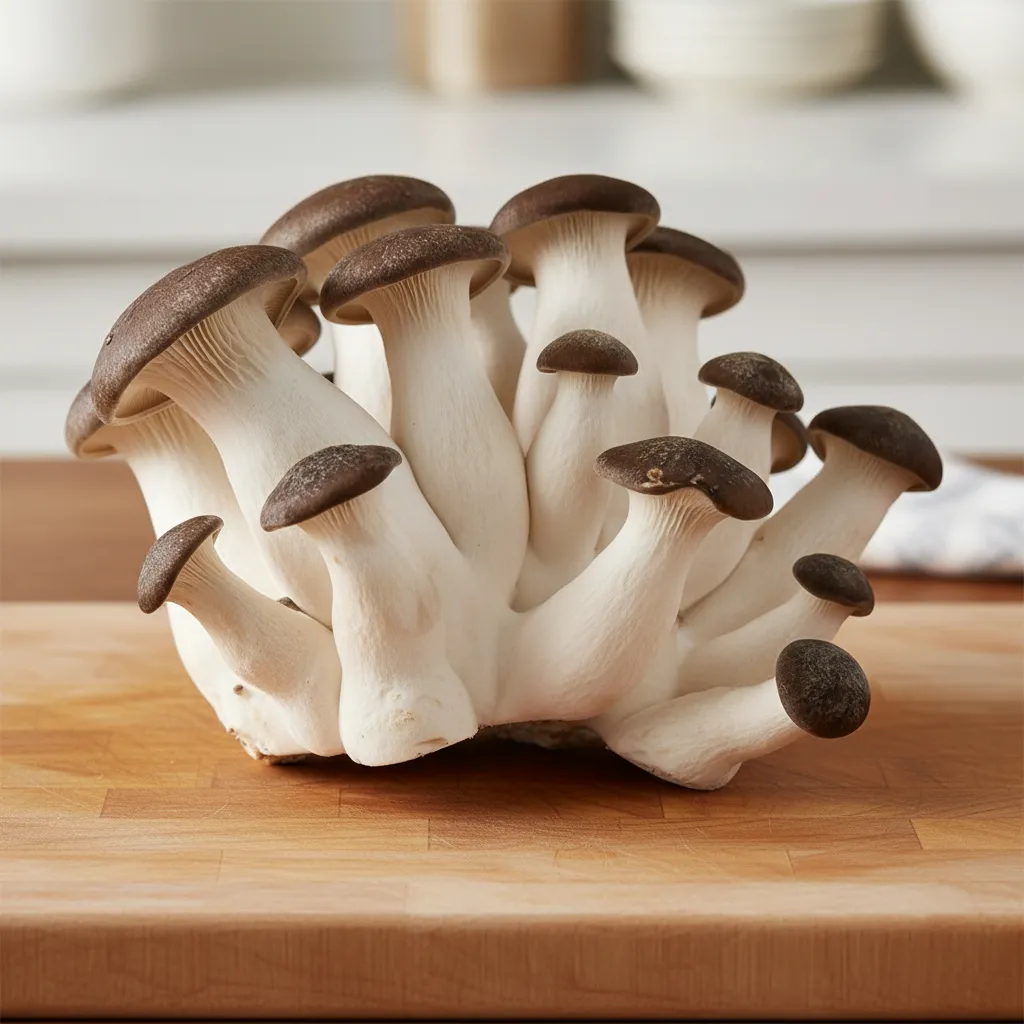
Black Pearl is a hybrid variety developed from crossing king oyster (Pleurotus eryngii) with another Pleurotus species, resulting in a mushroom that combines the thick stem of king oyster with darker coloring and slightly more forgiving growing conditions.
- Colonization: 21-24°C for 18-25 days
- Fruiting: 12-18°C (a slightly wider range than standard king oyster)
- Humidity: 85-90%
- FAE: tolerates moderate FAE better than standard king oyster — still produces thick stems without requiring as precise CO2 management
Black Pearl produces dark brown to nearly black caps with sturdy white stems that are shorter and thicker than standard king oyster. The flavor is robust, slightly nuttier than standard king oyster, with the same excellent firm texture.
Black Pearl is becoming increasingly popular at farmers markets because the dramatic dark color attracts buyers, and the slightly easier growing parameters make it more accessible to small-scale cultivators. It is a good stepping stone between common oyster mushrooms and standard king oyster.
King oyster yields are moderate and vary significantly based on environmental control. From a standard 2.5 kg (5.5 lb) supplemented sawdust block:
- Per flush: 150-300g (0.3-0.7 lb)
- Total yield: 300-600g across 2-3 flushes
- Biological efficiency: roughly 50-80%
- First flush: 3-6 mushrooms per block
- Second flush: 2-4 mushrooms, often smaller
This is lower than common oyster mushrooms but the premium price ($8-14/lb retail) more than compensates.
The quality-quantity tradeoff is important: blocks fruited at optimal cold temperatures (10-16°C) with controlled low FAE produce fewer but larger, denser mushrooms with better texture and longer shelf life. Blocks fruited at warmer temperatures produce more numerous but thinner, less valuable mushrooms.
To maximize yield between flushes, rest the block for 2-3 weeks at room temperature, then rehydrate by soaking in cold water for 12-24 hours before returning to fruiting conditions. King oyster blocks exhaust faster than oyster blocks, rarely producing a meaningful fourth flush.
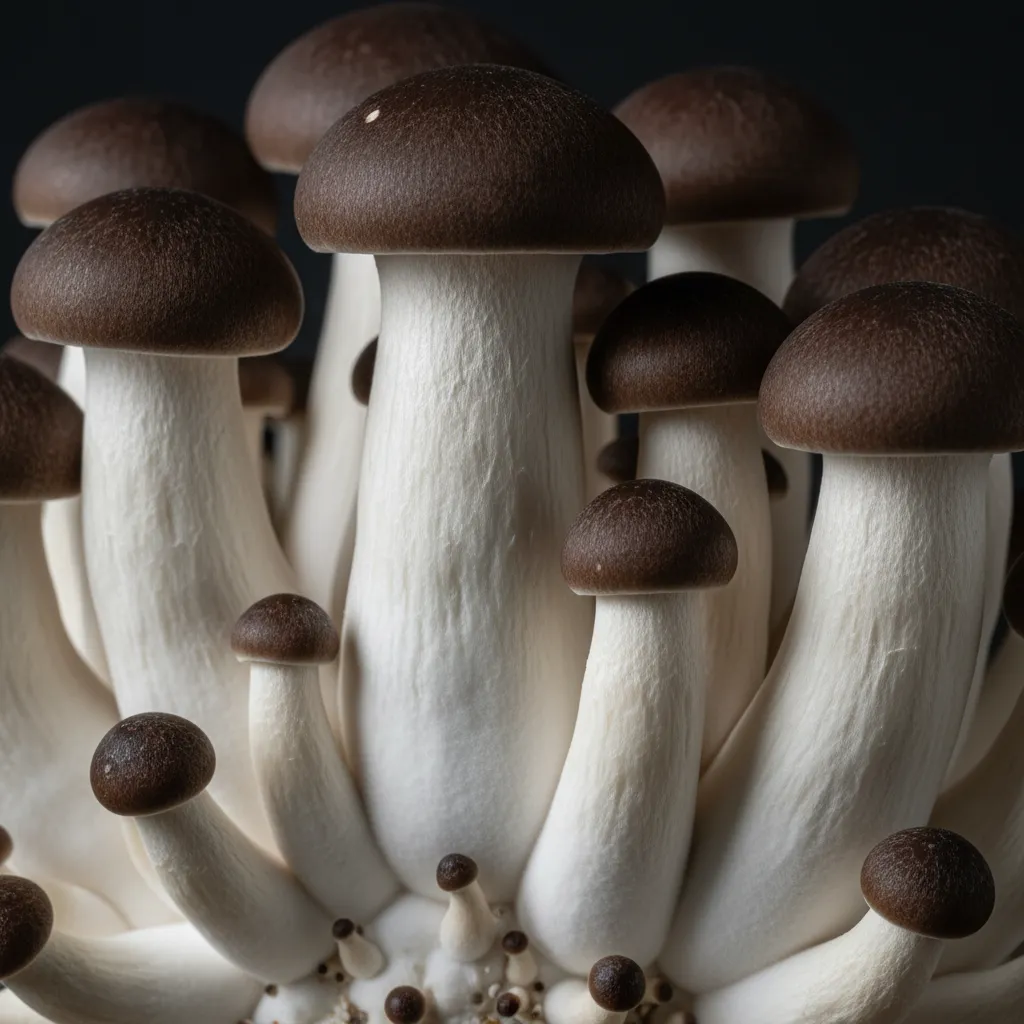
Harvest king oyster mushrooms when the caps begin to flatten from their initial convex shape but have not yet turned upward at the edges. The stem should be firm and white, typically 8-15cm tall and 3-5cm in diameter at maturity. The cap will be light to medium brown, 4-8cm across.
Unlike oyster mushrooms where the cap is the main attraction, king oyster is valued primarily for the stem — so harvest timing optimizes for stem quality. If you wait too long, the cap fully opens and flattens, the stem begins to soften, and the mushroom starts releasing spores.
Harvest the entire cluster by cutting at the base with a clean knife, as close to the substrate surface as possible. King oyster stems sometimes develop a tough, fibrous base where they attach to the block — trim this off before cooking. For maximum stem thickness, harvest slightly earlier rather than later.
King oyster has excellent shelf life: 7-10 days refrigerated in a paper bag, comparable to shiitake. The firm texture means it ships well without bruising, making it practical for farmers market growers who need to transport their harvest.
King oyster earns its intermediate difficulty rating because it requires precise control over multiple environmental parameters that beginners typically cannot manage.
- Cold fruiting requirement (10-16°C): most growers need dedicated cooling or seasonal timing
- Counterintuitive FAE management: where beginners learn mushrooms need fresh air, king oyster needs restricted airflow for proper stem development
- Supplemented substrate: must be pressure sterilized — no shortcuts with pasteurization
- Casing layer: adds an extra step requiring proper preparation and application
- Long colonization (21-30 days): contamination risk accumulates over time
Despite these challenges, king oyster is not an advanced species. Growers who have successfully produced 5-10 batches of oyster mushrooms and have reliable sterile technique, a pressure cooker, and some form of temperature control are ready to attempt king oyster.
The exceptional culinary quality makes the extra effort worthwhile.
Need more help? Dr. Myco can answer follow-up questions about king oyster based on thousands of real growing experiences.
Ask Dr. MycoMore in Species Guides
Oyster Mushrooms
15 tips
Lion's Mane
13 tips
Shiitake
13 tips
Reishi
13 tips
Chestnut & Other Gourmet
15 tips
Mushroom Health & Medicinal Benefits
17 tips
Cooking & Preparation
16 tips
Enoki, Maitake & Cordyceps
14 tips
Mushroom Alternate Names & Varieties
17 tips
Mushroom Supplement Guide
18 tips
Common Mushroom Varieties
20 tips
Rare & Specialty Cultivatable Species
16 tips