Cooking & Preparation
16 tips in Species Guides
By Andrew Langevin · Founder, Nature Lion Inc · Contributing author, Mushroomology (Brill, 2026)
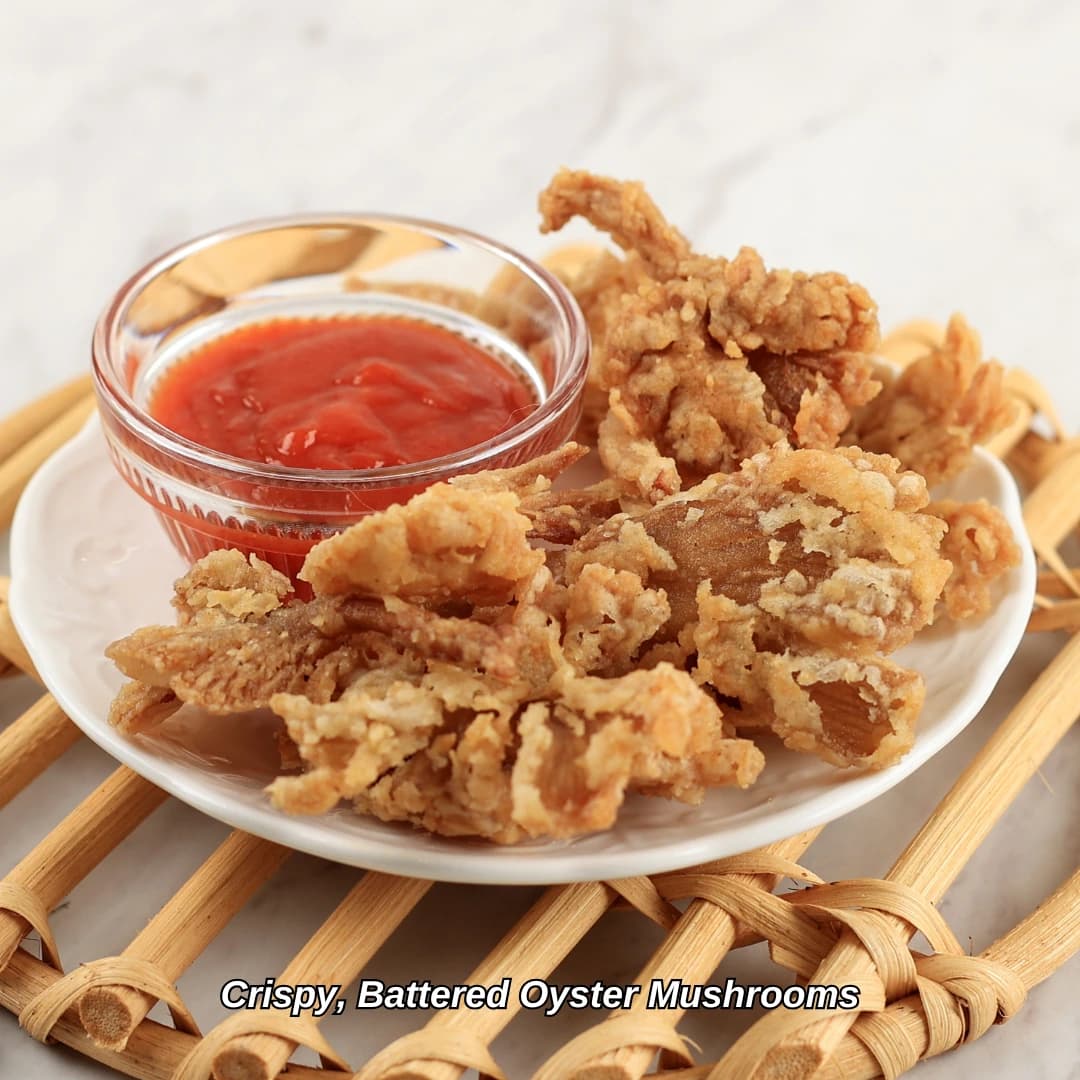
King oyster mushroom (Pleurotus eryngii) is prized for its thick, meaty stem that develops a scallop-like texture when cooked properly. The key is high heat and patience — let it sear without moving.
Scallop-style rounds:
- Slice stems into 2-3cm thick rounds
- Score a shallow crosshatch pattern on each flat surface for better browning
- Heat a cast iron skillet over medium-high heat with 2 tablespoons of butter or high-smoke-point oil
- Place rounds flat-side down and sear without moving for 3-4 minutes until deeply golden
- Flip and repeat on the other side
- Season with salt, pepper, and a squeeze of lemon
Pulled mushroom style:
- Use a fork to shred the stem lengthwise into thin strips resembling pulled pork
- Toss with olive oil, smoked paprika, garlic powder, and soy sauce
- Spread on a baking sheet and roast at 200°C for 20-25 minutes, flipping halfway
Steak-style:
- Halve the mushroom lengthwise through the cap and stem
- Score the cut surface and sear in a hot pan with butter, basting as it cooks
The small cap is edible but less interesting texturally — most chefs focus on the stem. King oyster absorbs relatively little oil compared to other mushrooms, making it a lighter option.
Drying mushrooms at home is straightforward and dramatically extends shelf life from days to 6-12 months while concentrating flavor — dried mushrooms contain up to 10 times the umami of fresh.
Food dehydrator method (recommended):
- Slice mushrooms to 5-6mm uniform thickness for even drying
- Arrange in a single layer on dehydrator trays with space between pieces for airflow
- Set temperature to 50-60°C (120-140°F)
- Dry for 4-8 hours depending on species and thickness
- Mushrooms are done when they are cracker-dry and snap cleanly — any flexibility means moisture remains
Oven method:
- Set oven to the lowest temperature (ideally 50-70°C)
- Place slices on wire racks over baking sheets for air circulation
- Prop the oven door slightly open to allow moisture to escape
- Check every 1-2 hours and rotate trays
- Takes 4-8 hours depending on your oven's minimum temperature
Air drying (no equipment):
- Thread sliced mushrooms on string or lay on wire cooling racks
- Place in a warm, dry area with good airflow
- Takes 2-5 days depending on humidity and temperature
- Only reliable in low-humidity climates
Storage: place cracker-dry mushrooms in airtight glass jars or vacuum-sealed bags with a silica gel packet. Store in a cool, dark pantry.
Mushroom powder is one of the most versatile ways to use dried mushrooms — it adds concentrated umami to any dish and can also be used for supplementation with medicinal species.
Step 1: Start with fully dried mushrooms
- Mushrooms must be cracker-dry — any remaining moisture will clog your grinder and produce clumps instead of powder
- If mushrooms feel slightly flexible, dehydrate further at 50-60°C until they snap cleanly
Step 2: Grind to powder
- Coffee grinder or spice grinder — the most effective tool for small batches. Pulse in 15-second bursts to avoid overheating. Process 30-50g at a time.
- High-speed blender (Vitamix, Blendtec) — works well for larger batches of 100g+
- Mortar and pestle — labor-intensive but produces a coarser grind suitable for rubs and seasonings
Step 3: Sift for consistency
- Pass the ground powder through a fine mesh strainer or sieve to separate any remaining chunks
- Re-grind the larger pieces that don't pass through
Best species for powder:
- Shiitake — intense umami, excellent in soups, sauces, and rubs
- Porcini — rich, earthy flavor prized in Italian cooking
- Lion's mane — mild flavor, commonly used for cognitive support supplementation
- Reishi — bitter, used medicinally in teas and capsules
Storage: keep powder in airtight glass jars away from light and moisture. Shelf life is 6-12 months for culinary use.
Making reishi powder requires more effort than grinding culinary mushrooms because reishi is extremely tough and woody — a standard spice grinder will struggle with chunks.
Step 1: Dry the reishi thoroughly
- Slice fresh reishi (antlers or conks) into 3-5mm thin slices while still slightly pliable — this is much easier than trying to cut fully dried reishi
- Dehydrate slices at 40-50°C for 8-12 hours until completely bone-dry and brittle
- Properly dried reishi should snap cleanly and shatter when bent
Step 2: Break into small pieces
- Use pliers, a hammer in a bag, or heavy-duty kitchen shears to break dried slices into pea-sized pieces before grinding
- This pre-breaking step protects your grinder from damage
Step 3: Grind to powder
- Coffee or spice grinder — pulse in short 10-15 second bursts. The woody fibers generate heat, so let the grinder rest between bursts to prevent motor burnout.
- High-speed blender — more effective for reishi than standard grinders due to higher RPM
- Process small batches (30-40g) at a time
Step 4: Fine sifting
- Sift through a fine mesh strainer — reishi fibers resist grinding, so expect 20-30% of material to remain as coarse fiber that needs re-grinding
Using reishi powder:
- Tea: steep 1-2 teaspoons in hot water for 10-15 minutes
- Capsules: fill size 00 capsules with 500mg each
- Smoothies: blend 1 teaspoon into smoothies (the bitterness is masked by fruit)
Store in airtight glass jars in a cool, dark place for up to 2 years.
The best dehydration method depends on your equipment, volume, and the species you are drying. Here is a ranked comparison.
1. Food dehydrator (best overall)
- Consistent, controlled airflow and temperature
- Set to 50-60°C and walk away for 4-8 hours
- Even drying across all trays
- Best for: all species, any volume up to dehydrator capacity
2. Oven with convection (good alternative)
- Set to lowest temperature (50-70°C) with convection fan on
- Prop door open slightly with a wooden spoon to vent moisture
- Check and rotate every 1-2 hours
- Best for: occasional drying when a dehydrator is not available
3. Air drying (equipment-free)
- String mushroom slices or lay on wire racks in a warm, dry, well-ventilated area
- Takes 2-5 days
- Risk of spoilage in humid climates
- Best for: thin species like turkey tail brackets in dry climates
Species-specific temperature guidelines:
- Oyster mushrooms: 55-60°C for 4-6 hours
- Shiitake: 50-60°C for 6-8 hours (thicker caps need longer)
- Lion's mane: 50-55°C for 6-8 hours (tear into pieces first)
- Reishi: 40-50°C for 8-12 hours (slice thin before drying)
- Turkey tail: 50-60°C for 4-6 hours
Critical rule: mushrooms must be cracker-dry. Any remaining flexibility means moisture is present, which will cause mold during storage. When in doubt, dry longer.
Lion's mane mushroom steak is one of the most impressive plant-based dishes you can make — when prepared correctly, the texture and flavor genuinely resemble crab cake or lobster tail.
Preparation:
- Select a fresh, firm lion's mane mushroom (ideally 200-400g)
- Slice vertically into 1.5-2cm thick steaks through the center of the mushroom
- Gently press each slice between paper towels to remove excess moisture — do not squeeze hard, just firm pressure for 30 seconds per side
Cooking method:
- Heat a cast iron skillet over medium-high heat until a drop of water sizzles immediately
- Add 2 tablespoons of butter (or a mix of butter and olive oil)
- Place steaks in the pan and press down gently with a spatula
- Do not move them for 3-4 minutes — this is critical for developing a deep golden crust
- Flip when the bottom is deeply browned and crispy
- Add another tablespoon of butter, minced garlic, and fresh thyme
- Baste the steaks with the garlic butter for 2-3 minutes
- Season with salt, pepper, and a squeeze of fresh lemon juice
Serving suggestions:
- Serve on a bed of mashed potatoes with a lemon-butter pan sauce
- Top with Old Bay seasoning for a crab cake presentation
- Pair with asparagus and a drizzle of balsamic reduction
The secret to great lion's mane steak is the sear — a hot, dry pan with butter creates the caramelized crust that gives this dish its restaurant-quality appeal.
Properly dried and stored mushrooms have an impressive shelf life, but longevity varies by species, preparation, and storage conditions.
General shelf life guidelines:
- Culinary mushrooms (shiitake, oyster, porcini, chanterelle): 6-12 months at peak flavor and aroma, usable for up to 2 years with gradual flavor decline
- Medicinal mushrooms (reishi, chaga, turkey tail): 1-3 years for potency, as the bioactive compounds are more stable than volatile flavor compounds
- Mushroom powder: 6-12 months — powder oxidizes faster due to increased surface area
Storage requirements for maximum shelf life:
- Airtight containers — glass jars with tight-fitting lids or vacuum-sealed bags
- Cool temperature — room temperature is fine, but a cool pantry (below 20°C) is ideal
- Dark environment — light degrades flavor compounds and some bioactive molecules
- Moisture control — include a food-grade silica gel packet in each container to absorb any residual moisture
- Vacuum sealing extends shelf life by 50-100% by removing oxygen that causes oxidation
Signs that dried mushrooms have gone bad:
- Musty or off odors (not the characteristic earthy mushroom smell)
- Visible mold — any fuzzy growth means moisture got in
- Loss of aroma — if they smell like nothing, the flavor is gone
- Insect damage — small holes or powdery residue
The single most important factor is ensuring mushrooms are completely cracker-dry before storage. Even 1-2% residual moisture can lead to mold growth in sealed containers.
Rehydrating dried mushrooms properly restores their texture while creating a flavorful mushroom broth (the soaking liquid) that should never be discarded.
Standard hot water method (most common):
- Place dried mushrooms in a heat-safe bowl
- Cover with hot (not boiling) water at about 75-85°C
- Cover the bowl and let soak for 20-30 minutes for thinly sliced mushrooms, 45-60 minutes for thick pieces or whole caps
- Mushrooms are ready when they are pliable and tender throughout — squeeze one to check for hard centers
Cold water method (better texture):
- Cover dried mushrooms with cold water in the refrigerator
- Soak for 4-8 hours or overnight
- Produces a firmer, meatier texture that some chefs prefer, particularly for shiitake
Quick method (when pressed for time):
- Place mushrooms in a microwave-safe bowl with water
- Microwave on high for 2-3 minutes
- Let stand for 10 minutes
Using the soaking liquid:
- Strain through a coffee filter or fine cheesecloth to remove grit and sediment
- Use as a stock base for risotto, soup, gravy, or pan sauces
- Freeze in ice cube trays for convenient flavor additions to future dishes
- The soaking liquid from shiitake and porcini is especially rich and valuable
Species-specific notes:
- Shiitake: discard the stems after rehydrating — they remain tough
- Oyster: rehydrates quickly (15-20 minutes), becomes slightly softer than fresh
- Porcini: soaking liquid is liquid gold for Italian cooking
Shiitake powder is one of the most useful kitchen staples you can make from home-grown mushrooms — it is essentially pure concentrated umami that elevates any savory dish.
Step 1: Dry the shiitake
- Slice fresh shiitake caps to 5-6mm thickness (discard or save stems for stock — they are too fibrous for powder)
- Dehydrate at 50-60°C for 6-8 hours until cracker-dry and brittle
- Alternatively, use commercially dried whole shiitake from Asian grocery stores
Step 2: Grind to powder
- Break dried slices into smaller pieces by hand
- Grind in a coffee grinder or spice grinder in 15-second pulses
- Process 30-50g at a time for the finest results
- Shiitake grinds more easily than woody species like reishi
Step 3: Sift and store
- Pass through a fine mesh strainer to ensure uniform texture
- Store in an airtight glass jar away from light and moisture
- Shelf life: 6-12 months for peak flavor
Culinary uses for shiitake powder:
- Umami seasoning — sprinkle on roasted vegetables, eggs, popcorn, or grilled meats
- Soup and broth enhancer — add 1-2 teaspoons to any soup or stew
- Dry rub ingredient — mix with salt, garlic powder, and black pepper for a savory mushroom rub
- Gravy and sauce thickener — whisk into pan sauces for depth of flavor
- Pasta seasoning — toss with butter, pasta, and parmesan for quick umami pasta
Shiitake powder contains naturally high levels of glutamic acid, the amino acid responsible for umami taste — making it a natural substitute for MSG.
Temperature control during dehydration directly affects the flavor, nutrition, and texture of your final product. Different species and end uses call for slightly different temperatures.
General rule: 50-60°C (120-140°F) is the sweet spot for most mushrooms.
Temperature breakdown by purpose:
- 40-50°C (105-120°F) — best for medicinal mushrooms (reishi, chaga, turkey tail) where preserving heat-sensitive bioactive compounds is the priority. Slower drying but maximizes potency.
- 50-55°C (120-130°F) — ideal for lion's mane and delicate species that can brown or develop off-flavors at higher temperatures
- 55-60°C (130-140°F) — the standard for shiitake, oyster, king oyster, and most culinary species. Balances speed with flavor preservation.
- 60-65°C (140-150°F) — acceptable for thick-sliced shiitake or species where you want faster results, but some volatile flavor compounds may be lost
Why temperature matters:
- Too low (below 40°C): drying takes so long that bacterial growth or oxidation can occur before mushrooms are fully dry
- Too high (above 70°C): destroys enzymes, degrades beta-glucans, cooks the outside while trapping moisture inside ("case hardening"), and produces bitter or burnt flavors
Additional tips for optimal results:
- Slice uniformly — uneven thickness means some pieces overdry while others remain moist
- Don't overcrowd — leave space between pieces for airflow
- Rotate trays every 2 hours if your dehydrator has uneven heat distribution
- Test doneness by snapping — properly dried mushrooms break cleanly with an audible snap, never bend
Making your own mushroom capsules from home-grown medicinal mushrooms is a cost-effective way to create supplements at a fraction of retail prices.
What you need:
- Mushroom powder — finely ground from dried fruiting bodies (reishi, lion's mane, turkey tail, chaga, or cordyceps)
- Empty capsules — size 00 (most common, holds approximately 500-600mg of powder) or size 0 (holds approximately 400-500mg)
- Capsule filling machine — manual devices cost $15-30 and fill 24-100 capsules at a time
- Digital scale — for measuring doses accurately
Step-by-step process:
- Ensure your mushroom powder is extremely fine — sift through a fine mesh strainer and re-grind any coarse material
- Separate the capsule halves and place the longer (body) halves into the filling machine tray
- Spread mushroom powder across the tray, pressing it into each capsule body with the tamping tool
- Tamp firmly 2-3 times, adding more powder between tamps until capsules are full
- Place the shorter (cap) halves on top and press to seal
Dosage guidelines:
- Reishi: 1-3g daily (2-6 capsules of size 00)
- Lion's mane: 500mg-3g daily (1-6 capsules)
- Turkey tail: 1-3g daily (2-6 capsules)
- Chaga: 500mg-1.5g daily (1-3 capsules)
Storage: keep capsules in amber glass jars or opaque containers with a silica gel packet. Shelf life is 6-12 months at room temperature. Label each batch with the species, date, and approximate dose per capsule.
For maximum potency, use extract powder (dual-extracted) rather than raw ground mushroom, as extraction breaks the chitin cell walls and makes bioactive compounds more bioavailable.
Freeze drying (lyophilization) produces the highest quality preserved mushrooms — retaining 95-99% of original nutrients, flavor, and aroma compared to 60-80% with conventional dehydration. The process removes moisture through sublimation (ice converting directly to vapor) rather than evaporation.
Home freeze dryer method:
- Home freeze dryers (such as Harvest Right) cost $2,000-5,000 but process 3-5kg per batch
- Slice mushrooms to 10-12mm thickness (thicker than for dehydrating, since freeze drying handles moisture removal more effectively)
- Arrange in a single layer on freeze dryer trays
- Run the machine for 20-30 hours — the automated cycle handles freezing, vacuum, and drying phases
- Mushrooms are done when they are completely dry, light, and crispy
Without a freeze dryer (dry ice method):
- Place sliced mushrooms in a single layer in a perforated container
- Surround with dry ice in an insulated cooler, leaving the lid slightly cracked (never fully sealed — CO2 pressure can cause explosion)
- The dry ice sublimation creates a cold, dry environment that partially freeze-dries the mushrooms over 24-48 hours
- Results are inferior to a true freeze dryer but better than standard dehydration
Advantages of freeze-dried mushrooms:
- Rehydrate in 2-5 minutes (vs. 20-60 minutes for dehydrated)
- Retain original color, shape, and cellular structure
- Crispier texture — excellent as snacks or toppings
- Longer shelf life: 15-25 years when vacuum-sealed with oxygen absorbers
Best species for freeze drying: lion's mane, oyster, shiitake, and king oyster all freeze dry exceptionally well. Medicinal species like reishi benefit less since they are typically extracted rather than eaten whole.
King oyster mushroom steaks are one of the best plant-based steak alternatives because the dense, fibrous stem develops a remarkably meat-like texture when seared properly. The key techniques are crosshatch scoring, high heat, and butter basting.
Preparation:
- Select large king oyster mushrooms with stems at least 3-4cm in diameter
- Slice each mushroom lengthwise through the cap and stem to create 1.5-2cm thick steak-shaped slabs
- Score a shallow crosshatch pattern (3-4mm deep) on both cut surfaces — this dramatically increases surface area for browning and helps seasoning penetrate
- Pat completely dry with paper towels — surface moisture prevents proper searing
Cooking method:
- Heat a cast iron skillet over high heat until a drop of water evaporates instantly
- Add 2 tablespoons of butter (or a mix of butter and neutral oil for a higher smoke point)
- Place steaks scored-side down and press gently with a spatula for even contact
- Sear without moving for 3-4 minutes until deeply golden with crispy crosshatch ridges
- Flip and add another tablespoon of butter, 2 crushed garlic cloves, and fresh thyme sprigs
- Baste continuously by tilting the pan and spooning hot butter over the steaks for 2-3 minutes
- Season with flaky salt and cracked black pepper
Serving suggestions:
- Drizzle with balsamic reduction and serve alongside roasted vegetables
- Top with chimichurri or compound herb butter
- Serve on a bed of creamy polenta or mashed potatoes with pan drippings
The crosshatch scoring is the secret — it creates crispy ridges that trap butter and seasoning while giving the steak visual appeal that rivals actual meat.
You can dry mushrooms effectively without a dehydrator using your oven, the sun, or simply moving air. The goal is always the same — remove moisture until mushrooms are cracker-dry and snap cleanly when bent.
Oven drying method (most reliable):
- Slice mushrooms to 5-6mm uniform thickness for even drying
- Arrange in a single layer on wire racks set over baking sheets (wire racks allow airflow underneath)
- Set your oven to the lowest temperature — ideally 50-70°C (120-160°F)
- Prop the door open 2-3cm with a wooden spoon to vent moisture
- Flip slices every 1-2 hours and rotate trays
- Total time: 4-8 hours depending on species and thickness
Sun drying method (equipment-free):
- Slice mushrooms and arrange on wire cooling racks, window screens, or bamboo trays
- Place in direct sunlight in a location with good airflow
- Cover with a single layer of cheesecloth to keep insects away
- Bring indoors overnight to avoid dew re-moistening
- Takes 2-4 days in hot, dry climates; unreliable above 60% humidity
- Bonus: sun-dried mushrooms develop significantly higher vitamin D2 content — up to 46,000 IU per 100g with gill-side-up exposure
Fan drying method (low-humidity climates):
- Thread sliced mushrooms on kitchen string or place on wire racks
- Position a box fan or desk fan blowing directly across them at medium speed
- Place in a warm, dry room (ideally below 50% humidity)
- Takes 24-48 hours of continuous airflow
Testing for doneness: properly dried mushrooms should snap with an audible crack, never bend. Any flexibility means moisture remains and mold will develop during storage.
Making mushroom coffee from scratch lets you control the species, dosage, and quality — producing a cup that rivals commercial products at a fraction of the cost. The process involves drying, grinding, and blending medicinal mushrooms with your coffee.
Step 1: Prepare the mushroom powder
- Dry your chosen mushrooms (lion's mane, chaga, or reishi) at 45-55°C until cracker-dry
- Grind to a very fine powder using a spice grinder or high-speed blender — pulse in 15-second bursts
- Sift through a fine mesh strainer to remove any coarse pieces
Step 2: Blend with coffee
- The standard ratio is 1 part mushroom powder to 5-8 parts ground coffee by weight
- For a single cup: mix 2-3g of mushroom powder with 12-15g of ground coffee
- Store your pre-mixed blend in an airtight container for daily convenience
Step 3: Brew normally
- Use your preferred brewing method — French press, pour-over, drip, or espresso all work
- The mushroom powder dissolves partially and adds a subtle earthy depth without overwhelming the coffee flavor
Best species combinations:
- Lion's mane + coffee — the most popular pairing for focus and cognitive clarity. Mild flavor blends seamlessly
- Chaga + coffee — adds a slightly sweet, vanilla-like warmth and antioxidant compounds
- Reishi + coffee — provides calming, adaptogenic balance but adds bitterness at higher ratios. Use sparingly (1:10 ratio)
- Cordyceps + coffee — targets energy and endurance. Very mild flavor
For maximum bioactive potency, use dual-extracted mushroom powder rather than simply ground dried mushrooms. Extraction breaks the chitin cell walls, making beta-glucans and other compounds bioavailable.
A mushroom growing kit is the easiest way to start growing — most kits produce their first harvest in 7-14 days with minimal effort. Here is the complete process from unboxing to first flush.
Step 1: Unbox and inspect
- Remove the kit from shipping packaging immediately — mushrooms may already be pinning (forming tiny bumps) if the kit was in transit for several days
- The kit is a block of colonized substrate (usually supplemented sawdust) sealed in a plastic bag
- Check for green, black, or orange patches — these indicate contamination and the kit should be returned. White or light blue mycelium is normal
Step 2: Initiate fruiting
- Cut an X-shaped slit (about 5-8cm across) in the plastic bag where indicated, or remove the front panel if the kit has a perforated window
- Some kits benefit from an overnight cold soak — submerge the entire block in cold water for 6-12 hours to trigger pinning (check the kit instructions)
- Mist the exposed surface with a spray bottle of clean water
Step 3: Maintain humidity
- Place the kit in a well-lit area with indirect light — a kitchen counter away from direct sun works well
- Mist the opening 2-3 times daily with a fine spray bottle
- For best results, create a humidity tent by loosely draping a plastic bag over the kit with a few holes punched for airflow
- Maintain 85-95% relative humidity around the fruiting area
Step 4: Harvest
- Mushrooms typically appear as tiny pins 3-7 days after initiation
- Harvest when caps begin to flatten or edges start curling upward — usually 7-10 days after pinning
- Twist and pull gently at the base, or cut with a clean knife
After the first flush, rest the kit for 7-10 days, then soak overnight in cold water to rehydrate for a second flush. Most kits produce 2-3 flushes over 4-8 weeks.
Need more help? Dr. Myco can answer follow-up questions about cooking & preparation based on thousands of real growing experiences.
Ask Dr. MycoMore in Species Guides
Oyster Mushrooms
15 tips
Lion's Mane
13 tips
Shiitake
13 tips
King Oyster
12 tips
Reishi
13 tips
Chestnut & Other Gourmet
15 tips
Mushroom Health & Medicinal Benefits
17 tips
Enoki, Maitake & Cordyceps
14 tips
Mushroom Alternate Names & Varieties
17 tips
Mushroom Supplement Guide
18 tips
Common Mushroom Varieties
20 tips
Rare & Specialty Cultivatable Species
16 tips