North American Foraging by Region
14 tips in Foraging & Wild ID
By Andrew Langevin · Founder, Nature Lion Inc · Contributing author, Mushroomology (Brill, 2026)
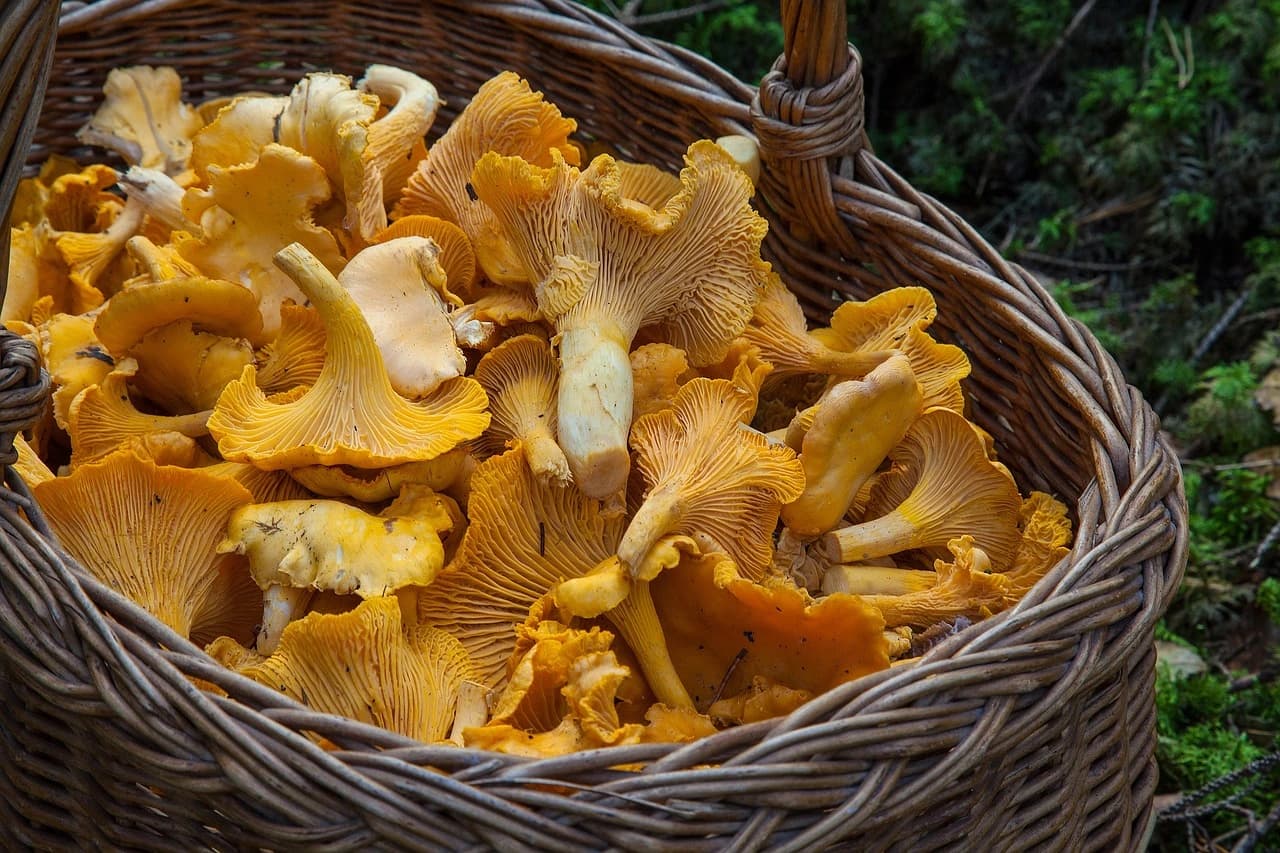
The Pacific Northwest — spanning Washington, Oregon, and coastal British Columbia — is one of the richest mushroom foraging regions on earth. The combination of mild temperatures, heavy rainfall, and vast old-growth conifer forests creates ideal conditions for an extraordinary diversity of edible species.
Top species to target:
- Chanterelles (Cantharellus formosus) — the flagship species, fruiting from late June through November in old-growth and mature second-growth forests
- Matsutake (Tricholoma murrillianum) — highly prized, found under conifers in sandy or volcanic soils from September through November
- King boletes (Boletus edulis) — associated with spruce and pine at mid to high elevations
- Hedgehog mushrooms — abundant in fall alongside chanterelles
- Lobster mushrooms — common in summer and early fall under hemlock and fir
- Cauliflower mushroom (Sparassis radicata) — a large, distinctive species found at the base of conifers
The PNW also produces exceptional winter foraging with yellowfoot chanterelles, winter chanterelles, and oyster mushrooms available from November through February in mild coastal areas. The region's commercial mushroom harvest is a multimillion-dollar seasonal industry.
Morel season in the Midwest typically runs from mid-April through late May, though exact timing varies by latitude and yearly weather patterns. The season progresses from south to north as soil temperatures reach the critical 10-15°C (50-60°F) range at four-inch depth.
Regional timing breakdown:
- Southern Midwest (Missouri, southern Illinois, southern Indiana): Early to mid-April
- Central Midwest (central Illinois, Indiana, Iowa): Mid to late April
- Northern Midwest (Michigan, Wisconsin, Minnesota): Late April through late May
Where to focus your search:
- Dying and dead elm trees — the single most reliable association in the Midwest
- Ash trees killed by emerald ash borer — increasingly productive as the blight spreads
- Old apple orchards — a classic Midwest morel habitat
- Cottonwood stands along river bottoms and flood plains
- South-facing slopes that warm earliest in spring
The Midwest morel culture is deeply ingrained — state festivals, competitive hunts, and family traditions revolve around the spring morel season. Michigan, Minnesota, and Wisconsin are the most celebrated morel states, with some foragers harvesting dozens of pounds in a good season.
The Appalachian Mountains host one of the most diverse temperate hardwood forests in the world, creating exceptional mushroom foraging from Georgia to Maine. The rich mix of oak, hickory, beech, maple, and tulip poplar supports a wide variety of mycorrhizal and saprobic species.
Prime species by season:
- Spring: Morels (particularly near tulip poplar and dying ash), dryad's saddle, oyster mushrooms
- Summer: Chanterelles (outstanding throughout the range), black trumpets, chicken of the woods, old man of the woods, indigo milkcap
- Fall: Hen of the woods (maitake), lion's mane, honey mushrooms, giant puffball, blewits, hedgehog mushrooms
- Winter: Oyster mushrooms, velvet shank, chaga on birch at higher elevations
Appalachian foraging advantages:
- Elevation diversity lets you follow species uphill through the season, extending harvest windows by weeks
- Rich cove forests at mid-elevations are among the most productive mushroom habitats in eastern North America
- Abundant rainfall throughout the growing season supports reliable fruiting
The southern Appalachians are particularly notable for chanterelles — the long, warm, humid summer produces one of the best chanterelle seasons anywhere in the country, often running from June through October.
Chanterelle season in the Pacific Northwest is remarkably long, typically running from late June through November, with peak harvest from September through October. The region's mild, wet climate and old-growth conifer forests create ideal conditions for extended fruiting.
Seasonal timeline:
- Late June-July: Early golden chanterelles appear at lower elevations following spring rains, particularly in mature Douglas fir stands
- August-September: Season builds as fall moisture returns, spreading to mid-elevation forests
- September-October: Peak season — the highest volume and best quality specimens across all elevations
- November-December: Late-season chanterelles continue until hard frosts, transitioning to winter chanterelles (yellowfoot) that persist even longer
Where to find PNW chanterelles:
- Old-growth and mature second-growth Douglas fir forests — the primary habitat
- Western hemlock and Sitka spruce forests along the coast
- Mossy, well-drained slopes with good air circulation
- Known productive areas include the Oregon Coast Range, Olympic Peninsula, and Vancouver Island
The Pacific chanterelle (Cantharellus formosus) is the dominant species, distinguished from the European C. cibarius by its slightly paler color and preference for conifer associations. Commercial harvest permits are available from the USFS for national forest lands.
The Northeast US and Eastern Canada share a broad region of mixed hardwood and boreal forests that support excellent mushroom diversity. From the Maritime provinces through New England and the Mid-Atlantic, the combination of four distinct seasons and adequate rainfall creates productive foraging territory.
Key species across the region:
- Chanterelles — abundant in hardwood forests from July through October, with the Northeast producing particularly fine black trumpets as well
- Hen of the woods (maitake) — one of the most reliable fall species, found at the base of oaks throughout the region
- Lion's mane — found on dead and dying hardwoods, especially beech and maple
- Chicken of the woods — widespread on oaks from late spring through fall
- Chaga — available on birch trees in northern areas and higher elevations year-round
- Giant puffball — common in meadows, pastures, and woodland edges in late summer and fall
Regional considerations:
- Death caps are spreading in the Northeast near imported European oaks — learn Amanita phalloides identification before foraging
- The Maritimes and northern Maine transition to boreal forest with different species including boreal boletes and matsutake
- Mycological societies throughout the region are among the oldest in North America and offer outstanding educational resources
Morel season in Western Canada and the Rocky Mountains runs from late April through mid-July, with timing driven primarily by elevation and the presence of previous-year wildfire burns. This region is famous for producing some of the largest morel harvests in North America.
Timing by area:
- BC interior valleys and low-elevation Rockies: Late April through May
- Mid-elevation mountain forests (1,000-1,800m): May through June
- High-elevation burn areas (1,800-2,500m): June through mid-July
- Alberta foothills: Mid-May through June
Fire morels dominate the Western Canadian harvest. The spring following a significant wildfire season can produce extraordinary fruitings in burned conifer forests, with experienced pickers harvesting 20-100+ pounds per day in prime burns. The BC interior is particularly renowned for fire morel productivity.
Where to search:
- Previous-year wildfire burns in pine, spruce, and fir forests — the single most productive habitat
- Cottonwood river bottoms in valley floors for yellow morels
- Aspen groves at mid-elevations
- Disturbed ground along logging roads and cleared areas
Commercial morel picking is a major seasonal industry in BC and Alberta, drawing pickers from across North America. Permits may be required on Crown land for commercial quantities, and some burned areas have restricted access.
The Southern US offers year-round foraging opportunities thanks to mild winters and a long growing season. From the Appalachian foothills to the Gulf Coast pine savannas, the region's diverse ecosystems support a wide variety of edible species that northern foragers rarely encounter.
Species highlights by season:
- Spring: Morels in the Appalachian foothills, chicken of the woods, oyster mushrooms, dryad's saddle
- Summer: Chanterelles (the South's signature species, with an exceptionally long season from June through October), chicken of the woods, old man of the woods, indigo milkcap, boletes
- Fall: Hen of the woods, lion's mane, honey mushrooms, chanterelles continuing into October, blewits
- Winter: Oyster mushrooms, wood ear (Auricularia), velvet shank — mild winters allow continued foraging
Southern foraging considerations:
- The green-spored parasol (Chlorophyllum molybdites) is extremely common in Southern lawns — it is the most frequently consumed toxic mushroom in the US
- Heat and humidity can make summer foraging physically demanding but create ideal fruiting conditions
- Pine forests along the Gulf Coast support different species than Appalachian hardwoods, including distinctive boletes and Russula species
The chanterelle season is the crown jewel of Southern foraging — lasting 4-5 months compared to 2-3 months in northern regions.
Porcini (Boletus edulis and related species) season in North America varies significantly by region, but the primary harvest window is late summer through fall, typically August through October. Porcini are mycorrhizal, forming partnerships with specific trees, so both timing and location depend on the host tree species and local climate.
Regional timing:
- Rocky Mountains (Colorado, Montana, Idaho): Late July through September, primarily under spruce at 2,000-3,000m elevation
- Pacific Northwest: August through October, under spruce, pine, and Douglas fir
- Northeast and Great Lakes: August through October, under spruce, pine, and some hardwoods
- California Sierras: September through November, especially after early fall rains
Key habitat associations:
- Spruce forests at mid to high elevations — the most reliable association in western North America
- Pine forests — both eastern white pine and western ponderosa support porcini
- Mixed birch-conifer forests in the Northeast and Great Lakes
Timing triggers: Porcini fruit in response to soaking rains followed by warm days and cool nights. The classic trigger is a multi-day rain event followed by 3-7 days of clearing weather. Monitor weather patterns and plan trips accordingly rather than relying on fixed calendar dates.
California's diverse geography — from coastal redwood forests to Sierra Nevada peaks to Mediterranean grasslands — supports a surprisingly rich and unique mushroom flora that differs significantly from other North American regions. The state's distinct wet-winter, dry-summer climate means the foraging calendar is shifted compared to eastern regions.
Top species by region and season:
- Coastal fog belt (November-March): Chanterelles under live oaks and tanoak, hedgehog mushrooms, black trumpets, yellowfoot chanterelles
- Sierra Nevada (August-November): King boletes (porcini) under conifers, matsutake, hawk wing mushrooms
- Oak woodlands (November-February): Black trumpets, chanterelles, candy cap mushrooms (Lactarius fragilis group — uniquely maple-scented)
- Grasslands (November-March): Blewits, field mushrooms, giant puffballs after heavy rains
California-specific highlights:
- Candy caps — found almost exclusively in California and southern Oregon, prized for their maple syrup aroma
- Coastal chanterelle season runs from November through February, peaking after winter storms
- Death caps are well-established around imported oaks in the Bay Area and other urban zones — extreme caution is required with any white Amanita
California's foraging season is essentially the opposite of the rest of North America — the best months are November through March, driven by winter rains.
Hen of the woods (Grifola frondosa), also called maitake, has a relatively narrow fall season running from September through November in most of its North American range. It is one of the most predictable and rewarding fall foraging targets because it returns to the same trees year after year.
Seasonal timeline:
- Early September: First specimens appear at the base of oaks in southern portions of the range
- Mid-September through October: Peak season across the Midwest, Northeast, and Mid-Atlantic
- Late October-November: Late specimens in warmer microclimates and southern areas
Where to find maitake:
- At the base of living and dead oak trees — this is the primary and most reliable association
- Occasionally near other hardwoods including maple, elm, and beech, but oak is dominant
- The same tree produces year after year — once you find a productive oak, mark it and return each fall
- Urban and suburban oaks in parks, yards, and along streets can be productive
Harvest tips:
- Cut the entire rosette at the base with a knife rather than pulling it from the ground
- Harvest when firm and fresh — specimens become tough and insect-damaged as they age
- A single cluster can weigh 5-25 kg (10-50 pounds), so bring a large bag or box
- Clean thoroughly between the overlapping layers where dirt and insects accumulate
Texas and the Gulf states (Louisiana, Mississippi, Alabama, Florida) offer year-round foraging driven by warm temperatures and abundant rainfall, though species and timing differ significantly from northern regions. The subtropical and tropical elements create unique foraging opportunities found nowhere else in North America.
Key species and timing:
- Chanterelles (June-October): Exceptionally productive across east Texas, Louisiana, and Mississippi, often fruiting after summer thunderstorms
- Chicken of the woods (spring-fall): Common on hardwoods throughout the region, with a long season
- Oyster mushrooms (fall-spring): Fruit during cooler months on dead hardwoods
- Indigo milkcap (summer-fall): A striking blue species found under pines and oaks, edible and distinctive
- Wood ear / Auricularia (year-round): Thrives in the humid Gulf climate on dead hardwoods
- Caesar's mushroom (summer): Amanita jacksonii, a choice edible Amanita found in the South
Gulf state foraging considerations:
- Extreme summer heat and humidity make foraging physically challenging but create ideal fruiting conditions
- The green-spored parasol is abundant in lawns and parks — always spore-print white parasol-type mushrooms
- Pine forests across the Gulf coastal plain support distinctive bolete and Russula species
- Florida has tropical species not found elsewhere in the US, including some that are poorly documented
Canada's boreal forest — the vast belt of spruce, pine, birch, and aspen stretching from Newfoundland to the Yukon — supports a distinct mushroom community adapted to cold winters and acidic soils. While species diversity is lower than in temperate hardwood forests, the boreal produces some highly prized edibles in impressive quantities.
Key boreal species:
- King boletes (Boletus edulis) — found under spruce and birch, often fruiting in large numbers after summer rains
- Chaga (Inonotus obliquus) — abundant on birch trees throughout the boreal zone, harvestable year-round
- Chanterelles — both golden chanterelles and winter chanterelles grow in boreal mixed forests
- Admirable bolete (Aureoboletus mirabilis) — a beautiful bolete found under conifers
- Hedgehog mushrooms — common in mossy spruce and fir forests
- Lobster mushrooms — found where Russula and Lactarius are abundant
Boreal foraging considerations:
- The season is compressed — most productive months are July through September
- Mosquitoes and black flies are intense during peak season in June and July
- Access can be challenging — many productive areas are remote and accessible only by logging roads or canoe
- Berry and mushroom picking are traditional activities for Indigenous communities throughout the boreal — respect local customs and land use
Fire morels can be exceptionally productive in boreal burns, with massive fruitings the spring following forest fires in spruce and pine stands.
Matsutake (Tricholoma murrillianum in western North America, T. matsutake in some classifications) is found primarily in Pacific coastal forests from California to British Columbia, with smaller populations in the Rocky Mountains and scattered eastern locations. It is one of the most commercially valuable wild mushrooms, with prime specimens fetching high prices.
Primary harvesting regions:
- Pacific Northwest (Oregon, Washington, BC): The heart of the North American matsutake harvest, particularly in old-growth and mature second-growth Douglas fir, hemlock, and pine forests
- Northern California: Found under pine and tanoak in the coastal mountains
- Rocky Mountains: Scattered populations under lodgepole pine and spruce in Idaho, Montana, and Colorado
- Great Lakes region: Rare populations under jack pine and red pine in Michigan, Wisconsin, and Minnesota
Habitat requirements:
- Sandy, well-drained soils — often volcanic or glacial soils with low organic content
- Conifer associations — primarily with pine, Douglas fir, and hemlock
- Sparse ground cover — matsutake prefers open forest floors without heavy leaf litter
- Consistent, reliable spots — matsutake returns to the same locations annually, and productive sites are closely guarded secrets
Season runs from September through November, triggered by fall rains and cooling temperatures. The distinctive spicy, cinnamon-like aroma is the key confirmation feature — no other mushroom in North America smells like matsutake.
The Great Plains and prairies present a unique foraging challenge — the vast grasslands lack the forests that most edible mushrooms depend on. However, several excellent edible species thrive in prairie habitats, and foragers who know where to look can find rewarding harvests in this overlooked region.
Prairie-adapted edible species:
- Giant puffball (Calvatia gigantea) — the signature prairie mushroom, found in meadows, pastures, and along fence lines from late summer through fall
- Shaggy mane (Coprinus comatus) — common in disturbed grasslands, lawns, roadsides, and after rain events
- Fairy ring mushroom (Marasmius oreades) — forms distinctive rings in lawns and pastures, though caution is needed due to toxic look-alikes in the same habitat
- Morels — found in river bottoms along cottonwood, elm, and ash in spring, particularly along prairie waterways
- Meadow mushroom (Agaricus campestris) — grows in pastures and grasslands, though extreme care is needed to distinguish from toxic white Amanitas
Foraging strategy for prairie regions:
- Focus on riparian corridors — river and stream bottoms with cottonwood, elm, and willow support morels, oysters, and other woodland species
- Urban and suburban areas — city parks, golf courses, and residential lawns produce puffballs, shaggy manes, and fairy ring mushrooms
- Shelterbelts and planted windbreaks — these linear woodlands can support surprising mushroom diversity
Always be cautious with white mushrooms found in grass — the deadly green-spored parasol and occasional Amanita species grow in prairie habitats.
Need more help? Dr. Myco can answer follow-up questions about north american foraging by region based on thousands of real growing experiences.
Ask Dr. MycoMore in Foraging & Wild ID
Foraging Basics & Safety
10 tips
Choice Edible Species
12 tips
Deadly & Toxic Species
14 tips
Regional Foraging Guides
9 tips
Visual Identification Guide
17 tips
Chaga Identification & Harvesting
10 tips
Morel Foraging Guide
10 tips
Morel & Chanterelle Varieties
10 tips
European Foraging Guide
12 tips
Southern Hemisphere & Tropical Foraging
10 tips
Foraging Species by Season
12 tips
Where to Find Wild Mushrooms
15 tips
Mushroom Habitats & Tree Associations
12 tips
Chanterelle Species by Region
12 tips
Morel Species by Region
12 tips
Chicken of the Woods & Turkey Tail by Region
10 tips
Deadly Mushrooms — Where They Actually Grow
10 tips
Wild Lion's Mane, Hedgehog & Lobster Mushrooms
10 tips
Porcini, Black Trumpet & Other Choice Edibles
10 tips