Mushroom Habitats & Tree Associations
12 tips in Foraging & Wild ID
By Andrew Langevin · Founder, Nature Lion Inc · Contributing author, Mushroomology (Brill, 2026)
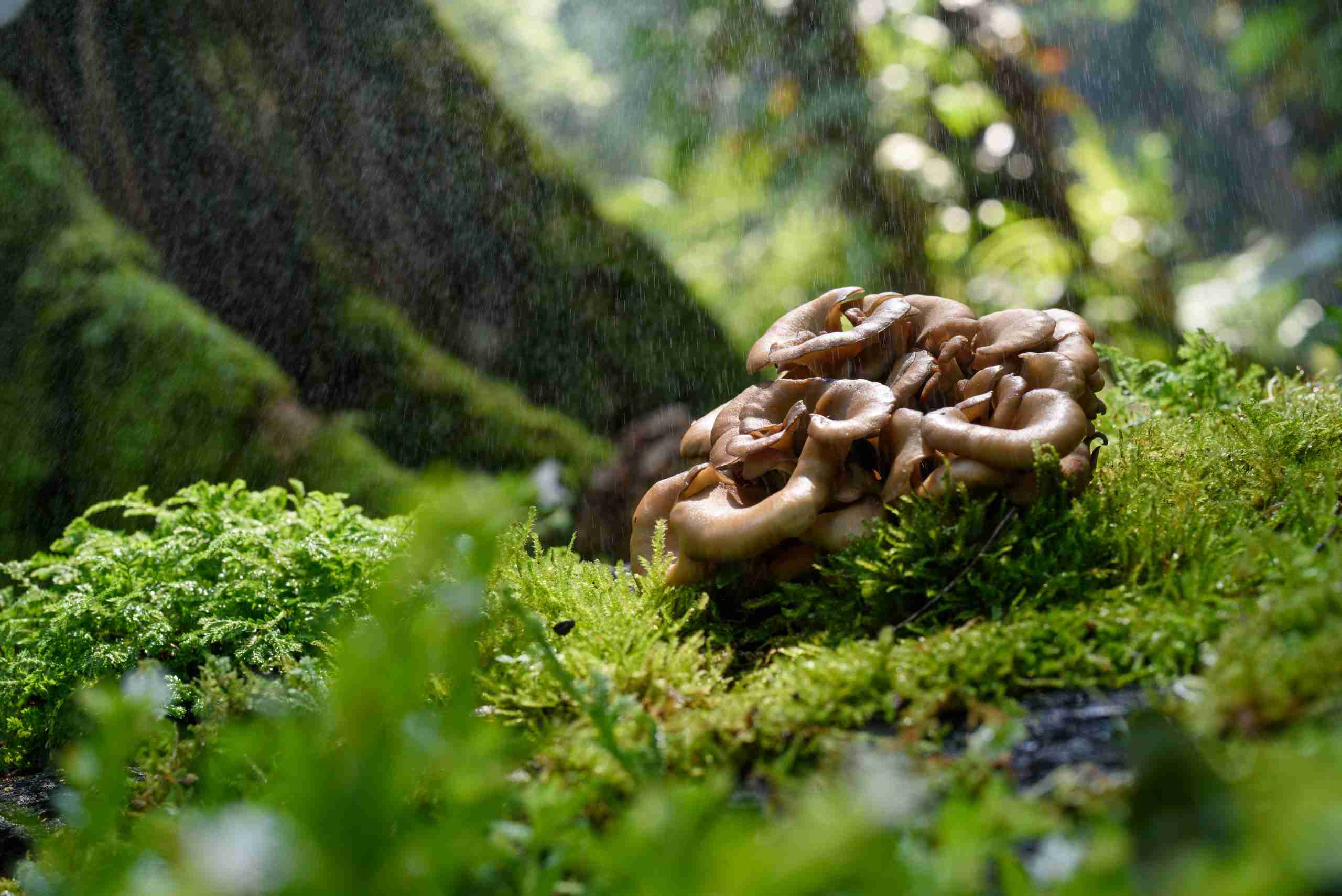
Birch trees support several distinctive and highly sought-after fungal species, both mycorrhizal partners in the soil and saprobic species on the wood itself. The most notable birch-associated mushrooms are chaga, birch polypore, birch bolete, and oyster mushrooms.
Key birch-associated species:
- Chaga (*Inonotus obliquus*): Forms black, charcoal-like conks on living birch trunks. Harvested for tea and extracts, chaga grows slowly over 5-20 years and is increasingly overharvested in some regions
- Birch polypore (*Fomitopsis betulina*): A smooth, white to brown bracket fungus found almost exclusively on dead birch. Historically used as tinder and traditional medicine
- Birch bolete (*Leccinum scabrum*): A mycorrhizal species with a brown cap and black-scaly white stem, found in the soil near birch roots from summer through fall
- Oyster mushrooms (*Pleurotus ostreatus*): Commonly fruit on dead birch logs and standing dead trees
- Fly agaric (*Amanita muscaria*): The iconic red-and-white spotted mushroom forms mycorrhizal bonds with birch (toxic — do not eat)
Birch forests are among the most productive habitats for beginner foragers because the tree is easy to identify and its associated fungi are relatively distinctive.
Oak trees are the single most important tree genus for mushroom foragers in temperate regions, supporting more prized edible species than any other tree. Oak associates include hen of the woods, chicken of the woods, chanterelles, black trumpets, and sulfur shelf — making oak forests the most productive foraging habitat.
Key oak-associated species:
- Hen of the woods (*Grifola frondosa*): Grows at the base of living oaks, returning to the same tree annually
- Chicken of the woods (*Laetiporus sulphureus*): Bright orange brackets on dead and dying oak trunks and branches
- Chanterelles (*Cantharellus* spp.): Mycorrhizal with oak roots, fruiting in the surrounding soil
- Black trumpets (*Craterellus cornucopioides*): Found in oak leaf litter on mossy slopes
- Boletes (*Boletus* spp.): Several excellent edible boletes partner with oaks
- Sulfur shelf: Another name for chicken of the woods when growing specifically on oak
If you can only learn one tree for foraging, learn to identify oaks. Their distinctive lobed leaves, acorns, and rugged bark make them easy to recognize. A single mature oak can support multiple edible fungal species simultaneously.
Pine forests host a distinct set of mycorrhizal mushrooms that differ significantly from hardwood associates. Key pine-associated species include matsutake, king bolete, slippery jack, saffron milk cap, and pine spike — all forming underground partnerships with pine roots.
Notable pine-associated species:
- Matsutake (*Tricholoma matsutake*): Grows in sandy soils under lodgepole, jack, and shore pine. One of the world's most valuable wild mushrooms
- King bolete (*Boletus edulis*): Found under various pine species at mid to high elevations
- Slippery jack (*Suillus luteus*): A common and easily recognized bolete with a slimy brown cap, found in pine plantations worldwide
- Saffron milk cap (*Lactarius deliciosus*): Bright orange with green-staining flesh, found exclusively under pines. The most popular foraging target in Australia
- Pine spike (*Chroogomphus rutilus*): An underappreciated edible with a pointed cap and smoky flavor
Pine plantations are excellent foraging sites for beginners because the even-aged trees create uniform habitat and the open understorey makes spotting mushrooms easier. The needle litter also provides good contrast for mushroom caps. Look 1-3 m from the trunk base where feeder roots are most active.
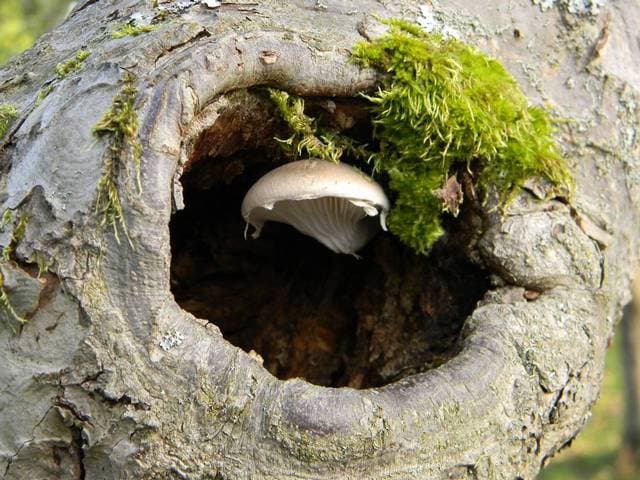
Dead logs are among the richest microhabitats for edible fungi, supporting saprobic species that decompose wood for nutrition. The most common and prized log-dwelling species are oyster mushrooms, lion's mane, turkey tail, chicken of the woods, and artist's conk.
What to look for on dead logs:
- Oyster mushrooms (*Pleurotus* spp.): Shelf-like clusters on hardwood logs, available nearly year-round in mild climates
- Lion's mane (*Hericium erinaceus*): White, shaggy masses on beech and maple logs and standing dead trees
- Chicken of the woods (*Laetiporus* spp.): Bright orange brackets, especially on oak logs and stumps
- Turkey tail (*Trametes versicolor*): Colorful banded brackets used for medicinal tea, extremely common on all hardwood logs
- Artist's conk (*Ganoderma applanatum*): Large, woody shelf fungus used in traditional medicine and art
- Shiitake relatives (*Lentinula* spp.): Wild relatives of cultivated shiitake on oak logs in some regions
The stage of decomposition matters. Freshly fallen logs (1-3 years dead) attract different species than well-rotted logs. Oysters and chicken of the woods prefer fresher wood, while lion's mane and artist's conk appear on older, more decayed logs. Check both the top and underside of logs — many species fruit on the shaded, moist underside.
Grasslands and meadows support a distinct group of saprobic mushrooms that decompose grass roots and organic matter in the soil. Common meadow species include giant puffball, fairy ring mushroom, field mushroom, shaggy mane, and horse mushroom — all growing independently of trees.
Key grassland species:
- Giant puffball (*Calvatia gigantea*): Unmistakable white spheres up to 50 cm across in pastures and meadows. Edible when the interior is pure white
- Fairy ring mushroom (*Marasmius oreades*): Forms distinctive dark-green circles in lawns and pastures. Small but flavorful with a nutty taste
- Field mushroom (*Agaricus campestris*): The wild ancestor of the button mushroom, found in well-grazed pastures with pink gills that darken to brown
- Shaggy mane (*Coprinus comatus*): Tall, cylindrical white mushrooms that appear in disturbed grassland, roadsides, and lawns. Must be eaten within hours of harvest before they dissolve into black ink
- Horse mushroom (*Agaricus arvensis*): Large, white, with an anise-like smell, found in pastures and parkland
Exercise extreme caution with white mushrooms in grass — the deadly destroying angel (Amanita bisporigera) can appear in grassy areas near trees. Always check for a volva (cup at the base) and take a spore print.
Rain is the primary trigger for mushroom fruiting, but different species respond at different speeds. The fastest responders appear within 1-3 days of heavy rain, while most prized edibles need 5-14 days of sustained soil moisture to develop full-sized fruiting bodies.
Response times by species:
- 1-3 days after rain: Inky caps, shaggy mane, fairy ring mushrooms, and small lawn fungi appear rapidly
- 3-7 days after rain: Oyster mushrooms, field mushrooms, puffballs, and many common woodland species
- 7-14 days after rain: Chanterelles, boletes, hen of the woods, and most mycorrhizal species that build large fruiting bodies
- Season-long moisture needed: Matsutake, truffles, and some boletes require sustained seasonal moisture rather than a single rain event
Temperature matters as much as moisture. A summer thunderstorm followed by 20-25°C days triggers different species than autumn rain at 10-15°C. The ideal combination for most temperate edibles is 25-50 mm of rain followed by 5-7 days of mild temperatures (10-20°C) without additional heavy rain. Experienced foragers maintain rain logs and correlate them with fruiting observations to refine their timing year after year.
Compost piles, wood chip mulch, and garden beds provide nutrient-rich substrates that support vigorous saprobic fungi. Common compost and mulch species include wine cap, shaggy mane, inky caps, and field mushrooms — many of which are excellent edibles that thrive in human-modified landscapes.
Species to look for:
- Wine cap (*Stropharia rugosoannulata*): The king of mulch mushrooms. Large burgundy caps on thick stems, found in hardwood chip beds. One of the best-tasting wild mushrooms
- Shaggy mane (*Coprinus comatus*): Appears in disturbed soil and compost edges, especially where soil has been mixed with organic matter
- Inky caps (*Coprinopsis* spp.): Clusters of small gray mushrooms that dissolve into black ink within hours. Edible when young, but C. atramentaria causes severe reactions with alcohol
- Field mushroom (*Agaricus campestris*): Occasionally fruits from rich compost
- Garden giant (*Stropharia rugosoannulata*): Another name for wine cap when cultivated in garden beds
Mulch beds in their second year are the most productive — fresh chips need time for mycelium to colonize, while very old mulch has been fully decomposed. Avoid eating mushrooms from mulch treated with pesticides, herbicides, or dyed colorants, as these chemicals can concentrate in fungal tissue.
High-elevation forests above 2,000 m support specialized mushroom communities adapted to short growing seasons, cool temperatures, and specific tree associations. Key alpine species include king bolete, matsutake, fire morels, and various high-altitude chanterelle and Russula species.
Notable high-elevation species:
- King bolete (*Boletus edulis*): Thrives at 2,000-3,000 m in spruce and fir forests, often producing larger and less insect-damaged specimens than at lower elevations
- Matsutake (*Tricholoma murrillianum*): Found at mid to high elevations in conifer forests of the Pacific Northwest and Rocky Mountains
- Fire morels (*Morchella* spp.): Appear in enormous quantities the spring after high-elevation forest fires, sometimes producing hundreds of kg per hectare
- Alpine chanterelles: Several species fruit in subalpine meadows and forest edges
- Hawk wing (*Sarcodon imbricatus*): A scaly-capped tooth fungus found under spruce at elevation
High-elevation foraging has a compressed season — typically July through September, compared to April through November at low elevation. Snow melt timing determines the start of the season, and early fall frosts end it abruptly. Monitor snowpack reports and plan your trips for 3-4 weeks after snow clears from your target elevation.
Wetlands, river corridors, and flood plains support unique mushroom communities tied to moisture-loving tree species and rich alluvial soils. Key wetland-associated species include morels along waterways, oysters on cottonwood, giant puffballs in river meadows, and various species adapted to periodically flooded soils.
What to find in riparian habitats:
- Morels (*Morchella* spp.): Cottonwood, elm, and ash groves along rivers are classic morel habitat, especially in the Midwest and Great Plains
- Oyster mushrooms (*Pleurotus* spp.): Cottonwood, willow, and box elder logs along rivers produce large flushes
- Giant puffball (*Calvatia gigantea*): Frequents river meadows and flood plain pastures with rich soil
- Shaggy mane (*Coprinus comatus*): Common along riverbanks and levees where soil is disturbed
- Honey mushroom (*Armillaria* spp.): Attacks stressed trees along waterways, fruiting in large clusters at the base
River corridors act as fungal highways — flowing water distributes spores downstream, and the consistently moist microclimate supports fruiting even during dry periods. Check areas 2-5 days after high water events, as the moisture and nutrient deposit from flooding can trigger impressive mushroom flushes along the high-water line.
Urban environments produce surprisingly good mushroom foraging opportunities, with many species thriving on landscape trees, mulch beds, and managed lawns. Common urban finds include chicken of the woods, shaggy mane, oyster mushrooms, fairy ring mushrooms, and dryad's saddle — all growing in parks, along streets, and in residential yards.
Urban species to watch for:
- Chicken of the woods (*Laetiporus* spp.): Fruits on ornamental oaks, cherries, and old stumps in parks and yards
- Shaggy mane (*Coprinus comatus*): Abundant in disturbed soil along sidewalks, parking lots, and construction sites
- Oyster mushrooms (*Pleurotus* spp.): Found on dead street trees, storm-damaged limbs, and wood chip piles
- Fairy ring mushroom (*Marasmius oreades*): Common in well-maintained lawns and athletic fields
- Dryad's saddle (*Cerioporus squamosus*): A large, shelf-like mushroom on wounded urban trees, especially elm and maple
- Hen of the woods (*Grifola frondosa*): Frequently fruits at the base of urban oaks in parks and along streets
Urban foraging requires extra caution about contamination. Avoid mushrooms growing near heavily trafficked roads (lead and heavy metals), recently treated lawns (pesticides and herbicides), or industrial sites. Parks with organic management practices are the safest urban foraging sites.
Coastal habitats including sand dunes, maritime forests, and beach-adjacent woodlands support specialized fungal communities adapted to sandy, salt-influenced soils. Sand-loving species include several unique boletes, agarics, and puffballs that grow exclusively in coastal dune ecosystems and pine forests near the ocean.
Coastal species to discover:
- Sand-dwelling boletes (*Suillus* spp.): Several species associate with shore pine and beach grass in coastal dune systems
- Matsutake (*Tricholoma* spp.): Coastal populations near shore pine on the Pacific coast are among the most productive in North America
- Dune stinkhorn (*Phallus hadriani*): A pink-based stinkhorn found in sand dunes, edible only at the "egg" stage
- Sandy puffballs (*Lycoperdon* spp.): Small puffballs that fruit in beach grass and dune areas
- Coastal chanterelles: Pacific golden chanterelles near shore pine in coastal forests
Coastal foraging is highly seasonal — most species fruit from late summer through fall when fog moisture supplements rainfall. The interface between beach dune systems and coastal pine forests is particularly productive. Be aware of protected dune habitats — many coastal areas are ecologically sensitive, and foraging may be restricted to protect endangered plants and nesting shorebirds. Check local regulations before collecting.
Yes, combining tree identification with soil analysis gives you a powerful predictive framework for finding wild mushrooms. Experienced foragers can walk into an unfamiliar forest, identify the dominant trees and soil characteristics, and predict with reasonable accuracy which edible species are likely to fruit there.
The prediction framework:
- Step 1 — Identify dominant trees: Oak, beech, birch, pine, spruce, hemlock, and their associates each predict specific mushroom communities
- Step 2 — Assess soil type: Sandy and well-drained (matsutake, boletes) vs. rich and loamy (morels, chanterelles) vs. clay-heavy (fewer species)
- Step 3 — Check soil pH: Acidic soils (pH 4.0-5.5) favor chanterelles and boletes. Near-neutral soils (pH 6.0-7.0) favor morels and field mushrooms
- Step 4 — Evaluate moisture: Consistent moisture from slope aspect, canopy cover, or proximity to water increases probability
- Step 5 — Consider disturbance history: Recent fires, logging, or tree death can trigger specific species like morels or honey mushrooms
This approach is not foolproof — even in perfect habitat, mushrooms may not fruit in dry years or off-seasons. But it dramatically narrows your search area. Keep a foraging journal recording GPS coordinates, tree species, soil observations, weather conditions, and what you found. After 2-3 seasons, clear patterns emerge that guide you to productive spots reliably.
Need more help? Dr. Myco can answer follow-up questions about mushroom habitats & tree associations based on thousands of real growing experiences.
Ask Dr. MycoMore in Foraging & Wild ID
Foraging Basics & Safety
10 tips
Choice Edible Species
12 tips
Deadly & Toxic Species
14 tips
Regional Foraging Guides
9 tips
Visual Identification Guide
17 tips
Chaga Identification & Harvesting
10 tips
Morel Foraging Guide
10 tips
Morel & Chanterelle Varieties
10 tips
North American Foraging by Region
14 tips
European Foraging Guide
12 tips
Southern Hemisphere & Tropical Foraging
10 tips
Foraging Species by Season
12 tips
Where to Find Wild Mushrooms
15 tips
Chanterelle Species by Region
12 tips
Morel Species by Region
12 tips
Chicken of the Woods & Turkey Tail by Region
10 tips
Deadly Mushrooms — Where They Actually Grow
10 tips
Wild Lion's Mane, Hedgehog & Lobster Mushrooms
10 tips
Porcini, Black Trumpet & Other Choice Edibles
10 tips