European Foraging Guide
12 tips in Foraging & Wild ID
By Andrew Langevin · Founder, Nature Lion Inc · Contributing author, Mushroomology (Brill, 2026)
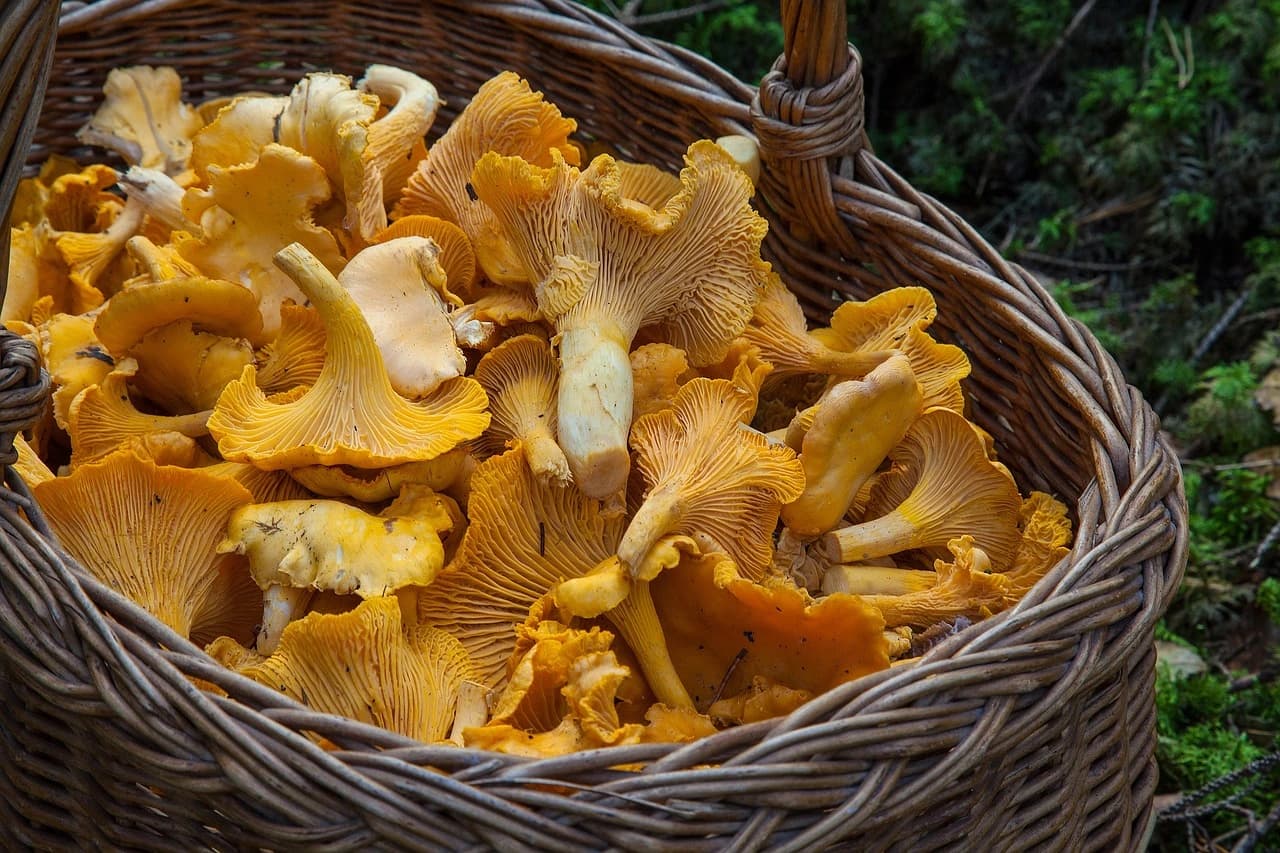
The UK and Ireland offer excellent mushroom foraging thanks to their mild, wet Atlantic climate and diverse mix of ancient woodlands, grasslands, and heathlands. While the species list is smaller than continental Europe, several world-class edibles are abundant and accessible.
Top edible species:
- Chanterelles (Cantharellus cibarius) — found in broadleaf and conifer forests from July through November
- Cep / penny bun (Boletus edulis) — the prized porcini, found under oaks, birch, and beech
- Hedgehog mushroom (Hydnum repandum) — common in mixed woodlands, excellent for beginners due to no dangerous look-alikes
- Giant puffball — found in meadows, parks, and woodland edges in late summer and autumn
- Field mushroom (Agaricus campestris) — common in horse pastures and meadows
- Wood blewit — a distinctive purple-lilac mushroom of late autumn
Key safety concerns:
- Death caps (Amanita phalloides) are native to the UK and Ireland and common under oak and beech
- Destroying angels (Amanita virosa) are found in woodlands across both countries
- The Cortinarius genus is large and poorly understood — avoid all brown webcap-type mushrooms
Foraging in the UK is a growing cultural movement, with guided forays, wild food restaurants, and mycological societies active across the country. The British Mycological Society is the primary national organization.
The main mushroom season in the UK runs from late August through November, with peak diversity and abundance in September and October. However, the mild Atlantic climate means that some species can be found year-round in sheltered locations.
Seasonal breakdown:
- Spring (March-May): St. George's mushroom (appearing around St. George's Day, April 23rd), morels in chalky soils and disturbed ground, dryad's saddle
- Early summer (June-July): Chicken of the woods, early chanterelles in Scotland, summer cep
- Late summer (August-September): Season builds rapidly — chanterelles, ceps, parasol mushrooms, field mushrooms, giant puffballs
- Autumn peak (September-November): The main event — hedgehog mushrooms, wood blewits, honey fungus, amethyst deceiver, horn of plenty (black trumpet), winter chanterelles
- Winter (December-February): Velvet shank, oyster mushrooms, wood ear, and scarlet elf cup in mild spells
Weather triggers to watch:
- Heavy rain followed by mild weather produces the best flushes, particularly in September and October
- A warm, wet September is the gold standard for UK mushroom foraging
- Early hard frosts can end the season abruptly, while mild autumns extend it into December
Scotland generally has a slightly earlier and longer chanterelle season than England due to its extensive conifer and birch forests.
France has arguably the strongest wild mushroom culture in Western Europe, with foraging deeply integrated into national cuisine, rural traditions, and even the healthcare system. French pharmacists are trained to identify common edible and toxic mushrooms, and foragers routinely bring their harvest to the pharmacy for confirmation.
Iconic French foraging species:
- Cèpe de Bordeaux (Boletus edulis) — the king of French mushrooms, found under oaks, beeches, and chestnuts in forests across the country
- Girolle (chanterelle) — harvested in enormous quantities from forests nationwide
- Trompette de la mort (Craterellus cornucopioides) — the black trumpet, a gourmet favorite
- Morille (morel) — prized in French haute cuisine, found in spring in calcareous soils and old orchards
- Pied de mouton (hedgehog mushroom) — popular in markets and restaurants
- Truffe (Tuber melanosporum) — the legendary black Périgord truffle, technically a fungus found with trained dogs under oak trees
French foraging culture:
- Pharmacists will identify your mushrooms for free — a service unique to France and invaluable for safety
- Wild mushrooms appear routinely in markets and restaurant menus during autumn
- Regional regulations vary — some forests have harvest limits or permit requirements
France's diverse ecosystems — from Atlantic coast to Mediterranean, from Alpine to lowland — support an extraordinary range of species throughout a long foraging season.
Germany, Austria, Switzerland, and the Czech Republic have strong mushroom foraging traditions deeply embedded in regional culture and cuisine. Central European forests — a mix of beech, oak, spruce, and pine — support excellent species diversity, and wild mushrooms are a regular feature of autumn markets and restaurants.
Popular foraging species:
- Steinpilz (Boletus edulis) — king bolete, the most prized species across the region
- Pfifferling (chanterelle) — widely harvested and sold in markets throughout the autumn season
- Maronenröhrling (Imleria badia) — bay bolete, extremely common under conifers and a reliable beginner species
- Parasol mushroom (Macrolepiota procera) — a large, distinctive species popular in German and Austrian cuisine, often breaded and fried
- Hallimasch (honey fungus) — popular in Central European cooking despite being mildly toxic when raw
- Morchel (morel) — found in spring in orchards, parks, and disturbed ground
Central European foraging regulations:
- Germany: Foraging for personal use is allowed in most forests with a daily limit (typically 1-2 kg). Commercial harvesting requires permits
- Austria: Similar personal-use allowances, with regional variations in quantity limits
- Switzerland: Canton-specific regulations — some areas restrict foraging days and quantities
- Czech Republic: Strong foraging tradition with relatively relaxed regulations for personal use
Mushroom identification courses and guided forays are widely available through nature conservation organizations, adult education centers (Volkshochschulen), and mycological societies across the region.
Chanterelle season in Northern Europe typically runs from late June through November, with the specific timing depending on latitude, elevation, and local weather patterns. The chanterelle is the most popular and commercially important wild mushroom in Scandinavia and the Baltic states.
Regional timing:
- Southern Scandinavia and Baltics (Denmark, southern Sweden, Latvia, Lithuania): Late June through October, peaking in August and September
- Central Scandinavia (central Sweden, southern Norway, southern Finland): July through October, peaking in late August through September
- Northern Scandinavia (northern Sweden, northern Norway, northern Finland): Late July through September, with a compressed but intense season
Species variety:
- Golden chanterelle (Cantharellus cibarius) — the primary target, abundant in mixed forests across the region
- Winter chanterelle / yellowfoot (Craterellus tubaeformis) — extends the season into November and December, found in mossy conifer forests
- Black trumpet (Craterellus cornucopioides) — found under beech and oak in southern portions of the range
Harvesting culture and scale:
- Sweden alone produces 50-100 tonnes of commercially harvested chanterelles annually, with domestic consumption far exceeding this through private foraging
- Chanterelles are sold in every supermarket during season and are a routine ingredient in Scandinavian home cooking
- The right to roam means anyone can pick chanterelles on any land, though commercial quantities may require landowner permission in some jurisdictions
Eastern Europe — Poland, Russia, Ukraine, Romania, and the Baltic states — has perhaps the strongest mushroom foraging culture in the world. In these countries, mushroom picking is not a niche hobby but a mainstream seasonal activity practiced by millions of families, with deep roots in folk traditions, cuisine, and cultural identity.
Most popular species:
- King bolete / cep (Boletus edulis) — called "borovik" in Russian, "borowik" in Polish — the most prized species across the region
- Birch bolete (Leccinum scabrum) — extremely common and widely collected under birch trees
- Orange-cap bolete (Leccinum aurantiacum) — a striking orange-capped species found under aspen
- Chanterelles — widely harvested and preserved (pickled, dried, and frozen) for winter use
- Honey mushrooms (Armillaria) — extremely popular in Russia and Poland, often pickled
- Russula species — many species collected as everyday eating mushrooms, particularly in Russia
Eastern European foraging traditions:
- Mushroom picking is a family and social activity — weekend trips to the forest during autumn are a deeply embedded cultural tradition
- Preservation is central — salting, pickling, drying, and freezing mushrooms for winter consumption is routine
- "Quiet hunting" (tikhaya okhota) is the Russian term for mushroom foraging, reflecting its importance as a cultural practice
- Markets overflow with wild mushrooms during autumn, sold by individual foragers and commercial harvesters alike
Foraging knowledge is transmitted across generations and is considered basic cultural literacy in much of Eastern Europe.
Europe is home to several of the world's most lethal mushroom species, and the continent's long foraging tradition means that poisoning incidents, while relatively rare, do occur every year — particularly among immigrant communities unfamiliar with local toxic species and their resemblance to edible species from their home countries.
The most dangerous European species:
- Death cap (Amanita phalloides) — responsible for over 90% of fatal mushroom poisonings in Europe. Native to European oak and beech forests, it contains amatoxins that cause liver failure 2-5 days after ingestion
- Destroying angel (Amanita virosa) — an all-white species containing the same lethal amatoxins as the death cap
- Deadly webcap (Cortinarius rubellus) — contains orellanine, which causes kidney failure with symptoms delayed 2-14 days
- Fool's webcap (Cortinarius orellanus) — same orellanine toxin as the deadly webcap
- Fool's funnel (Clitocybe rivulosa) — contains muscarine at potentially lethal levels, grows in lawns and grasslands
- Panther cap (Amanita pantherina) — causes severe neurological symptoms and occasional fatalities
Key risk factors in Europe:
- Immigrants from East Asia sometimes confuse the death cap with the edible paddy straw mushroom
- The destroying angel closely resembles edible field mushrooms and young puffballs
- Many European countries have poison centers with specialized mycological expertise — know your local emergency number before foraging
Mushroom foraging legality varies widely across Europe, ranging from full freedom under right-to-roam laws to strict permit requirements and outright bans in certain protected areas. Understanding local regulations is essential before foraging in any European country.
Country-by-country overview:
- Sweden, Norway, Finland: Protected by right-to-roam laws (allemansrätten/allemannsretten/jokamiehenoikeus). Free picking for personal use on all land, including private property. Commercial harvesting may require landowner permission
- UK: No universal right to forage. Permitted for personal use in many public areas, but specific restrictions apply in nature reserves, Sites of Special Scientific Interest, and Royal Parks. Commercial foraging generally requires permission
- France: Permitted in most public forests for personal use, but local regulations vary. Some forests impose daily quantity limits (typically 5-10 kg)
- Germany: Personal-use foraging allowed in most forests with a daily limit of 1-2 kg. Protected species cannot be collected. Commercial harvesting requires permits
- Switzerland: Canton-specific rules — some cantons restrict foraging to certain days of the week and impose strict quantity limits
- Italy: Regional permit systems — many regions require a foraging permit (tesserino) and impose daily limits
- Poland, Czech Republic, Romania: Generally permissive for personal use in public forests
National parks and nature reserves across Europe typically prohibit or restrict foraging regardless of national laws. Always check local regulations before foraging in protected areas.
Mediterranean climates — found across southern Europe, including southern France, Spain, Italy, Greece, and coastal Turkey — support a distinctive mushroom flora adapted to hot, dry summers and mild, wet winters. The foraging season is shifted compared to northern Europe, with autumn and winter being the most productive months.
Key Mediterranean species:
- Saffron milk cap (Lactarius deliciosus) — the signature Mediterranean edible, found under pine trees from October through December. Prized in Spanish, Catalan, and southern French cuisine
- Caesar's mushroom (Amanita caesarea) — a spectacular orange-capped Amanita that is one of Europe's most prized edibles, found under oaks and chestnuts
- Black truffle (Tuber melanosporum) — the legendary Périgord truffle, found in calcareous soils under oak trees from November through March
- King bolete — found in oak and chestnut forests during autumn rain events
- Parasol mushroom — common in Mediterranean grasslands and open woodlands
- Oyster mushrooms — available on dead hardwoods through the mild winter months
Mediterranean foraging challenges:
- Drought years dramatically reduce fruiting — the autumn mushroom season depends entirely on adequate rainfall beginning in September or October
- Death caps and destroying angels are native to Mediterranean oak forests — extra caution is needed
- Caesar's mushroom must be carefully distinguished from fly agaric (Amanita muscaria) — the former has orange gills and stem, while fly agaric has white gills and stem with warts on the cap
The right to roam is a legal concept enshrined in several Northern European countries that grants the public freedom to walk, camp, and forage on any land — including private property — without needing the landowner's permission. It is one of the most significant legal frameworks affecting mushroom foraging in Europe.
Countries with right-to-roam laws:
- Sweden (allemansrätten): The most comprehensive version. Anyone may walk, cycle, ski, camp, and pick wild berries and mushrooms on any land except private gardens, cultivated fields, and the immediate vicinity of homes
- Norway (allemannsretten): Similar to Sweden, covering uncultivated land. Includes the right to pick mushrooms and berries on all unfenced land
- Finland (jokamiehenoikeus): Broad public access rights including mushroom and berry picking on all land
- Scotland: The Land Reform (Scotland) Act 2003 establishes a right of responsible access that includes foraging for personal use
- Estonia, Latvia, Lithuania: Traditional public access rights that include mushroom picking in forests
Key limitations:
- The right to roam does not apply to cultivated land, private gardens, or the curtilage of homes
- Commercial harvesting of large quantities may require landowner permission even under right-to-roam laws
- Protected areas (nature reserves, national parks) may have additional restrictions regardless of general access rights
- The right carries responsibilities — leave no trace, do not damage property or crops, and respect wildlife
England, Wales, France, Germany, and most southern European countries do not have comprehensive right-to-roam laws, though public footpaths, public forests, and commons may allow foraging under separate regulations.
European markets — from farmers' stalls to upscale food halls — feature a remarkable diversity of wild and cultivated mushrooms that reflects the continent's deep fungal culinary traditions. Wild mushroom commerce is far more developed in Europe than in North America, with species sold fresh, dried, pickled, and preserved.
Most commonly sold wild species:
- Cep / porcini (Boletus edulis) — the most commercially valuable wild mushroom in Europe, sold fresh in autumn and dried year-round. Italy, France, and Poland are major producers
- Chanterelle (Cantharellus cibarius) — sold fresh throughout autumn in markets across the continent, with Scandinavia and Eastern Europe being the primary sources
- Black truffle (Tuber melanosporum) — the most expensive, sold primarily from France, Spain, and Italy at prices that can exceed 1,000 euros per kilogram
- Morels (Morchella species) — sold fresh in spring and dried year-round, particularly valued in French cuisine
- Black trumpet (Craterellus cornucopioides) — prized in French and Scandinavian markets for its intense, truffle-like flavor
- Saffron milk cap (Lactarius deliciosus) — a staple of Spanish and Catalan markets
Popular cultivated species:
- Button / cremini / portobello (Agaricus bisporus) — the dominant cultivated species, grown throughout Europe
- Oyster mushrooms (Pleurotus ostreatus) — increasingly popular, widely cultivated
- Shiitake (Lentinula edodes) — growing European production, particularly in Portugal and Spain
European mushroom markets are seasonal destinations in themselves — visiting the autumn wild mushroom displays at markets in Barcelona, Paris, or Warsaw is a memorable experience for any mushroom enthusiast.
Need more help? Dr. Myco can answer follow-up questions about european foraging guide based on thousands of real growing experiences.
Ask Dr. MycoMore in Foraging & Wild ID
Foraging Basics & Safety
10 tips
Choice Edible Species
12 tips
Deadly & Toxic Species
14 tips
Regional Foraging Guides
9 tips
Visual Identification Guide
17 tips
Chaga Identification & Harvesting
10 tips
Morel Foraging Guide
10 tips
Morel & Chanterelle Varieties
10 tips
North American Foraging by Region
14 tips
Southern Hemisphere & Tropical Foraging
10 tips
Foraging Species by Season
12 tips
Where to Find Wild Mushrooms
15 tips
Mushroom Habitats & Tree Associations
12 tips
Chanterelle Species by Region
12 tips
Morel Species by Region
12 tips
Chicken of the Woods & Turkey Tail by Region
10 tips
Deadly Mushrooms — Where They Actually Grow
10 tips
Wild Lion's Mane, Hedgehog & Lobster Mushrooms
10 tips
Porcini, Black Trumpet & Other Choice Edibles
10 tips