Small Space & Apartment Growing
20 tips in Getting Started
By Andrew Langevin · Founder, Nature Lion Inc · Contributing author, Mushroomology (Brill, 2026)
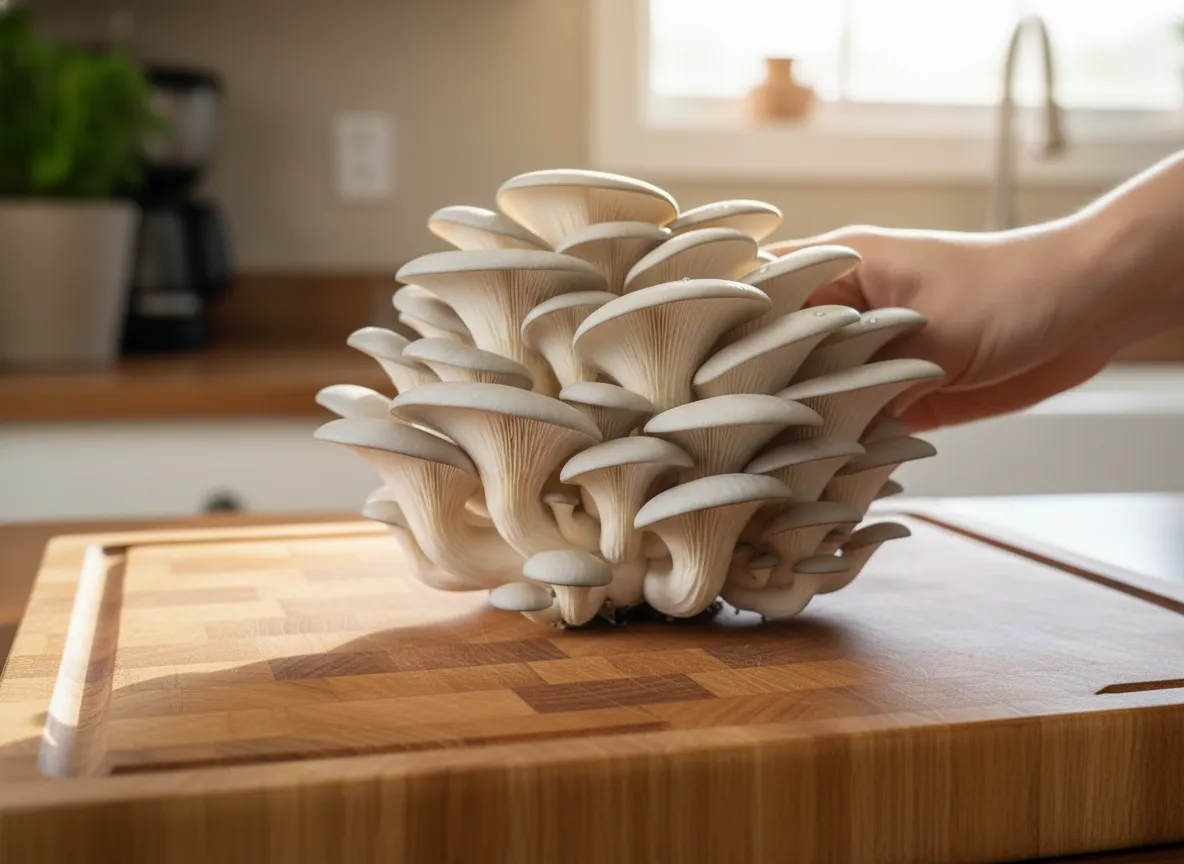
Yes, studio apartments are perfectly viable spaces for growing mushrooms, and many successful growers do exactly this. Mushrooms do not need sunlight, large footprints, or outdoor access — they thrive in compact, controlled environments that apartments naturally provide.
What makes studio apartments work:
- Stable temperatures — Climate-controlled apartments stay in the sixty to seventy-five degree range year-round, which suits most gourmet species
- Small footprint needed — A single grow kit or monotub fits on a shelf, countertop, or inside a closet
- Controllable humidity — A small humidifier or even manual misting maintains the moisture mushrooms need in a confined space
The main challenges in a studio are managing humidity without damaging walls or furniture, controlling odors during fruiting, and ensuring adequate fresh air exchange in a small enclosed area. All of these are solvable with basic equipment and good placement.
Start with a ready-made grow kit or a single monotub to test how mushroom growing fits your space and routine. Many apartment growers scale up to a small Martha tent or shelving unit once they are comfortable with the basics.
You can grow mushrooms in as little as two square feet of space — roughly the size of a shoebox on a shelf. A single grow kit or a small shotgun fruiting chamber fits on a nightstand, bookshelf, or kitchen counter and produces a meaningful harvest.
Minimum space by method:
- Grow kit — Takes up about one square foot and sits anywhere with indirect light
- Shotgun fruiting chamber — A shoebox-sized tote on a shelf or desk
- Single monotub — About two by one and a half feet of floor or shelf space
- Mini Martha tent — Two by two feet of floor space with vertical shelving for multiple blocks
The key insight is that mushrooms grow vertically, not horizontally. A shelf unit against a wall can hold multiple fruiting blocks in just a few square feet of floor space. Some growers use the top of a refrigerator, a bathroom corner, or even the inside of a wardrobe.
The limiting factor is rarely physical space — it is humidity management. Even the tiniest area works if you can maintain adequate moisture without damaging surrounding surfaces. A clear plastic tote with a few modifications provides all the containment you need.
A closet is one of the best small-space environments for mushroom growing because it is naturally dark, enclosed, and easy to control. Many experienced growers started in a spare closet and never needed to move beyond it.
Closet setup essentials:
- Line the floor with a waterproof tray or plastic sheeting to protect against moisture
- Add a small wire shelving unit to maximize vertical space for multiple blocks or tubs
- Install a small clip-on fan or leave the door cracked periodically for fresh air exchange
- Place a hygrometer inside to monitor humidity levels
For humidity, a small ultrasonic humidifier connected to a humidity controller works well, or you can mist manually two to three times per day. If using a humidifier, make sure excess moisture does not collect on walls or clothing stored nearby.
Ventilation is the biggest challenge in closet grows. Mushrooms produce CO2 as they grow, and a sealed closet traps it quickly. Open the door for a few minutes several times a day, or install a small computer fan vented through a hole in the door to maintain adequate fresh air exchange. Species like oyster mushrooms are particularly sensitive to CO2 buildup and will grow long stems with tiny caps if ventilation is poor.
Oyster mushrooms are the undisputed champion for small space growing, but several other species also thrive in compact setups. The best small-space species share common traits: they tolerate imperfect conditions, fruit quickly, and produce well from small substrate volumes.
Top species ranked for small spaces:
- Blue oyster — Extremely forgiving, fast-growing, and produces heavy flushes from small blocks. Tolerates temperature swings common in apartments
- Pink oyster — The fastest-fruiting species, going from pins to harvest in three to five days. Needs warmer temperatures above seventy degrees
- Lion's mane — Grows as a single large cluster from one opening, making it space-efficient. Needs high humidity
- Shiitake — Compact blocks produce well on shelves. Prefers cooler conditions
- King oyster — Grows upright with thick stems, fitting neatly on a shelf. Needs higher CO2 than other species
Species to avoid in small spaces:
- Wine cap — Needs large outdoor beds
- Maitake — Requires extended colonization times and precise conditions
Start with blue or pearl oyster mushrooms for your first small-space grow. They are the most tolerant of beginner mistakes and produce rewarding harvests even in imperfect conditions.
Managing humidity in an apartment means balancing the mushrooms' need for eighty-five to ninety-five percent relative humidity with protecting your living space from excess moisture. The key is containment — keep the humidity inside the growing chamber rather than releasing it into the room.
Effective apartment humidity strategies:
- Enclosed fruiting chambers — Monotubs, shotgun fruiting chambers, and Martha tents all trap humidity around the mushrooms without raising room humidity
- Small ultrasonic humidifiers — Place inside or plumbed into your chamber with a humidity controller to maintain precise levels
- Manual misting — A fine-mist spray bottle works for small setups and gives you complete control
- Perlite trays — Damp perlite in the bottom of a fruiting chamber releases moisture slowly without any electricity
Protecting your apartment:
- Place growing setups on waterproof trays or mats
- Keep chambers away from walls, wooden furniture, and electronics
- Run a small dehumidifier in the room if ambient humidity rises above sixty percent
- Wipe down nearby surfaces weekly to prevent moisture-related issues
A well-sealed monotub or Martha tent adds virtually no humidity to your apartment air. The moisture stays contained where the mushrooms need it, leaving your living space comfortable and dry.
Mushroom growing will not damage your apartment if you use proper containment and harvest on time. The two potential concerns — moisture damage and spore accumulation — are both manageable with basic precautions that any careful grower already follows.
Moisture management:
- Use enclosed chambers like monotubs or tented setups that contain humidity internally
- Place waterproof trays under all growing equipment to catch drips and condensation
- Avoid misting in open air — always mist inside the chamber, not around it
- Monitor room humidity — if it rises above sixty percent, improve your chamber sealing or add room ventilation
Spore concerns:
- Harvest before full maturity — Most spore release happens after mushrooms are past their ideal harvest window
- Oyster mushrooms are the biggest spore producers — harvest them while cap edges are still curled downward
- A thin white dust on surfaces near your grow area means you are harvesting too late
For renters concerned about security deposits: mushroom growing with proper containment leaves no lasting marks, stains, or damage. The setup is fully portable and removable. If you can grow houseplants without problems, you can grow mushrooms without problems.
The most effective spore control is timely harvesting — pick your mushrooms before they begin dropping spores. Each species has visual cues that indicate the ideal harvest window, and learning these cues eliminates ninety percent of spore issues in small spaces.
Harvest timing by species:
- Oyster mushrooms — Harvest when cap edges are still slightly curled under, before they flatten and turn upward
- Shiitake — Pick when the cap is still slightly convex and the veil beneath is just beginning to break
- Lion's mane — Harvest when spines are about half an inch long, before they elongate and yellow
Additional spore management:
- Run a HEPA air purifier near your growing area to capture airborne spores
- Keep chambers closed except during misting and harvesting
- Wipe surfaces around your grow area with a damp cloth weekly to collect settled spores
- Ventilate the room by opening a window briefly after harvesting
Spores are not harmful in small quantities for most people, but prolonged heavy exposure in poorly ventilated spaces can irritate airways. People with asthma or respiratory sensitivities should wear an N95 mask during harvest and ensure their growing area has adequate ventilation.
A kitchen counter is one of the most popular spots for a first mushroom grow, especially with ready-made grow kits. The kitchen provides ambient light, convenient access for daily misting, and a surface that is easy to clean if moisture escapes.
What works well on a kitchen counter:
- Grow kits — Simply open the bag, mist daily, and harvest. No additional equipment needed
- Small shotgun fruiting chambers — A clear plastic tote with a layer of damp perlite fits neatly on a countertop
- Single bag grows — A colonized supplemented sawdust block fruiting through a cut in the bag
Kitchen counter considerations:
- Place on a waterproof tray — Drip trays from garden centers work perfectly and protect your countertop
- Avoid placement near the stove — Heat and cooking fumes are not ideal for developing mushrooms
- Keep away from the fruit bowl — Ripening fruit releases ethylene gas and attracts fruit flies, both of which affect your grow
- Mist carefully — Overspray can leave mineral deposits on surrounding surfaces
The kitchen counter is ideal for beginners because the mushrooms are visible and accessible throughout the day. You are more likely to notice when they need misting, when conditions change, and when they are ready to harvest.
A bookshelf can be converted into a surprisingly effective mushroom growing station by adding humidity containment and a little airflow management. The vertical shelves let you stack multiple grows in a small footprint.
Bookshelf conversion steps:
- Choose a metal wire shelf over wood — wire shelves resist moisture and allow airflow. If using a wooden bookshelf, line shelves with waterproof trays
- Wrap the unit in clear plastic sheeting — This creates a simple Martha-style tent that traps humidity around your blocks
- Cut ventilation openings — A small opening at the bottom and top allows natural convection to provide fresh air exchange
- Add a small humidifier connected to a humidity controller at the base
Placement tips:
- Position against an interior wall away from windows and heating vents
- Leave at least two inches of space between the shelf and the wall for air circulation
- Place a drip tray on the floor beneath the unit
Each shelf can hold two to four fruiting blocks, giving you eight to sixteen blocks in a two-by-four-foot floor area. This is essentially a DIY Martha tent built from common household items. The setup is easy to disassemble and store when not in use, making it perfect for apartment growers who want to scale beyond a single kit.
A countertop fruiting chamber is a small, self-contained growing enclosure designed to sit on a table or counter and maintain the humidity, airflow, and light conditions mushrooms need to fruit. It is the smallest practical fruiting setup and perfect for growing one to three blocks at a time.
Common countertop chamber designs:
- Shotgun fruiting chamber (SGFC) — A clear plastic tote with quarter-inch holes drilled on all six sides, filled with four inches of damp perlite on the bottom
- Dub tub — Two identical plastic totes stacked rim-to-rim, creating a taller chamber without drilling holes
- Clear storage container with cracked lid — The simplest option, just a clear tote with the lid slightly offset for air exchange
How to use a countertop chamber:
- Place your colonized block or cake inside on a small rack or piece of foil
- Mist the interior walls two to three times daily
- Fan briefly after misting to introduce fresh air
- Monitor humidity with a small hygrometer
Countertop chambers cost five to fifteen dollars to build and require no electricity. They are ideal for grow kits, PF Tek cakes, or single blocks of oyster, shiitake, or lion's mane. The main limitation is capacity — for more than a few blocks, upgrade to a Martha tent or grow tent.
Healthy mushroom grows have a mild, earthy smell that most people find pleasant or barely noticeable. Strong or unpleasant odors almost always indicate a problem — usually contamination, overwatering, or decomposing substrate — rather than normal mushroom growing.
Sources of smell and solutions:
- Sour or vinegar smell — Bacterial contamination in your substrate. Discard the affected block and review your sterilization process
- Sweet, fermented smell — Wet grain or substrate that is too moist. Improve drainage and reduce watering
- Earthy, forest-floor smell — Completely normal and harmless. This is healthy mycelium at work
- Strong mushroom aroma during fruiting — Normal, especially with oyster mushrooms. Ventilate the room if it bothers you
Odor management strategies:
- Keep chambers sealed except during misting and harvesting
- Remove spent substrate promptly after final harvest — decomposing blocks develop stronger odors
- Run a carbon filter or air purifier near your growing area
- Ensure adequate ventilation to prevent stale air from concentrating smells
If your grow smells genuinely bad, investigate immediately. Foul odors are a contamination warning sign, not a normal byproduct of mushroom cultivation.
Bathrooms are one of the best rooms in an apartment for mushroom growing because they naturally handle moisture well and often have higher ambient humidity than other rooms. The tile surfaces, ventilation fans, and waterproof flooring make bathrooms forgiving of the humidity mushrooms require.
Bathroom growing advantages:
- Moisture-resistant surfaces — Tile, porcelain, and sealed grout handle humidity without damage
- Built-in ventilation — Exhaust fans provide ready-made fresh air exchange
- Higher ambient humidity — Showers and baths maintain humidity levels closer to what mushrooms need
- Easy cleanup — Spills, drips, and overspray wipe up easily on bathroom surfaces
Potential concerns:
- Competing molds — Bathrooms can harbor their own mold in grout and corners. Keep the bathroom clean and well-ventilated
- Temperature fluctuations — Hot showers create temporary temperature spikes. This is usually harmless if your chamber is enclosed
- Chemical exposure — Avoid using harsh cleaning sprays near open mushroom blocks. Bleach fumes can inhibit mycelium
A shelf above the toilet, a corner of the shower that is not directly sprayed, or a small table near the window all work as mushroom growing spots. Use enclosed chambers to protect your blocks from bathroom chemicals and temperature swings.
Most home mushroom growers do not have a dedicated grow room — they integrate growing into their existing living space. The key is choosing the right method and equipment to contain humidity and maintain conditions without disrupting your daily life.
Best approaches for shared spaces:
- Monotubs — Completely self-contained, can sit on any shelf or table. The lid manages humidity and airflow passively
- Martha tents — Fit in a corner of any room and contain all moisture within the plastic cover
- Grow kits — The ultimate no-space solution, requiring nothing more than a spot on a shelf and a spray bottle
- Closet grows — Convert a spare closet shelf into a growing area without affecting the rest of the room
Tips for growing in shared living areas:
- Choose enclosed methods that do not release humidity into the room
- Keep your setup tidy — A clean, organized grow area is easier to maintain and less obtrusive
- Label and date everything to stay on top of your growing schedule
- Store supplies neatly — A small bin with your spray bottle, alcohol, and gloves keeps everything contained
Mushroom growing integrates easily into normal apartment life. The daily routine takes five to fifteen minutes, the equipment is quiet and compact, and the results are fresh gourmet mushrooms that would cost ten to fifteen dollars per pound at the store.
The best grow kits for apartment living are compact, low-maintenance, and designed to fruit with minimal equipment. Look for kits that include everything you need and require nothing more than a spray bottle and a spot with indirect light.
Top kit recommendations for apartments:
- Blue oyster kits — The most reliable for beginners. Fruit in a wide temperature range and produce two to three flushes. Available from North Spore, Back to the Roots, and many other suppliers
- Lion's mane kits — Produce a single impressive cluster that is visually striking and delicious. Need slightly more humidity attention
- Pink oyster kits — Fastest results, often fruiting within one week. Need warmer temperatures above seventy degrees
- Shiitake kits — Reliable and produce well over multiple flushes. Prefer cooler spots
What to look for in an apartment-friendly kit:
- Pre-colonized and ready to fruit — No sterilization or inoculation steps
- Clear instructions with species-specific humidity and temperature guidance
- Compact size — Most kits are roughly the size of a loaf of bread
- Reputable supplier with good reviews and responsive customer service
Expect to spend fifteen to thirty dollars per kit and harvest one to two pounds of fresh mushrooms over two to three flushes. Kits make excellent gifts and conversation starters for apartment-dwelling friends.
A small two-by-two-foot Martha tent or mini grow tent can comfortably fruit eight to sixteen blocks simultaneously, depending on block size and species. This makes small tents the best way to maximize production in a limited apartment footprint.
Capacity by setup size:
- Two-by-two-foot tent with four shelves — Eight to twelve five-pound blocks, or up to sixteen smaller blocks
- Two-by-four-foot tent with four shelves — Sixteen to twenty-four blocks with room for a humidifier inside
- Single-shelf small tent — Four to six blocks, good for a first tent setup
Spacing guidelines:
- Leave at least two inches between blocks for airflow and mushroom growth
- Do not overcrowd — Blocks packed too tightly restrict FAE and create dead zones where CO2 accumulates
- Position blocks with their fruiting openings facing outward for easy access and harvesting
- Stagger blocks on shelves so airflow reaches all surfaces
At sixteen blocks producing one pound each over two flushes, a small tent can yield thirty-two pounds of fresh mushrooms per cycle. That is three hundred to four hundred dollars worth of gourmet mushrooms from a two-by-two-foot corner of your apartment, running on a twenty-dollar humidifier and a five-dollar timer.
Garages and basements are among the best spaces for mushroom cultivation because they offer naturally cool temperatures, stable conditions, and separation from your main living area. Many small-scale commercial growers operate entirely out of basement or garage setups.
Basement advantages:
- Naturally cool temperatures — Underground spaces stay fifty-five to sixty-five degrees year-round in most climates, ideal for species like blue oyster and shiitake
- Stable environment — Less affected by outdoor temperature swings than above-ground rooms
- Space for scaling — Room for multiple tents, shelving units, or even a small walk-in fruiting room
Garage advantages:
- Ventilation — Easy to install exhaust fans or crack a door for fresh air exchange
- Durable surfaces — Concrete floors and walls tolerate moisture without damage
- Separation — Keeps humidity, spores, and growing activity away from living spaces
Considerations for both:
- Check for existing mold — Damp basements may already harbor mold that competes with your grows
- Insulate if needed — Uninsulated garages may get too cold in winter or too hot in summer
- Ensure adequate lighting — Add a simple LED shop light on a timer for the fruiting light cycle
A basement or garage gives you room to grow beyond apartment-scale and experiment with multiple species and techniques simultaneously.
A mini Martha tent is a compact, automated fruiting setup that fits in a two-by-two-foot corner of any room and can fruit multiple blocks with minimal daily maintenance. It is the natural upgrade from monotubs for apartment growers who want to scale up.
Materials needed:
- Small wire shelving unit — A two-by-one-and-a-half-foot unit with three to four shelves
- Clear plastic cover — A fitted greenhouse cover or clear plastic sheeting secured with clips
- Small ultrasonic humidifier — A one to two liter desktop model
- Humidity controller — An Inkbird or similar unit set to maintain eighty-five to ninety-two percent relative humidity
- Small exhaust fan — A four-inch inline fan or even a USB computer fan on a cycle timer
Setup process:
- Assemble the shelving unit and place it on a waterproof tray
- Cut a small hole near the bottom of the cover for humidifier ducting and one near the top for exhaust
- Connect the humidifier through the humidity controller so it cycles automatically
- Run the exhaust fan for one to two minutes every fifteen to thirty minutes
Total cost is typically sixty to one hundred twenty dollars for everything. The automated humidity and ventilation mean your daily involvement drops to a quick visual check and occasional harvesting — a major quality-of-life improvement over manual misting.
Basic mushroom growing setups are nearly silent, and even automated setups produce only a gentle hum comparable to a small desktop fan. Noise is rarely a significant concern, even in studio apartments or shared living situations.
Noise levels by setup type:
- Grow kits and manual misting — Completely silent. You spray water from a bottle a few times a day
- Monotubs — Silent. No electrical equipment involved in most designs
- Martha tents with humidifier — Produces a quiet hum when the humidifier cycles on, similar to a white noise machine. Most people find it pleasant or unnoticeable
- Grow tents with exhaust fans — The loudest component, but a four-inch fan on a cycle timer runs only a few minutes per hour
Reducing noise further:
- Choose ultrasonic humidifiers over evaporative models — they are significantly quieter
- Use fan speed controllers to dial exhaust fans down to the minimum effective speed
- Place equipment on rubber mats to absorb vibration
- Run fans on timers so they operate during waking hours only if nighttime noise is a concern
Compared to other indoor hobbies, mushroom growing is one of the quietest. A fish tank filter or a window air conditioner produces more noise than a typical automated mushroom fruiting setup.
Fruit flies and fungus gnats are the most common pest in indoor mushroom growing, and they are especially annoying in apartments where the kitchen and growing area are often close together. Prevention is far more effective than treatment.
Prevention strategies:
- Seal your fruiting chambers — Use micropore tape, polyfill, or fine mesh over any openings to physically block flies from reaching your substrate
- Harvest promptly — Overripe mushrooms attract flies. Pick at the optimal window before caps fully flatten
- Remove spent substrate immediately — Do not leave exhausted blocks sitting around. Bag them and take them to the trash or compost
- Keep your kitchen clean — Ripe fruit, compost bins, and dirty drains attract flies that then discover your mushroom blocks
Treatment if flies appear:
- Apple cider vinegar traps — A small jar with apple cider vinegar and a drop of dish soap placed near your grow area
- Yellow sticky traps — Hang near your fruiting chamber to catch adults before they lay eggs
- Diatomaceous earth — Sprinkle lightly around (not on) your growing area to kill crawling insects
Fungus gnats lay eggs in moist substrate, and their larvae can damage mycelium and developing pins. Keeping chambers sealed is the single most important defense. If an infestation develops inside a block, it is usually best to discard that block rather than risk spreading the problem.
Mushroom growing is safe for both roommates and pets when basic precautions are followed. The fungi you cultivate — oyster, shiitake, lion's mane, and other gourmet species — are food crops, not toxic organisms. However, there are a few considerations worth discussing with housemates.
Roommate considerations:
- Allergies — Some people are sensitive to mushroom spores, which can cause sneezing or respiratory irritation. Harvest on time and keep chambers sealed to minimize airborne spores
- Shared space cleanliness — Keep your growing area tidy and contained. Drips, spills, and discarded substrate are inconsiderate in shared spaces
- Odor — Normal grows have a mild earthy smell. Contaminated blocks can smell sour. Remove contamination promptly
- Communication — Let roommates know what you are growing and where, so they do not accidentally disturb or discard your projects
Pet safety:
- Keep grows out of reach — Cats and dogs may knock over fruiting chambers or eat substrate
- Gourmet mushrooms are not toxic to pets, but eating raw substrate or contaminated material could cause digestive upset
- Pet hair and dander increase contamination risk — keep chambers sealed and wash hands before handling substrate
The golden rule for growing in shared spaces is containment and communication. Enclosed growing methods, prompt cleanup, and basic courtesy make mushroom growing a non-issue for everyone in the household.
Need more help? Dr. Myco can answer follow-up questions about small space & apartment growing based on thousands of real growing experiences.
Ask Dr. Myco