Mushroom Business Operations
15 tips in Getting Started
By Andrew Langevin · Founder, Nature Lion Inc · Contributing author, Mushroomology (Brill, 2026)
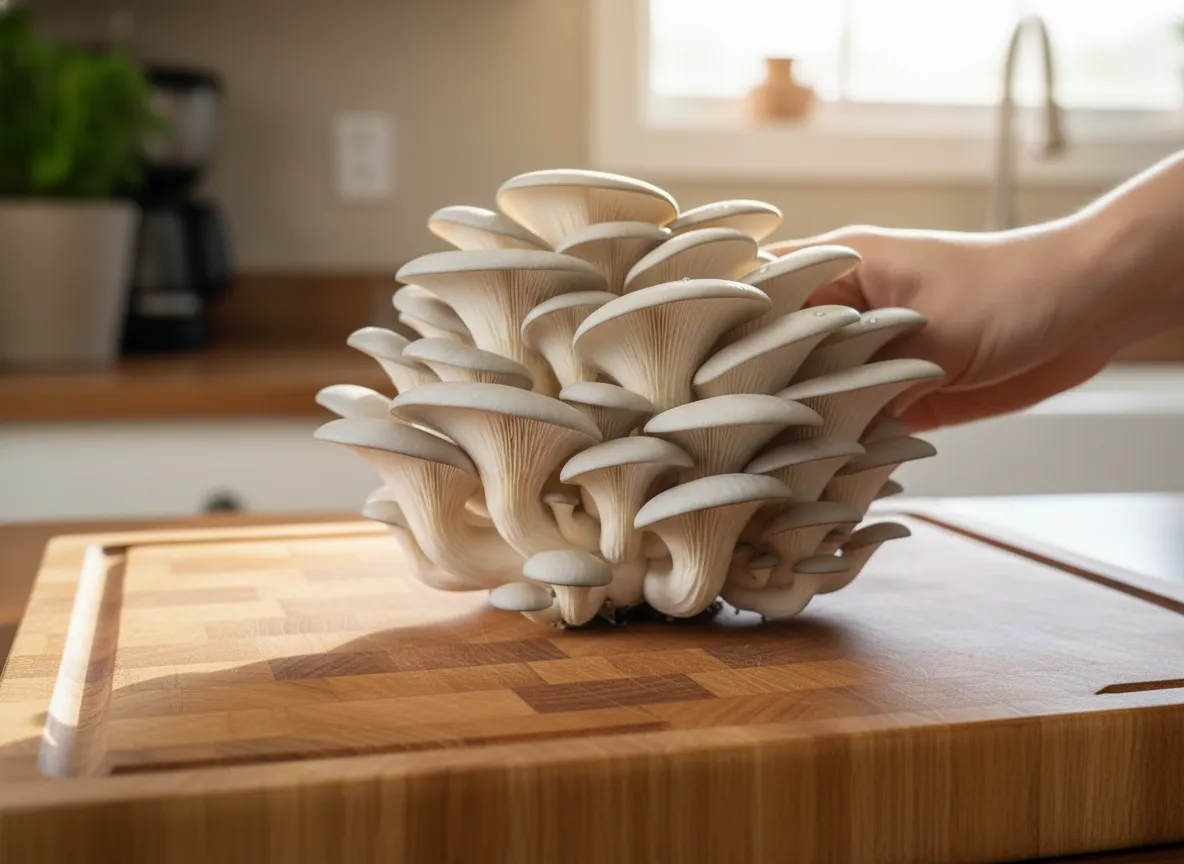
A mushroom farm business plan follows the same structure as any agricultural business plan but must address the unique capital and operational requirements of controlled-environment growing. Start with a clear production model — species, scale, substrate source, and target market — then build your financials around realistic yield assumptions.
Key sections your plan needs:
- Executive summary: Species grown, weekly production target in lbs, target market (farmers market, wholesale, restaurant), and startup capital required
- Market analysis: Local competition, pricing per pound in your area, demand from restaurants and retailers. Visit your target farmers markets and talk to chefs before writing this section
- Production plan: Substrate recipe, spawn source, grow room capacity, production cycle timeline (typically 6-8 weeks from inoculation to harvest for oyster mushrooms)
- Facility requirements: Square footage, HVAC, humidity control, and estimated buildout cost. Budget $30-60 per square foot for a basic commercial grow room
- Financial projections: Startup costs, monthly operating expenses, revenue per production cycle, and break-even timeline
The most common mistake is underestimating operating costs. Substrate materials, spawn, utilities (especially HVAC and humidification), packaging, and labor add up quickly. Build a detailed monthly cash flow projection for your first 18 months.
A well-designed mushroom farm separates clean and dirty operations into distinct zones with controlled airflow between them. The fundamental principle is unidirectional workflow — materials move from dirty to clean to fruiting to harvest without backtracking.
Standard facility zones:
- Substrate preparation area (dirty zone): Where you mix, hydrate, and bag substrate. This area generates dust and contaminants, so it should be physically separated from clean zones. Needs floor drains, water access, and ventilation
- Sterilization/pasteurization area: Houses your autoclave, steam generator, or hot-water pasteurization setup. Position between the dirty and clean zones
- Inoculation room (cleanest zone): Positive-pressure HEPA-filtered room where you inoculate bags with spawn. This is your most critical contamination control point — keep it small (50-100 sq ft is enough) and spotlessly clean
- Incubation room: Dark, temperature-controlled (20-24°C), with shelving for colonizing bags. Needs no fresh air exchange during colonization
- Fruiting rooms: The largest spaces. Require fresh air exchange (4-6 air changes per hour), humidity control (85-95% RH), lighting (12 hours on/off), and temperature control. Allocate 60-70% of your total growing space to fruiting
- Harvest and packing area: Clean, cool space with scales, packaging materials, and cold storage access
Production capacity depends on three variables: usable shelf space, cycle time, and yield per bag or block. Multiply these together to get your weekly or monthly output in pounds.
The capacity formula:
- Step 1 — Count your positions: Measure your shelf space and divide by the footprint of each fruiting bag or block. A standard 5 lb supplemented sawdust block occupies roughly 0.5 sq ft of shelf space
- Step 2 — Determine cycle time: For oyster mushrooms, a typical fruiting cycle is 14-21 days from introduction to final harvest (2-3 flushes). Lion's mane and shiitake take longer at 21-35 days
- Step 3 — Calculate yield per position: Oyster mushrooms yield approximately 1-2 lbs per 5 lb block over 2-3 flushes. Lion's mane yields 0.75-1.5 lbs per block
- Step 4 — Multiply: (Total positions) × (yield per position) ÷ (cycle time in weeks) = weekly output
Example calculation:
- 200 shelf positions × 1.5 lbs per block = 300 lbs per cycle
- 3-week cycle time = 100 lbs per week
Stagger your inoculations so that you have blocks entering the fruiting room every week rather than all at once. This ensures consistent weekly production and prevents harvest bottlenecks. Most commercial farms aim to inoculate 1/3 to 1/4 of their total capacity each week.
Revenue per square foot varies enormously depending on species, market, and growing efficiency, but well-run small farms typically generate $50-150 per square foot of fruiting space per year. Premium species and direct-to-consumer sales push this toward the higher end.
Revenue benchmarks by species and market:
- Oyster mushrooms (wholesale): $4-6/lb, yielding approximately $50-80/sq ft/year with efficient rack systems
- Oyster mushrooms (farmers market/retail): $8-14/lb, yielding $100-180/sq ft/year
- Lion's mane (wholesale): $8-12/lb, yielding $80-120/sq ft/year despite longer cycle times
- Shiitake (wholesale): $6-10/lb, yielding $60-100/sq ft/year
- Specialty species (maitake, pioppino, chestnut): $10-16/lb at retail, with highly variable yields
Factors that dramatically affect revenue per square foot:
- Vertical racking: Adding shelving tiers multiplies your effective growing area. Four-tier racks quadruple your revenue per floor square foot
- Cycle time: Faster-fruiting species turn over space more frequently
- Market channel: Direct-to-consumer prices are typically 2-3x wholesale
- Biological efficiency: Better substrate recipes and genetics increase yield per block
Compare these numbers to your facility costs — rent, utilities, labor — to determine whether a given space is economically viable before signing a lease.
Pricing strategy determines whether your farm is profitable or just a well-organized hobby. The standard approach is to calculate your true cost of production per pound, then apply a markup that reflects your market channel — typically 2x for wholesale and 3-5x for retail.
Calculating your cost per pound:
- Add up all monthly costs: substrate materials, spawn, utilities, rent, labor, packaging, delivery, insurance
- Divide by total monthly production in pounds
- Most small farms land between $2-5 per pound in production cost for oyster mushrooms
Pricing by channel:
- Wholesale to distributors: Your cost × 2. Expect $4-7/lb for oyster, $8-12/lb for lion's mane. Volume is high but margins are thin
- Wholesale to restaurants: Your cost × 2.5-3. Expect $6-10/lb for oyster, $10-14/lb for lion's mane. Chefs pay more for consistent quality and reliable delivery
- Farmers markets and farm stands: Your cost × 3-5. Expect $10-16/lb for oyster, $14-20/lb for lion's mane. Higher margin but requires your time at the market
- Online direct-to-consumer: Similar to farmers market pricing but add shipping costs
Never compete on price alone. Emphasize freshness (harvested today), growing method (no pesticides), and local origin. Offer mixed boxes and subscription programs to lock in repeat customers.
Chef relationships are the highest-value sales channel for small mushroom farms because they pay premium prices and order consistently. The key is showing up with free samples, being relentlessly reliable, and making their job easier — not harder.
How to land your first restaurant accounts:
- Start with samples: Bring a 1-2 lb sample box to the kitchen door during prep hours (typically 9-11 AM, Tuesday through Thursday). Include a one-page info sheet with species, pricing, and your delivery schedule
- Target the right restaurants: Look for farm-to-table, Asian, and upscale casual restaurants. Check menus for mushroom dishes — these chefs already value good fungi
- Be consistent: Chefs need to know they can count on you. Deliver the same quality, same quantity, same day, every week. One missed delivery can end a relationship
- Communicate proactively: If your production is short, tell the chef 2-3 days in advance so they can adjust their menu. Never surprise them with a shortage
Building deeper relationships:
- Offer seasonal or limited species as exclusives for your best accounts
- Invite chefs to visit your farm — seeing the growing process creates loyalty
- Accept feedback gracefully — if a chef wants smaller clusters or longer stems, adapt
- Invoice on their terms (usually net 15 or net 30)
Start with 3-5 restaurant accounts and only add more when you can reliably supply your existing customers.
Packaging directly affects shelf life, presentation, and your per-unit cost. The best packaging keeps mushrooms visible, allows some air exchange, and protects against crushing — while keeping your packaging cost below $0.50 per unit.
Packaging options ranked by market channel:
- Farmers markets: Kraft paper bags (cheapest, $0.05-0.10 each) or small cardboard berry baskets with a clear wrap. Paper bags breathe well but hide the product. Clear clamshell containers ($0.15-0.30 each) let customers see quality and justify premium pricing
- Restaurant wholesale: Waxed cardboard boxes (2 lb, 5 lb, or 10 lb). Simple, stackable, professional. Include your farm name and harvest date on a sticker
- Retail/grocery: PET clamshells with your branded label. Requires higher volume to justify label printing costs. Standard sizes are 4 oz, 8 oz, and 1 lb
- Online/shipping: Insulated mailer with ice packs, mushrooms in perforated bags inside a rigid box. Shipping fresh mushrooms is expensive — budget $8-15 per shipment
Shelf life tips:
- Harvest mushrooms dry — never wash before packaging
- Cool mushrooms to 2-4°C within one hour of harvest before packing
- Include micro-perforations in any sealed packaging to prevent CO₂ buildup
- Properly packaged and refrigerated oyster mushrooms last 7-10 days, lion's mane 5-7 days
Food safety compliance is non-negotiable if you sell mushrooms commercially — and increasingly required by restaurants, retailers, and distributors. A basic HACCP (Hazard Analysis and Critical Control Points) plan for mushroom production identifies the key points where contamination could enter and establishes controls for each.
Critical control points for mushroom farms:
- Substrate preparation: Verify pasteurization or sterilization reaches target temperature and duration. Log time and temperature for every batch — pasteurization must reach 65-80°C for 1-2 hours, sterilization 121°C at 15 PSI for 90-120 minutes
- Growing environment: Monitor for chemical contaminants — never use pesticides, herbicides, or unapproved cleaning agents in or near fruiting rooms
- Harvest hygiene: Clean hands or gloves, clean harvest tools (sanitized knives/scissors), clean harvest containers. No eating, drinking, or smoking in harvest areas
- Post-harvest cooling: Mushrooms must reach 4°C within 2 hours of harvest to prevent bacterial growth
- Storage and transport: Maintain cold chain below 4°C from harvest to customer
Document everything. Keep logs of substrate temperatures, cleaning schedules, cold storage temperatures, and harvest dates. If a customer or inspector asks to see your food safety records, you need to produce them immediately. Many states and provinces require produce sellers to complete a food safety training course — check your local requirements.
Insurance requirements for a mushroom farm depend on your scale, market channels, and local regulations. At minimum, you need general liability insurance and product liability insurance — these protect you if someone gets sick or injured.
Essential insurance types:
- General liability: Covers injuries on your property (a customer visiting the farm, a delivery driver slipping). Typical cost: $500-1,500/year for a small farm
- Product liability: Covers claims if someone gets sick from your mushrooms. This is critical and often required by restaurants and retailers. Typical cost: $800-2,000/year
- Property insurance: Covers your facility, equipment, and inventory against fire, theft, and natural disasters. Cost depends on facility value
- Commercial auto: If you use a vehicle for deliveries, your personal auto insurance likely does not cover commercial use. Add a commercial policy or endorsement
- Workers compensation: Required in most jurisdictions if you have employees. Rates vary by state/province
Insurance tips for mushroom farms:
- Look for farm bureau or agricultural policies — these are typically cheaper than standard commercial policies because they are designed for food producers
- Many farmers market organizers require proof of $1-2 million in liability coverage as a condition of your vendor permit
- Get quotes from at least 3 agricultural insurance providers
- Maintain your HACCP records and food safety documentation — this can reduce your premiums
Labor is typically the largest operating expense for small mushroom farms, accounting for 40-60% of total production costs. Managing labor efficiently is the difference between a profitable farm and a break-even hobby.
Where labor hours go on a mushroom farm:
- Substrate preparation: 25-30% of labor. Mixing, bagging, and sterilizing/pasteurizing substrate is repetitive and physically demanding
- Inoculation: 5-10% of labor. Relatively quick but requires trained workers for sterile technique
- Monitoring and maintenance: 10-15% of labor. Daily checks on incubation and fruiting rooms, adjusting environmental controls
- Harvesting: 25-35% of labor. The most time-sensitive task — mushrooms must be picked at peak quality, often daily
- Sales and delivery: 15-20% of labor. Farmers markets, restaurant deliveries, and order management
Strategies to reduce labor costs:
- Batch your substrate preparation into 1-2 days per week rather than making it daily
- Invest in equipment that reduces manual work: mechanical bag fillers, automated sterilizers, and conveyor systems pay for themselves quickly at scale
- Standardize everything: Written SOPs mean less training time and fewer mistakes
- Track labor hours per pound produced — this is your key efficiency metric. Target 15-25 minutes of labor per pound of finished product
Hire for harvest days first. Part-time harvest help 3-4 days per week is more cost-effective than a full-time employee when you are producing under 200 lbs/week.
Break-even timelines for small mushroom farms vary widely based on startup investment and sales channels, but most well-managed operations break even within 12-24 months of first sales. Low-tech bucket or bag operations can break even faster, while purpose-built facilities take longer.
Typical startup cost ranges:
- Minimal (garage/shed conversion): $2,000-8,000. Insulated room, basic humidifier, shelving, and substrate equipment. Break-even possible in 3-6 months
- Moderate (dedicated grow room buildout): $15,000-40,000. Proper HVAC, HEPA filtration, and automated climate control. Break-even in 12-18 months
- Commercial (purpose-built facility): $50,000-150,000+. Multiple fruiting rooms, lab space, and commercial kitchen. Break-even in 18-36 months
Factors that accelerate break-even:
- Direct-to-consumer sales (farmers markets, CSA, online) at 2-3x wholesale prices
- Starting with fast-growing species like oyster mushrooms rather than slow ones like shiitake
- Keeping facility buildout minimal — start lean and expand with revenue
- Pre-selling to restaurants before building out your farm
The most dangerous period is months 3-9, when you are past the initial excitement but not yet producing at full capacity. Many farms fail because they overbuilt their facility and cannot generate enough revenue to cover fixed costs during the ramp-up period. Start smaller than you think you need to.
Even with controlled-environment growing, mushroom farms face seasonal demand fluctuations that can strain cash flow. Summer typically brings lower demand and higher cooling costs, while fall and winter see peak demand from restaurants and holiday cooking.
Seasonal challenges and solutions:
- Summer (June-August): Restaurant orders drop 15-30% as menus shift to lighter fare. Cooling costs increase significantly. Reduce production by 20-30% or pivot to value-added products (dried mushrooms, powder) with your excess harvest
- Fall (September-November): Demand surges as restaurants add hearty mushroom dishes. Start ramping production 4-6 weeks before expected demand increase. This is your highest-revenue quarter
- Winter (December-February): Strong demand continues through holidays. Watch heating costs — maintain fruiting room temperatures of 15-21°C without overheating your budget
- Spring (March-May): Steady demand. Good time to experiment with new species or strains for the coming year
Strategies to smooth seasonal revenue:
- Diversify sales channels: Farmers markets peak in summer when wholesale dips
- Offer dried and value-added products to capture summer excess and provide year-round income
- Grow heat-tolerant species in summer (pink oyster, yellow oyster) and cold-tolerant species in winter (blue oyster, shiitake)
- Adjust spawn orders and substrate production 6-8 weeks ahead of anticipated demand changes
Certifications can justify price premiums and open doors to premium retail and wholesale accounts that require them. Organic certification typically adds $2-4/lb to your selling price but costs $1,000-5,000/year to maintain — so it only makes sense at sufficient volume.
Key certifications and their value:
- USDA Organic / Canada Organic: The most recognized certification. Requires organic substrate ingredients, no synthetic inputs, and annual third-party audits. Price premium: 20-40% over conventional. Break-even typically requires producing 200+ lbs/week to justify audit costs
- Good Agricultural Practices (GAP): Required by many grocery chains and distributors. Covers food safety, worker hygiene, and traceability. Audit cost: $500-2,000/year. Does not directly increase price but opens access to higher-volume accounts
- Non-GMO Project Verified: Increasingly requested by natural food retailers. Relatively easy for mushroom farms since mushroom cultivation rarely involves GMO inputs. Cost: $2,000-5,000/year
- Local/regional certifications: Programs like "Certified Naturally Grown" are cheaper alternatives to USDA Organic for direct-to-consumer farms. Cost: $100-500/year
Start with GAP certification if you want to sell to grocery stores or distributors — it is the most commonly required credential. Add organic certification once your volume justifies the cost. Keep detailed input records from day one regardless of certification plans, as retroactive documentation is nearly impossible.
Scaling from 50 to 200 lbs per week is the most common growth inflection point for small mushroom farms, and it requires upgrading nearly every aspect of your operation. This is where you transition from a side hustle to a real business — and where most farms either professionalize or plateau.
Infrastructure upgrades needed:
- Fruiting space: You need roughly 4x your current fruiting area. At 200 lbs/week, expect to need 400-600 sq ft of shelf space across multiple rooms or zones
- Substrate production: Manual mixing and hand-filling bags becomes impractical. Invest in a substrate mixer ($500-2,000) and consider a mechanical bag filler
- Sterilization capacity: A single pressure cooker cannot keep up. Upgrade to a larger autoclave or build a steam pasteurization system using a wallpaper steamer or commercial steam generator
- Climate control: Multiple fruiting rooms need independent HVAC and humidification. Budget $3,000-8,000 for proper automated environmental controls
Operational changes:
- Hire help: At 200 lbs/week, you need at least one part-time employee for harvest and substrate preparation
- Stagger production: Inoculate the same quantity every week to ensure consistent output rather than boom-and-bust cycles
- Secure sales before scaling: Pre-sell your increased production to restaurants and markets. Never scale production without confirmed demand
- Track every metric: Cost per pound, labor hours per pound, contamination rate, and yield per block. These numbers reveal where to invest next
Need more help? Dr. Myco can answer follow-up questions about mushroom business operations based on thousands of real growing experiences.
Ask Dr. Myco