Environmental engineering
Mushroom Fruiting Room Design: Airflow, Humidity and CO₂
A fruiting room must remove crop CO₂ while maintaining species-appropriate humidity and temperature without blowing directly on mushrooms. Design air distribution, drainage and sensor locations together; equipment capacity alone does not guarantee uniform crop conditions.
By Andrew Langevin · Founder, Nature Lion Inc · Contributing author, Mushroomology (Brill, 2026) · Updated August 11, 2026
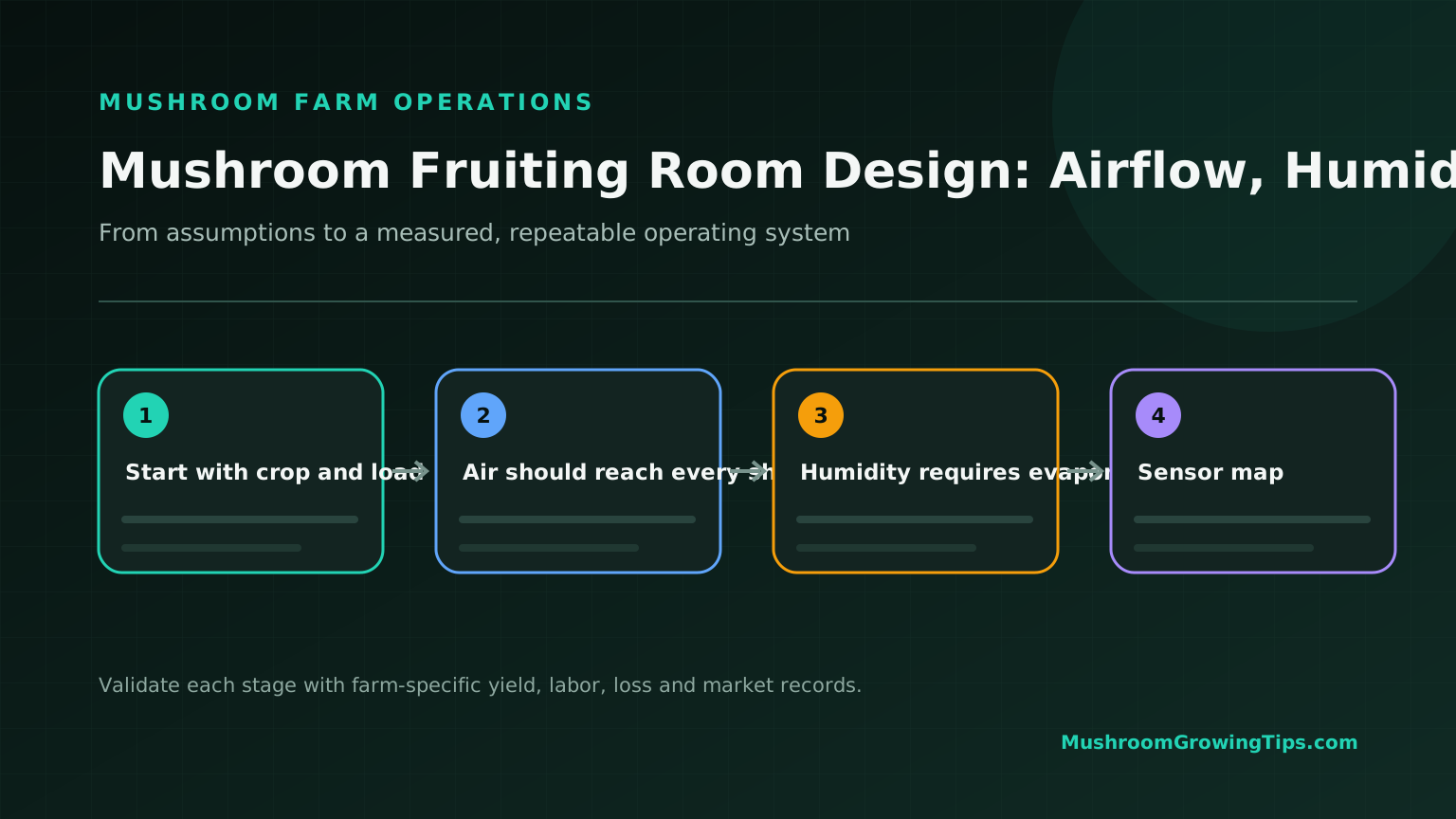
Start with crop and load
- Species and strains grown simultaneously
- Peak blocks and biological heat load
- Room volume and rack geometry
- Outside-air temperature and humidity extremes
- Moisture added by humidification and crops
- Required cleaning and drying cycle
- Acceptable conditions during equipment failure
Air should reach every shelf
Exhausting the room-average volume does not prove lower shelves receive fresh air. Blocks and racks obstruct flow. Use indirect distribution, adequate return paths and crop-level measurements to identify dead zones.
| Symptom | Possible distribution issue |
|---|---|
| Long stems on lower shelves | CO₂ pooling or weak lower-shelf circulation |
| Dry caps near intake | Direct high-velocity or low-humidity air |
| Wet upper surfaces | Condensation or poorly mixed humid air |
| One rack underperforms | Blocked supply/return path or local temperature load |
| Door-side variability | Infiltration and control cycling |
Humidity requires evaporation and drainage
High RH is not the same as wet mushrooms. Provide fine humidification, indirect mixing and enough evaporation to support pinning while preventing persistent surface water. Design washable slopes, drains and condensate routes so the room does not become a reservoir.
- Keep mist and probes out of direct collision
- Prevent reservoir biofilm and standing water
- Insulate surfaces prone to condensation
- Allow access behind racks for cleaning
- Document water quality and equipment service
Sensor map
- Temperature, RH and CO₂ at representative crop heights
- Supply and exhaust measurements for troubleshooting
- Door and equipment-status events
- Independent alarm or verification where failure is costly
- Calibration or comparison schedule and sensor ID
- Environmental records connected to batch and room
Commission with crops, not an empty room
An empty-room test cannot reproduce crop respiration, water release or rack obstruction. Map conditions at low and peak load, verify alarms and simulate safe equipment outages. Recommission after rack, crop or ventilation changes.
Frequently asked questions
How much fresh air does a mushroom fruiting room need?
It depends on species, crop load, room and rack geometry. Design from measured crop-level CO2 and morphology rather than a universal timer setting or room-average exchange claim.
Where should sensors be placed in a mushroom grow room?
Place identified sensors at representative crop locations and rack heights, away from direct mist or supply air unless those points are intentionally being measured.
Continue building the farm plan
Crop-loss management
Mushroom Farm Contamination Rate: Measurement and Action Thresholds
Measure mushroom farm contamination by stage, calculate its financial effect and set evidence-based internal action thresholds without relying on a universal rate.
Post-harvest operations
Mushroom Harvest, Cooling and Shelf-Life SOP
Build a mushroom harvest and cold-chain SOP covering maturity, grading, lot identification, rapid cooling, packaging, storage and delivery records.
Commercial equipment planning
Mushroom Farm Equipment List: Market Test to Commercial Scale
Choose mushroom farm equipment by production stage, from a low-risk market test through an integrated commercial facility.
Build this into a measured production plan
Use your own yields, labor, loss rate, prices and room constraints before committing capital or customer volume. The planning tools below turn these operating assumptions into a weekly model.