Post-harvest operations
Mushroom Harvest, Cooling and Shelf-Life SOP
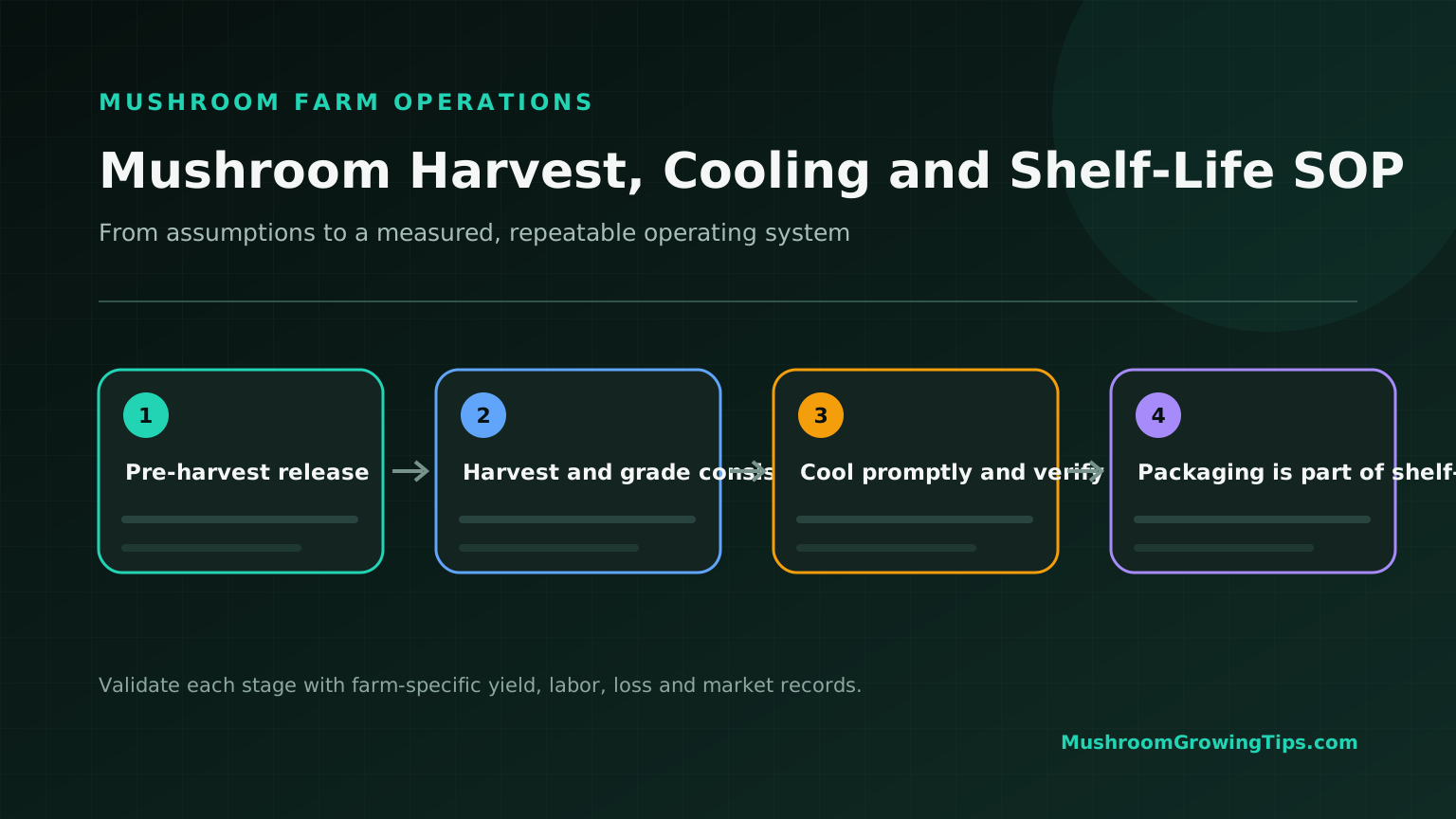
Harvest into clean food-contact containers, protect lot identity, remove field heat promptly and store under validated species- and package-specific conditions. Shelf life depends on crop condition, cooling speed, temperature history, packaging and handling—not a date alone.
By Andrew Langevin · Founder, Nature Lion Inc · Contributing author, Mushroomology (Brill, 2026) · Updated August 11, 2026
Pre-harvest release
- Confirm batch and harvest-lot identity
- Inspect crop for contamination, pests, condensation and foreign material
- Verify harvest tools, totes, scales and packing surfaces are ready
- Confirm cold storage has capacity for the peak harvest
- Check customer orders, grades and pack sizes before cutting
Harvest and grade consistently
| Control | Record or standard |
|---|---|
| Maturity | Species-specific cap, tooth or edge stage |
| Handling | Cut or twist method that avoids crushing and substrate debris |
| Gross weight | Harvest before trim or downgrade |
| Saleable weight | Product meeting the defined grade |
| Downgrade and waste | Weight and reason code |
| Lot identity | Batch, harvest date and pack lot |
Cool promptly and verify the cold chain
Move harvested product into appropriate cooling without unnecessary room-temperature staging. Define a time-to-cooling target and verify product or representative package temperature, not only the refrigerator display.
- Do not overload cooling equipment beyond its pull-down capacity
- Allow cold air to reach containers
- Separate dirty harvest totes from clean packed product
- Record storage and delivery deviations
- Use first-expire-first-out inventory rotation
Packaging is part of shelf-life validation
Mushrooms respire and release moisture. Package venting, film, absorbency, fill weight and storage conditions interact. Validate the actual package and route rather than copying a shelf-life claim from another farm.
- Check condensation and dehydration
- Evaluate texture, color, odor and visible spoilage
- Record package type and lot
- Test realistic delivery and customer storage
- Use conservative labels supported by the validation
Species planning differences
| Species | Post-harvest concern |
|---|---|
| Pink oyster | Very short fresh shelf life; close market and rapid sale are critical |
| Blue/pearl oyster | Fragile cap edges, spores and dehydration |
| Lion's mane | Bruising, yellowing, drying and compression |
| Shiitake | Generally stronger shelf life but still requires temperature control |
| King oyster | Dense product with better handling tolerance; package condensation still matters |
| Chestnut/maitake | Protect cluster structure and monitor moisture loss |
Deviation and disposition
Define who evaluates temperature excursions, contamination, damaged packaging, unknown lot identity and customer returns. Record hold, release, downgrade or disposal decisions and prevent held product from shipping accidentally.
Frequently asked questions
How should mushrooms be cooled after harvest?
Move clean, identified product into suitable refrigeration promptly and verify the product or representative package temperature. Validate time, airflow, package and species conditions for the farm's operation.
How long do fresh mushrooms last?
Shelf life varies by species, maturity, handling, cooling speed, temperature history and packaging. Validate the actual product and route rather than relying on a universal number.
Continue building the farm plan
Commercial equipment planning
Mushroom Farm Equipment List: Market Test to Commercial Scale
Choose mushroom farm equipment by production stage, from a low-risk market test through an integrated commercial facility.
Facility design
Commercial Mushroom Farm Layout and Workflow
Plan a commercial mushroom farm layout with clean-to-dirty product flow, separated lab, incubation, fruiting, packing, cold storage and waste routes.
Facility economics
Mushroom Farm Profit per Square Foot and Shelf Position
Calculate mushroom farm profit per square foot using vertical racks, saleable yield, crop cycle, occupancy, utilization and contribution per shelf-week.
Build this into a measured production plan
Use your own yields, labor, loss rate, prices and room constraints before committing capital or customer volume. The planning tools below turn these operating assumptions into a weekly model.