Commercial equipment planning
Mushroom Farm Equipment List: Market Test to Commercial Scale
Buy equipment only after the market and production stage justify it. A market test can use purchased fruiting blocks and a controlled fruiting area; in-house spawn and substrate production add clean-air, sterilization, mixing, bagging and traceability systems.
By Andrew Langevin · Founder, Nature Lion Inc · Contributing author, Mushroomology (Brill, 2026) · Updated August 11, 2026
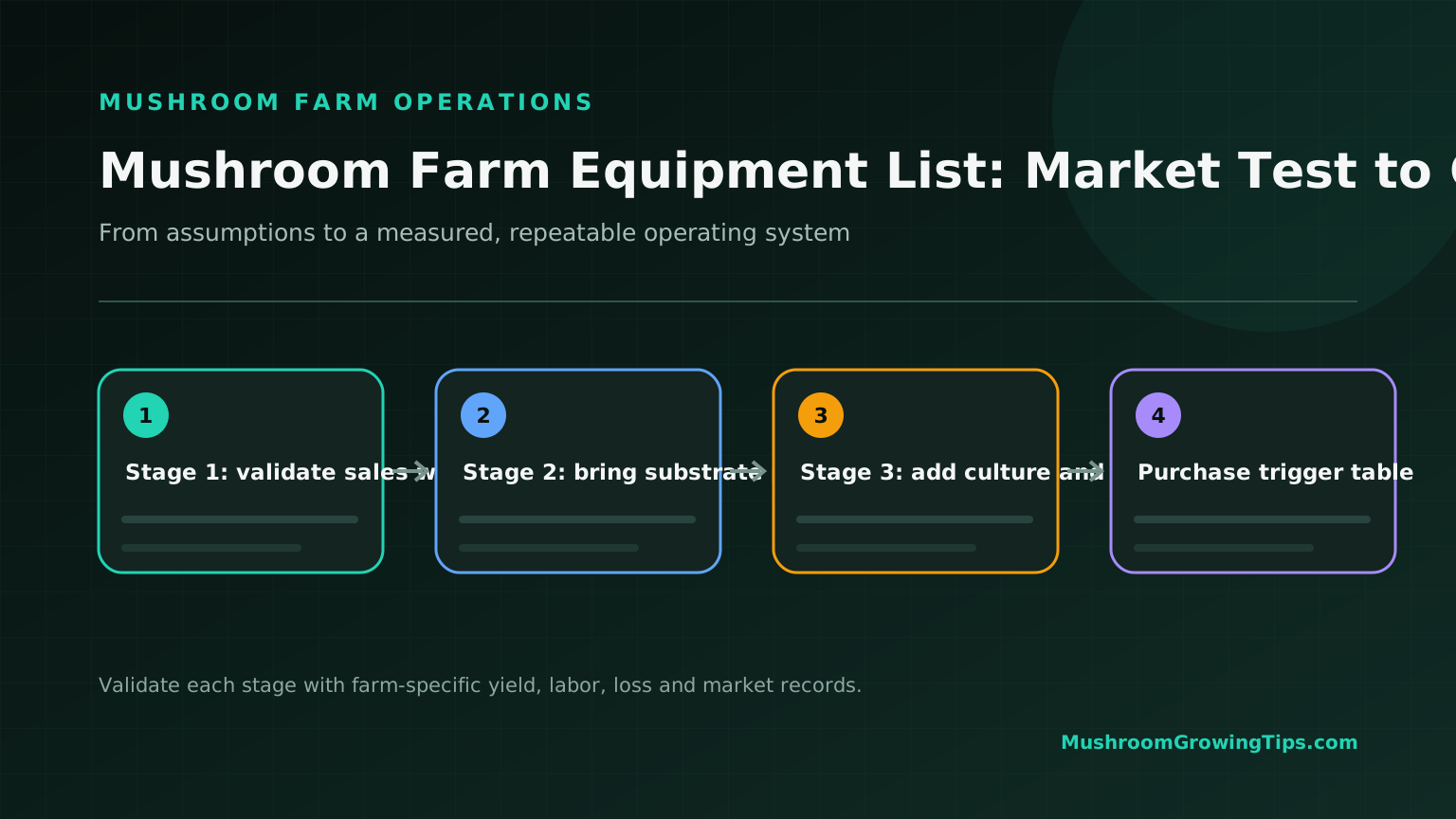
Stage 1: validate sales with purchased blocks
The lowest-risk farm test buys consistent fruiting blocks and concentrates on fruiting, harvest, cooling and customers. This proves selling price, weekly demand, route density and product quality before a lab or substrate line consumes capital.
- Washable fruiting enclosure or room
- Water-resistant racks with measurable block positions
- Humidity and temperature control
- Indirect fresh-air exhaust and safe condensate management
- Crop-level temperature, RH and CO₂ sensors
- Washable harvest tools, scales, food-safe totes and labels
- Dedicated refrigeration or documented cold-storage capacity
- Cleaning supplies approved for the intended surfaces
Stage 2: bring substrate production in-house
Add processing only when purchased-block margin, supply reliability or volume makes it worthwhile. Design raw-material flow before buying a mixer or sterilizer.
- Dry raw-material storage and lot identification
- Weighing, hydration and mixing equipment sized to the batch
- Bag filling and sealing system
- Load-specific pasteurization or sterilization equipment
- Cooling and clean staging area
- Incubation racks with batch visibility
- Carts that stay within defined clean or dirty zones
Stage 3: add culture and spawn capability
Culture work can multiply one problem across every downstream block. A clean lab requires more than a flow hood: controlled workflow, validated processes, traceability and qualified operators matter.
- Cleanable enclosed workspace
- Appropriately sized clean-air equipment
- Pressure-rated sterilization equipment and monitoring
- Agar, culture and spawn cold storage
- Impulse sealing, labeling and lot records
- Master, working and production culture system
- Quarantine and release space for new spawn lots
Purchase trigger table
| Equipment | Buy when | Avoid buying when |
|---|---|---|
| Fruiting controls | Trial customers can absorb recurring weekly harvest | No measured demand or room heat/moisture plan |
| Substrate mixer | Batch labor and consistency constrain profitable volume | Recipe and dry-mass records are not stable |
| Sterilizer/pasteurizer | Required loads and treatment method are known | The process, utilities or safe installation are undefined |
| Flow hood | Regular sterile transfers justify a controlled lab | The surrounding workflow remains dirty or untrained |
| Cold storage | Harvest volume and customer schedule exceed existing capacity | Cooling load, drainage and food-storage separation are unknown |
| Delivery vehicle | Route margin and recurring density justify ownership | Orders remain sporadic or can be served by lower-cost logistics |
Specify capacity before requesting quotes
For every purchase, document units per hour, largest batch, utilities, cleaning access, footprint, service support, consumables and failure contingency. Compare total installed cost and labor saved—not only purchase price.
Frequently asked questions
What equipment is essential for starting a mushroom farm?
For a market test, prioritize a cleanable fruiting space, racks, environmental control and measurement, harvest tools, scales, packaging and refrigeration. Culture and substrate equipment can wait until demand is proven.
Should a new farm make its own mushroom blocks?
Not necessarily. Purchased blocks reduce technical and capital risk while the farm validates customers. Bring production in-house only when the economics, volume and operating capability justify it.
Continue building the farm plan
Facility design
Commercial Mushroom Farm Layout and Workflow
Plan a commercial mushroom farm layout with clean-to-dirty product flow, separated lab, incubation, fruiting, packing, cold storage and waste routes.
Facility economics
Mushroom Farm Profit per Square Foot and Shelf Position
Calculate mushroom farm profit per square foot using vertical racks, saleable yield, crop cycle, occupancy, utilization and contribution per shelf-week.
Sales and unit economics
Mushroom Farm Pricing Guide: Wholesale, Restaurant and Retail
Set mushroom prices from true unit cost, channel margin, packaging, delivery, unsold inventory and target contribution—not competitor guesses.
Build this into a measured production plan
Use your own yields, labor, loss rate, prices and room constraints before committing capital or customer volume. The planning tools below turn these operating assumptions into a weekly model.