Crop-loss management
Mushroom Farm Contamination Rate: Measurement and Action Thresholds
There is no universal acceptable contamination rate for every mushroom process. Measure comparable containers by stage and batch, translate the loss into cost and capacity, then set internal warning and action thresholds from the farm's qualified baseline and risk tolerance.
By Andrew Langevin · Founder, Nature Lion Inc · Contributing author, Mushroomology (Brill, 2026) · Updated August 11, 2026
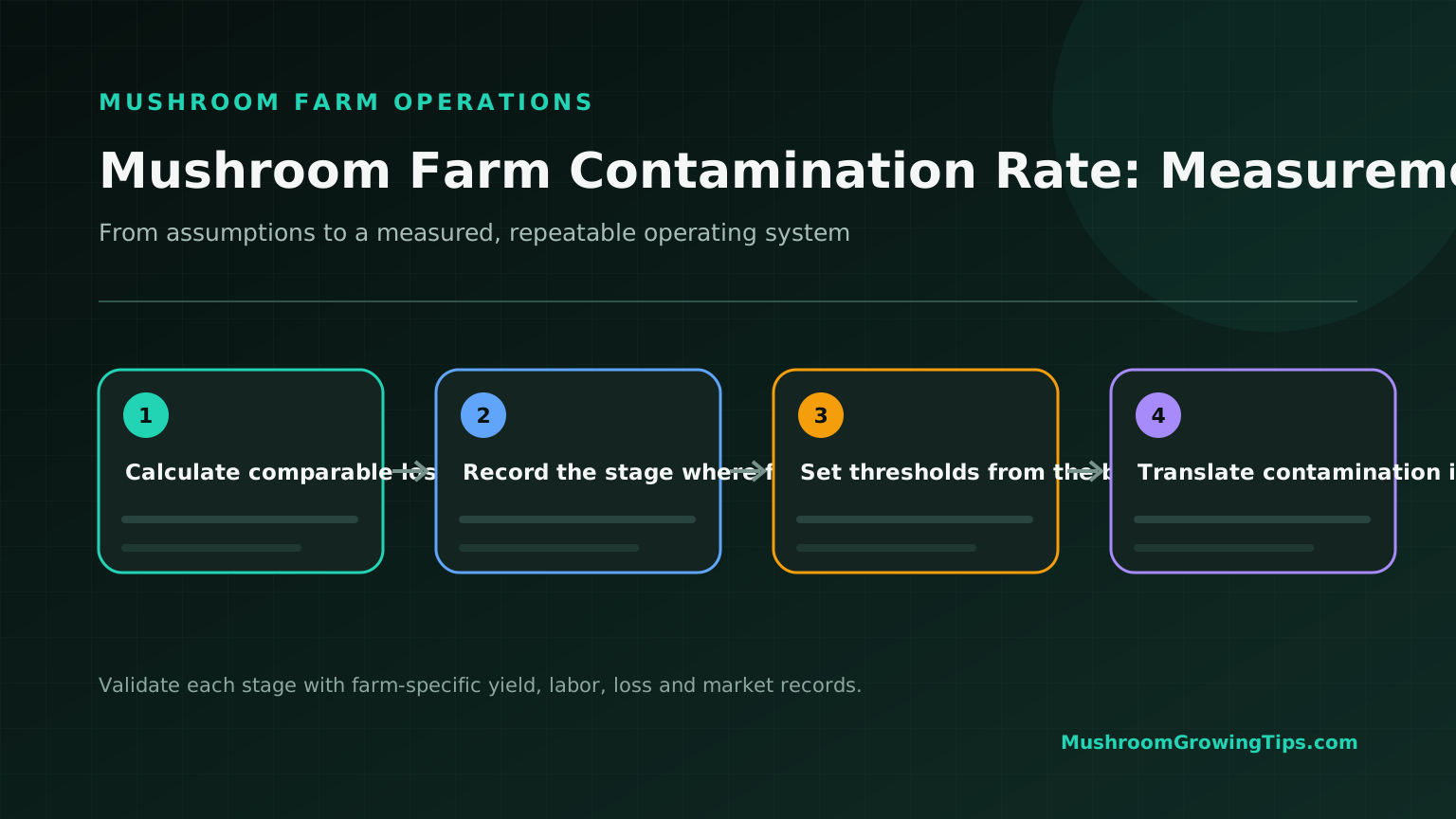
Calculate comparable loss rates
Use a consistent denominator. A culture-plate failure rate, grain-spawn rejection rate and fruiting-block loss rate describe different processes and should not be combined into one percentage.
| Rate | Formula |
|---|---|
| Agar rejection | Rejected plates ÷ comparable inoculated plates × 100 |
| Spawn rejection | Rejected spawn containers ÷ comparable spawn containers × 100 |
| Block rejection | Discarded blocks ÷ comparable produced blocks × 100 |
| Saleable-yield loss | Expected saleable kg − actual saleable kg |
| Customer spoilage/returns | Returned or credited kg ÷ sold kg × 100 |
Record the stage where failure becomes visible
- Culture or agar
- Liquid culture
- Grain preparation and sterilization
- Inoculation or G2G expansion
- Incubation
- Fruiting
- Post-harvest and customer
Set thresholds from the baseline
A practical system uses at least three levels: routine variation, warning and action. Establish them from comparable historical batches, economic tolerance and the consequence of spreading a suspect lineage. A single severe organism or shared-culture pattern may trigger action even when the percentage is small.
- Define the batch and denominator before calculating
- Use both percentage and count
- Flag repeated failures sharing culture, load, operator or room
- Escalate when the process shifts from its normal range
- Document containment, investigation, correction and verification
Translate contamination into money
Failed blocks consume materials and labor and may occupy incubation or fruiting capacity. Calculate replacement starts needed to fill demand, wasted block cost, unit-cost increase and weekly contribution lost.
| Hidden cost | How it appears |
|---|---|
| Materials and spawn | Direct cost of failed containers |
| Labor | Preparation, handling, investigation and cleaning |
| Capacity | Shelf positions occupied by non-saleable blocks |
| Customer service | Shortages, substitutions or missed orders |
| Future risk | Spores or a suspect lineage affecting later batches |
Do not diagnose by percentage alone
A rising rate identifies a process problem, not its cause. Use timing, location, appearance, shared inputs and controls. Keep suspect containers sealed and avoid deliberate inhalation or disturbance.
Frequently asked questions
What is an acceptable mushroom farm contamination rate?
There is no universal rate. Set internal thresholds by process stage using a qualified baseline, economic consequences and risk. Some contamination patterns require action even at low percentages.
How is mushroom contamination rate calculated?
Divide rejected containers by the total comparable containers in that batch and stage, then multiply by 100. Keep different production stages separate.
Continue building the farm plan
Post-harvest operations
Mushroom Harvest, Cooling and Shelf-Life SOP
Build a mushroom harvest and cold-chain SOP covering maturity, grading, lot identification, rapid cooling, packaging, storage and delivery records.
Commercial equipment planning
Mushroom Farm Equipment List: Market Test to Commercial Scale
Choose mushroom farm equipment by production stage, from a low-risk market test through an integrated commercial facility.
Facility design
Commercial Mushroom Farm Layout and Workflow
Plan a commercial mushroom farm layout with clean-to-dirty product flow, separated lab, incubation, fruiting, packing, cold storage and waste routes.
Build this into a measured production plan
Use your own yields, labor, loss rate, prices and room constraints before committing capital or customer volume. The planning tools below turn these operating assumptions into a weekly model.