Cheat Sheets
10 tips in Tools & Calculators
By Andrew Langevin · Founder, Nature Lion Inc · Contributing author, Mushroomology (Brill, 2026)
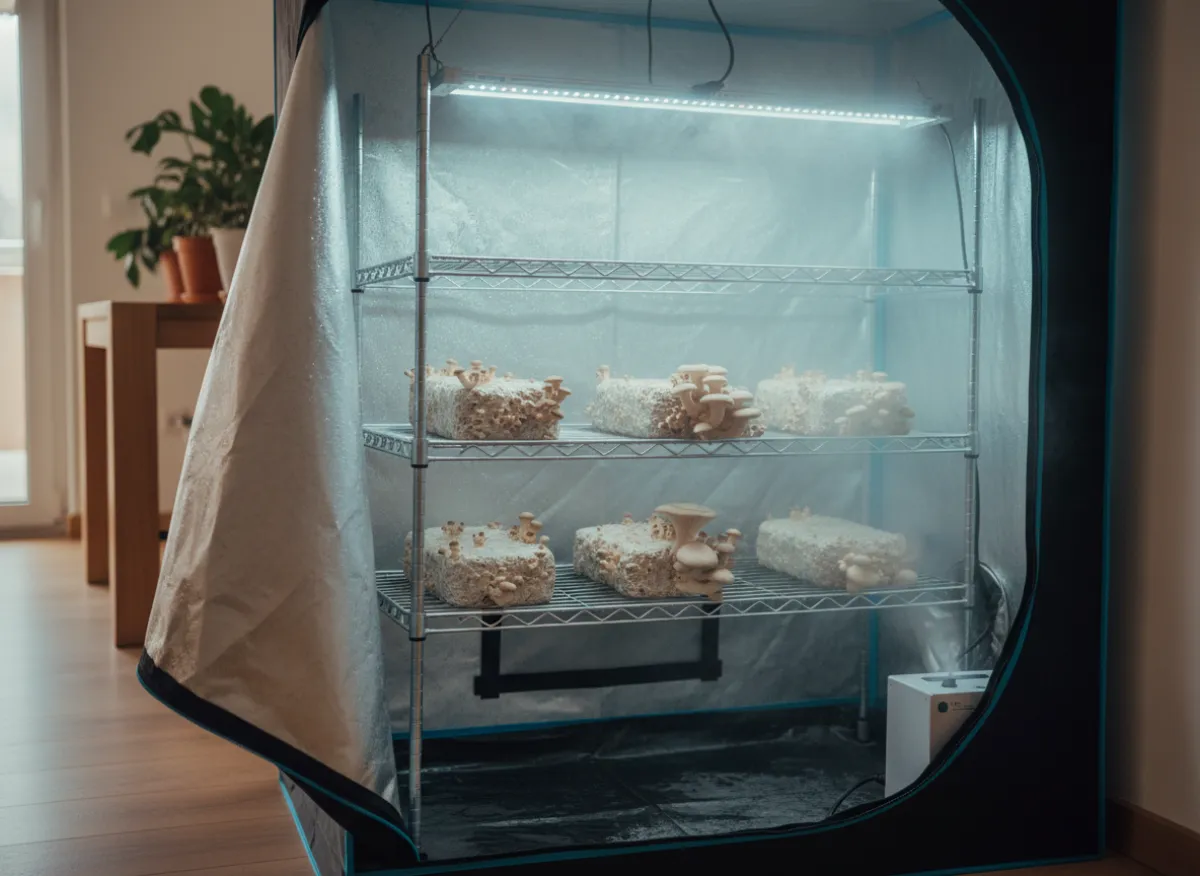
A quick-scan comparison of the most commonly cultivated species. Bookmark this page for fast look-up when setting up a new grow.
Blue oyster:
- Difficulty: Beginner
- Substrate: Straw, Masters Mix, cardboard, coffee grounds
- Colonization temp: 21-24C
- Fruiting temp: 10-21C
- Humidity: 85-95%
- Time to fruit (from inoculation): 3-4 weeks
- Flushes: 2-3
Pink oyster:
- Difficulty: Beginner
- Substrate: Straw, Masters Mix
- Colonization temp: 24-30C
- Fruiting temp: 18-30C (warm weather species)
- Humidity: 85-95%
- Time to fruit: 2-3 weeks
- Flushes: 2-3
Lion's mane:
- Difficulty: Intermediate
- Substrate: Masters Mix, supplemented sawdust
- Colonization temp: 21-24C
- Fruiting temp: 18-24C
- Humidity: 90-95%
- Time to fruit: 4-6 weeks
- Flushes: 1-2
Shiitake:
- Difficulty: Intermediate
- Substrate: Supplemented sawdust, logs
- Colonization temp: 21-27C
- Fruiting temp: 10-21C (cold shock triggers)
- Humidity: 80-90%
- Time to fruit: 8-12 weeks (includes browning)
- Flushes: 3-5 on logs
King oyster:
- Difficulty: Intermediate-Advanced
- Substrate: Masters Mix, supplemented sawdust
- Colonization temp: 21-24C
- Fruiting temp: 12-18C
- Humidity: 85-90%
- Time to fruit: 4-6 weeks
- Flushes: 1-2
Reishi:
- Difficulty: Beginner-Intermediate
- Substrate: Supplemented sawdust, logs
- Colonization temp: 24-30C
- Fruiting temp: 24-30C
- Humidity: 80-90%
- Time to fruit: 6-10 weeks
- Flushes: 1 (conk/antler form)
When you spot something suspicious, act fast. This guide helps you identify what you are dealing with and decide whether to salvage or discard.
Green (most common):
- Trichoderma — Starts white, turns bright green within 24-48 hours. Powdery texture. Aggressive spreader. Action: Discard immediately. Do not try to cut it out.
- Penicillium — Blue-green, powdery, often appears in concentric rings. Action: Discard. Less aggressive than Trich but still fatal to your grow.
- Aspergillus — Dark green to olive. Powdery. Action: Discard. Can be harmful to inhale.
Black:
- Black mold (Aspergillus niger) — Black powdery patches. Action: Discard with caution. Wear a mask. Dangerous to inhale.
- Black pin mold (Rhizopus) — Whisker-like with tiny black dots on tips. Spreads very fast. Action: Discard.
Orange/Pink:
- Neurospora (lipstick mold) — Bright orange, spreads explosively. Action: Discard outside immediately. Seal the container first. This contaminant can take over an entire grow room.
Gray:
- Cobweb mold (Dactylium) — Gray, wispy, very fast-growing. Can sometimes be treated with hydrogen peroxide spray if caught early. Action: Spray with 3% H2O2 and monitor.
Yellow/Wet:
- Bacterial contamination — Wet, slimy patches with a sour smell. Often in grain spawn. Action: Discard. Caused by excess moisture or insufficient sterilization.
Rule of thumb: when in doubt, throw it out. One contaminated container can spread spores to your entire operation.
Keep this list handy when preparing substrates. All recipes listed with dry ingredients, hydration method, and sterilization requirements.
CVG (coir/vermiculite/gypsum):
- 650g coco coir (1 brick) + 4 qt vermiculite + 2 cups gypsum
- Hydrate with 4-5 qt boiling water in a bucket, lid on, wait 2-4 hours
- Pasteurization by bucket tek — no pressure cooker needed
Masters Mix:
- 50% hardwood fuel pellets + 50% soy hull pellets by dry weight
- Hydrate to 60% moisture (roughly equal weight of water)
- Must be pressure sterilized — 15 PSI for 2.5 hours
Hardwood pellet blocks (no soy):
- 100% hardwood fuel pellets + 10% wheat bran by dry weight
- Hydrate to 60% moisture
- Pressure sterilize — 15 PSI for 2.5 hours
Straw:
- Chop to 5-10 cm lengths
- Pasteurize: cold water lime bath (24h), hot water (1h at 65-82C), or cold fermentation (7-10 days submerged)
- Drain to field capacity before use
PF Tek (BRF cakes):
- 2 parts vermiculite + 1 part brown rice flour + 1 part water (by volume)
- Load into half-pint jars with dry vermiculite layer on top
- Pressure sterilize — 15 PSI for 90 minutes
Manure-based (composted):
- Horse manure (composted) + straw + gypsum (5%)
- Pasteurize at 60-74C for 1-2 hours
- Or cold pasteurize with hydrated lime
Log cultivation:
- Freshly cut hardwood logs (oak, maple, beech), 10-15 cm diameter
- Cut 2-4 weeks before inoculation (no sterilization needed)
- No substrate preparation — drill, plug, wax
Start with just the essentials and add gear as your skills grow. You do not need everything on day one.
Beginner (PF Tek, pre-made spawn + straw/CVG):
- Spray bottle (misting)
- Clear plastic tub with lid (fruiting chamber)
- Perlite (for SGFC humidity)
- Micropore tape
- Isopropyl alcohol 70%
- Still air box (SAB) — clear tote with arm holes
- Pressure cooker (8+ quart) or buy pre-sterilized grain
- Thermometer/hygrometer
Intermediate (grain spawn production, monotubs):
- Pressure cooker (23+ quart for larger batches)
- Wide-mouth mason jars + modified lids
- Grain (rye berries, oats, or WBS)
- Impulse sealer + autoclavable grow bags
- Agar plates and parafilm
- Scalpel and alcohol lamp
- Digital scale
Advanced (clean culture work, flow hood, scaling up):
- Laminar flow hood (HEPA-filtered, 99.97% efficient)
- Magnetic stir plate for liquid culture
- Polycarbonate agar plates (reusable)
- pH meter
- Humidity controller + ultrasonic humidifier
- Inline duct fan + HEPA filter for grow room
- CO2 meter
- Wire metro shelving
- Automated misting system
Budget priority order: SAB, then pressure cooker, then quality grain, then monotub, then flow hood. The flow hood is the biggest quality-of-life upgrade, but invest in it only after you have outgrown the SAB.
A complete grow typically takes 4-8 weeks from inoculation to first harvest, depending on species and method. Here is the full timeline.
Week-by-week for a typical gourmet monotub grow:
- Day 0 — Inoculate grain jars with liquid culture or agar
- Days 1-3 — No visible growth (mycelium is establishing)
- Days 3-7 — First visible mycelial growth radiating from inoculation points
- Days 7-14 — Grain 30-50% colonized; shake at 30%
- Days 14-21 — Grain fully colonized; spawn to bulk substrate
- Days 21-28 — Bulk substrate colonizing (keep lid closed)
- Days 28-35 — Substrate fully colonized; introduce fruiting conditions (FAE, light, humidity)
- Days 35-40 — Pins form (tiny mushroom primordia appear)
- Days 40-47 — Mushrooms double in size daily; harvest when caps flatten or just before
- Days 48-60 — Soak or rest for second flush; repeat
Species-specific total timelines (inoculation to first harvest):
- Oyster mushrooms — 3-4 weeks
- Lion's mane — 4-6 weeks
- King oyster — 5-7 weeks
- Shiitake (bags) — 8-14 weeks (long browning period)
- Reishi — 8-12 weeks
- Log cultivation — 6-18 months (seasonal)
Tip: Write the inoculation date on every jar and bag. Track timelines to identify when your process needs adjustment.
This is one of the most important concepts in mushroom growing. Get it wrong and you will either waste time over-processing or lose grows to contamination.
Sterilization (kills everything — 100% of organisms):
- Method: Pressure cooker at 15 PSI (121C / 250F)
- When to use: Any nutrient-rich, supplemented substrate that contaminants love
- Required for: Grain spawn, Masters Mix, supplemented sawdust, agar, liquid culture
- Why: These substrates are so nutritious that even a few surviving spores will outcompete your mycelium
Pasteurization (kills most organisms but not all):
- Method: Hot water (65-82C / 149-180F for 1-2 hours), lime bath, or bucket tek with boiling water
- When to use: Low-nutrient substrates where your mycelium has a competitive advantage
- Works for: Straw, plain coir, CVG, manure-based substrates, cardboard
- Why: These substrates are not rich enough to support aggressive contaminants if your mycelium gets a head start
No treatment needed:
- Logs — the intact bark acts as a natural barrier
- Outdoor beds — you are working with natural conditions
Common mistake: Trying to pasteurize Masters Mix or supplemented sawdust. These substrates must be sterilized. Pasteurization leaves heat-resistant endospores alive, and the rich nutrients give them everything they need to explode.
Choose your tek based on your species, equipment, and experience level. Each method has trade-offs between ease, cost, and yield.
PF Tek (beginner — cakes):
- Best for: First-time growers, small scale
- Equipment: Pressure cooker, mason jars, SGFC
- Pros: Simple, forgiving, low cost
- Cons: Low yields, labor-intensive per gram of output
Monotub (beginner-intermediate — bulk):
- Best for: Higher yields with moderate effort
- Equipment: Pressure cooker, tubs, SAB or flow hood
- Pros: Good yields, set-and-forget after setup
- Cons: Higher contamination risk than sealed bags
Grow bags (intermediate — commercial standard):
- Best for: Gourmet species, scaling up, consistent results
- Equipment: Pressure cooker (large), impulse sealer, grow bags
- Pros: Professional results, controlled environment, stackable
- Cons: Higher upfront cost, requires more equipment
Bucket tek (beginner — straw):
- Best for: Oyster mushrooms on the cheap
- Equipment: 5-gallon bucket, straw, lime or hot water
- Pros: No pressure cooker needed, very cheap
- Cons: Limited to aggressive species (oyster)
Log cultivation (beginner — outdoor):
- Best for: Long-term outdoor production
- Equipment: Drill, plug spawn, wax
- Pros: Low-tech, multi-year production, no ongoing substrate costs
- Cons: Slow (6-18 months to first fruit), seasonal, weather-dependent
Pick the right spawn type for your cultivation method. Each has a specific niche where it excels.
Grain spawn:
- Cost: Moderate ($12-20/quart)
- Colonization speed: Fast (highest nutrition per point)
- Best for: Monotubs, grow bags, bulk substrate inoculation
- Shelf life: 2-4 weeks refrigerated
- Make at home: Yes, with pressure cooker
- Skill level: Intermediate
Sawdust spawn:
- Cost: Low ($8-15/5 lbs)
- Colonization speed: Moderate
- Best for: Log inoculation, outdoor beds, commercial bag production
- Shelf life: 2-6 weeks refrigerated
- Make at home: Yes, with pressure cooker
- Skill level: Intermediate
Plug spawn:
- Cost: Low ($15-25 per 100 plugs)
- Colonization speed: Slow
- Best for: Log inoculation only
- Shelf life: 2-6 months refrigerated
- Make at home: Possible but not practical
- Skill level: Beginner
Liquid culture:
- Cost: Very low ($10-15/syringe, or pennies if homemade)
- Colonization speed: Moderate (needs grain to multiply)
- Best for: Inoculating grain spawn, long-term culture storage
- Shelf life: 1-6 months refrigerated
- Make at home: Yes, with pressure cooker + stir plate
- Skill level: Intermediate-Advanced
Decision shortcut: Doing indoor grows? Use grain spawn. Doing logs? Use plug spawn. Want to make your own spawn? Start with liquid culture.
Your fruiting chamber determines your humidity control, air exchange, and how many blocks you can fruit at once. Match the chamber to your scale.
Shotgun fruiting chamber (SGFC):
- Capacity: 1-6 PF Tek cakes or 1-2 small blocks
- Cost: $5-15
- Humidity method: Wet perlite layer on bottom
- FAE: Passive through drilled holes on all 6 sides (1/4 inch holes, 2 inches apart)
- Pros: Dead simple, cheap, good for PF Tek
- Cons: Inconsistent humidity, manual misting 2-3x daily, tiny capacity
Monotub:
- Capacity: 1 bulk substrate block (3-6 inches deep)
- Cost: $10-20
- Humidity method: Substrate moisture + sealed environment
- FAE: Polyfill-stuffed holes or flipped lid with gap
- Pros: Set-and-forget, good yields, consistent
- Cons: One tub = one grow, not great for top-fruiting species
Martha tent:
- Capacity: 10-30 blocks on shelves
- Cost: $50-150
- Humidity method: Ultrasonic humidifier on timer or humidity controller
- FAE: Small fan on timer or continuous low-speed
- Pros: Good humidity control, multiple species at once, visible
- Cons: Requires humidity controller for best results, condensation management
Dedicated grow room:
- Capacity: 50+ blocks
- Cost: $500-5000+
- Humidity method: Industrial humidifier, insulated walls, drain floor
- FAE: HEPA-filtered positive pressure intake
- Pros: Professional results, climate-controlled, scalable
- Cons: Expensive, requires construction, overkill for hobby scale
Plan your grows around the seasons for outdoor cultivation, and use the calendar to batch your indoor work efficiently.
January-February (winter):
- Order spawn, supplies, and cultures for the year
- Start agar work and liquid cultures
- Indoor grows: inoculate grain, prepare bulk substrate
- Cut logs for spring inoculation (trees are dormant — ideal time)
March-April (early spring):
- Log inoculation window — inoculate freshly cut logs before trees leaf out
- Start outdoor bed preparation (wine caps, oyster)
- Continue indoor monotub and bag grows
- Clean and organize grow space
May-June (late spring):
- Outdoor beds start producing (wine caps, oyster on straw)
- Check logs — first-year logs will not fruit yet
- Indoor grows continue year-round
- Prepare straw bales or outdoor substrates
July-August (summer):
- Hot weather challenge: indoor temp control is critical
- Favor warm-weather species indoors (pink oyster, reishi)
- Outdoor oyster on straw peaks
- Maintain log stacks — keep shaded and watered during drought
September-October (fall):
- Peak outdoor fruiting season — shiitake logs fruit after fall rains
- Force-fruit shiitake logs by soaking in cold water 24 hours
- Best time for outdoor wine cap beds (inoculate before frost)
- Stock up on grain and substrate for winter indoor grows
November-December (late fall/winter):
- Outdoor season winds down
- Shift focus entirely to indoor cultivation
- Great time for agar isolation and culture library work
- Plan next year's grows and order supplies during holiday sales
Year-round indoor tasks: Maintain your culture library, keep grain spawn rotating, clean and sterilize equipment regularly, and log every grow for continuous improvement.
Need more help? Dr. Myco can answer follow-up questions about cheat sheets based on thousands of real growing experiences.
Ask Dr. Myco