Worked business-plan example
Oyster Mushroom Farm Example: A 100 kg/Week Operating Plan
A 100 kg/week oyster plan is a scenario, not a universal blueprint. At 0.70 kg saleable yield per healthy block and 10% crop loss, it requires about 159 weekly starts plus room, labor, cold storage and customers capable of absorbing the harvest.
By Andrew Langevin · Founder, Nature Lion Inc · Contributing author, Mushroomology (Brill, 2026) · Updated August 11, 2026
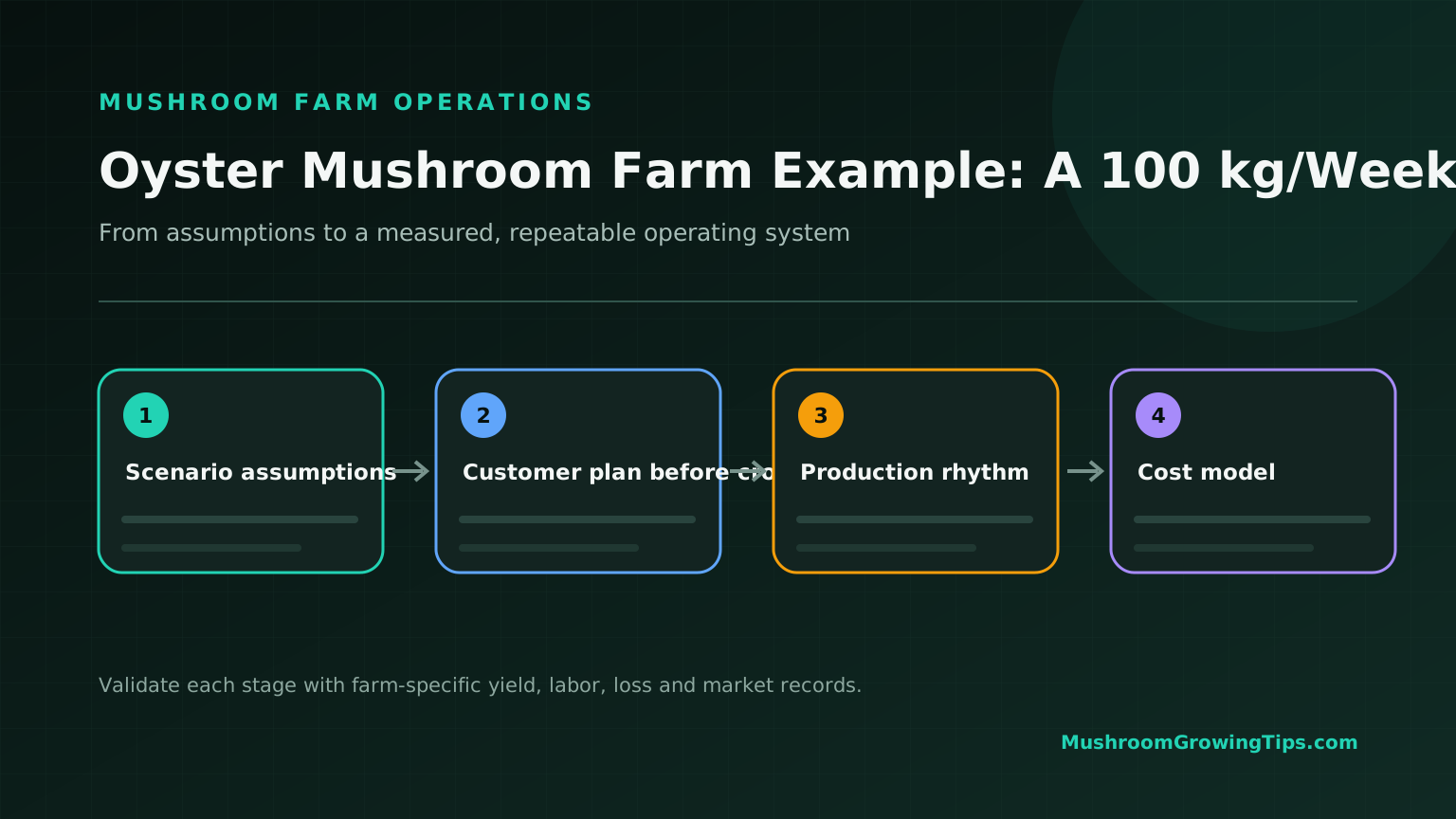
Scenario assumptions
| Input | Example assumption |
|---|---|
| Saleable target | 100 kg/week |
| Species | Blue or pearl oyster matched to room temperature |
| Healthy-block yield | 0.70 kg saleable |
| Crop loss | 10% |
| Weekly block starts | 159 |
| Incubation occupancy | 2 weeks / 318 positions |
| Fruiting occupancy | 3 weeks / 477 positions |
| Average realized price | Farm-specific input—not assumed here |
Customer plan before crop plan
Divide the target among actual channels and delivery days. No farm should produce 100 kg because a spreadsheet says it can. Paid trial orders should demonstrate price, pack size, consistency and route density.
- Limit dependence on one buyer
- Separate committed demand from hoped-for demand
- Set order cutoffs and shortage communication
- Measure unsold inventory by channel
- Match pink, blue or pearl oyster shelf life to delivery distance
Production rhythm
Prepare and inoculate approximately the same number of blocks on a fixed weekly rhythm, release clean batches into incubation, move qualified blocks into fruiting and harvest to customer schedule. The farm needs spare capacity for delays and cleaning.
- Maintain traceable culture, spawn and substrate lots
- Record stage-specific loss
- Measure first and later flushes separately
- Retire blocks when shelf-week contribution becomes inferior to replacement
- Keep backup cultures outside the production lineage
Cost model
- Substrate, bags and spawn per block
- Production, harvest, packing and delivery labor
- Packaging and labels
- Utilities and room operating allocation
- Refrigeration and delivery
- Crop loss, downgraded and unsold product
- Lease, insurance, administration and debt separately identified
Downside tests
| Scenario | Question |
|---|---|
| Yield falls 20% | Can commitments still be filled without destroying margin? |
| Crop loss reaches 20% | How many replacement starts and positions are required? |
| Top customer leaves | Can production be reduced before blocks reach harvest? |
| Cooling fails | What product, customer and response plan applies? |
| Labor time doubles | Which process or price must change? |
Use the example correctly
Replace every assumption with measured farm data and local requirements. The value of this example is the relationship among demand, yield, loss, capacity and cash—not the specific scale.
Frequently asked questions
How many oyster blocks are needed for 100 kg per week?
At 0.70 kg saleable yield per healthy block and 10 percent crop loss, start about 159 blocks each week.
Is 100 kg per week a good starting size?
Only if repeatable production data and paid customer demand support it. Many farms should validate a much smaller route before committing to this capacity.
Continue building the farm plan
Environmental engineering
Mushroom Fruiting Room Design: Airflow, Humidity and CO₂
Design a mushroom fruiting room around crop-level airflow, humidity, CO2 removal, condensate, sensors, racks and failure response.
Crop-loss management
Mushroom Farm Contamination Rate: Measurement and Action Thresholds
Measure mushroom farm contamination by stage, calculate its financial effect and set evidence-based internal action thresholds without relying on a universal rate.
Post-harvest operations
Mushroom Harvest, Cooling and Shelf-Life SOP
Build a mushroom harvest and cold-chain SOP covering maturity, grading, lot identification, rapid cooling, packaging, storage and delivery records.
Build this into a measured production plan
Use your own yields, labor, loss rate, prices and room constraints before committing capital or customer volume. The planning tools below turn these operating assumptions into a weekly model.