Inoculation Techniques
14 tips in Spawn Production
By Andrew Langevin · Founder, Nature Lion Inc · Contributing author, Mushroomology (Brill, 2026)
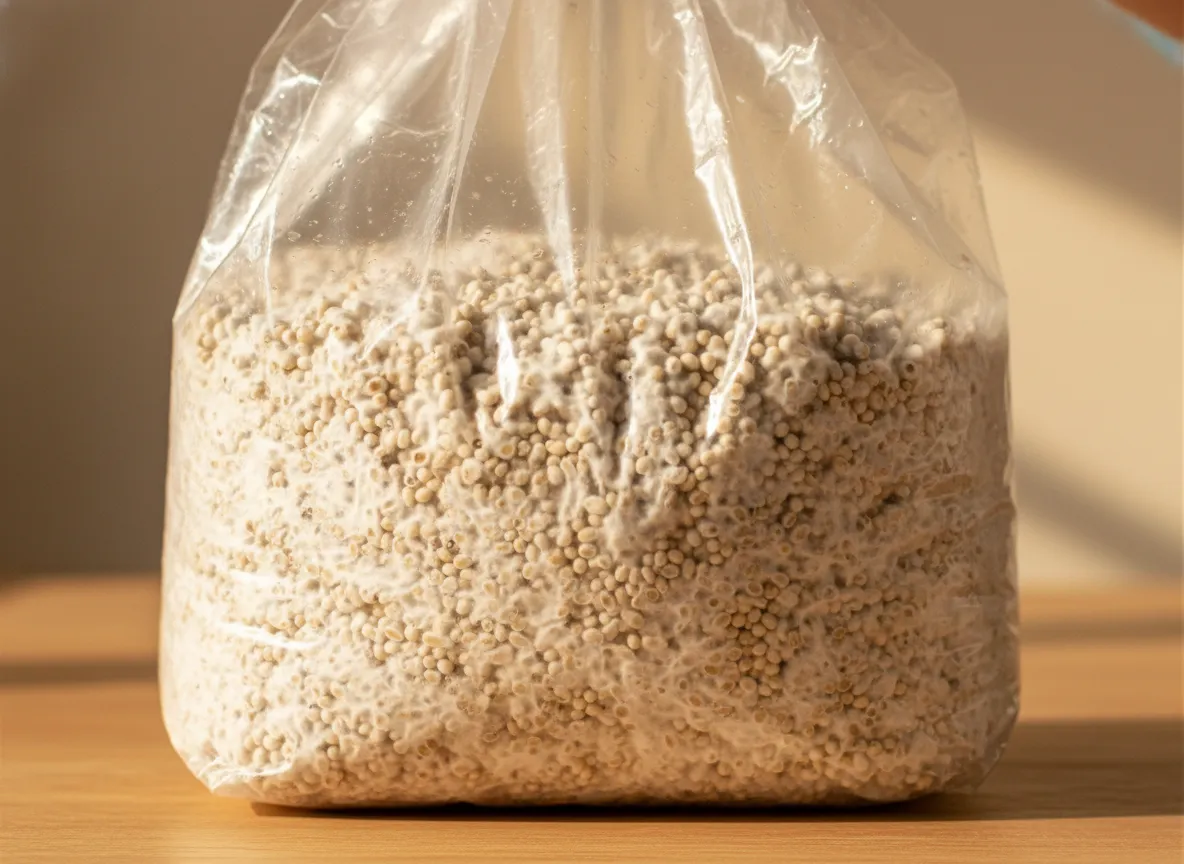
Inoculating grain with liquid culture is one of the most common methods for producing grain spawn. Inject 1-3cc of liquid culture per quart jar of sterilized grain through a self-healing injection port using a sterile syringe and needle.
Step-by-step process:
- Sterilize your grain jars at 15 PSI for 90 minutes and let them cool completely (overnight is ideal)
- Shake your liquid culture syringe vigorously to break up mycelial clumps and distribute them evenly
- Flame-sterilize the needle until red-hot, then let it cool for a few seconds
- Wipe the injection port with 70% isopropyl alcohol
- Insert the needle through the port and inject 1-3cc of LC, distributing it in multiple spots if possible
- Withdraw the needle — the port self-seals
LC inoculation is faster than spore syringes because you're adding established, actively growing mycelium rather than ungerminated spores. Expect visible colonization within 3-5 days and full colonization in 10-21 days at proper temperatures. Always test your LC on agar first to confirm it's contaminant-free before committing multiple jars.
Agar-to-grain transfer is the gold standard for producing clean grain spawn. You cut small wedges of colonized agar and drop them into sterilized grain jars using sterile technique in a SAB or in front of a flow hood.
Step-by-step process:
- Prepare and sterilize grain jars, cool completely
- Work inside your SAB or in front of your flow hood
- Flame-sterilize your scalpel until red-hot
- Open your colonized agar plate and cut 3-5 small wedges (approximately 1cm square)
- Open the grain jar, quickly drop in the agar wedges, and close the jar
- Shake gently to distribute the wedges throughout the grain
Multiple small wedges are better than one large piece because they create several inoculation points spread throughout the grain, speeding colonization. Each wedge acts as a growth origin, reducing total colonization time.
Agar-to-grain is preferred over LC for critical transfers because you can visually inspect the agar plate for contamination before committing it to grain. If you see any off-colors or unusual growth on your agar, do not transfer it to grain — clean it up with further agar transfers first.
Grow bags with filter patches are the standard vessel for producing supplemented sawdust fruiting blocks. Inoculate sterilized bags with grain spawn at a 15-20% spawn rate by weight, working in front of a flow hood or inside a SAB.
Step-by-step process:
- Sterilize your substrate bags at 15 PSI for 2.5 hours and cool completely
- Prepare your colonized grain spawn (shake the jar to break up grain)
- In front of clean air, open the bag at the top above the filter patch
- Pour the appropriate amount of grain spawn into the bag
- Fold the bag closed, seal with an impulse sealer or fold and tape
- Mix the spawn thoroughly by kneading and shaking the sealed bag to distribute grain evenly throughout the substrate
For a 5 lb substrate bag, use approximately 0.75-1 lb (340-450g) of grain spawn. The more evenly you distribute the spawn, the faster colonization will proceed.
After inoculation, store bags in a clean, dark area at colonization temperature (typically 21-24°C). Full colonization takes 14-30 days depending on species and spawn rate. Do not open or disturb the bags during colonization.
Spawning to bulk is the process of mixing colonized grain spawn into prepared bulk substrate inside your monotub. This is the critical transition from spawn production to fruiting, and cleanliness during this step directly impacts your success rate.
Step-by-step process:
- Prepare your bulk substrate (CVG is most common) and verify field capacity with the squeeze test
- Ensure your grain spawn is 100% colonized with no signs of contamination — smell each jar before opening
- Sanitize your monotub, your hands (or wear gloves), and any tools with 70% isopropyl alcohol
- Add a thin layer of substrate to the bottom of the tub
- Break up the grain spawn and mix it evenly throughout the remaining substrate in a separate container or directly in the tub
- Level the surface without packing it down — you want airspace in the substrate
- Optional: add a thin casing layer (1/4 inch of plain substrate) on top
Close the lid and seal any holes with tape during colonization. Store at colonization temperature (21-24°C) in a dark area. Do not open the tub until the surface is fully colonized (7-14 days), then introduce fruiting conditions.
PF Tek is the classic beginner method using brown rice flour (BRF) cakes in half-pint jars, inoculated with a multi-spore syringe. Inject approximately 0.75-1cc of spore solution per jar through holes in the lid.
Step-by-step process:
- Prepare BRF jars (2 parts vermiculite, 1 part BRF, 1 part water) with a dry vermiculite barrier on top
- Punch 4 holes in each lid with a nail, cover with micropore tape
- Sterilize at 15 PSI for 90 minutes, cool completely (do not skip the cooling — condensation from warm jars can cause contamination)
- Shake the spore syringe well to distribute spores
- Flame-sterilize the needle until red-hot
- Wipe each injection hole with alcohol
- Insert the needle through each hole and inject approximately 0.25cc against the glass (you want spores near the outer edge where you can see colonization)
- Cover holes with fresh micropore tape after injection
Incubate at 21-27°C in the dark. Colonization takes 14-28 days. PF Tek is slower than bulk methods because spore syringes contain ungerminated spores that must first germinate and then find compatible mating partners before dikaryotic colonization begins.
Log inoculation with plug spawn is the simplest method for outdoor mushroom cultivation. Use freshly cut hardwood logs (2-8 weeks after cutting), drill holes, tap in colonized plugs, and seal with wax.
Step-by-step process:
- Select fresh hardwood logs 3-8 inches in diameter and 3-4 feet long (oak is ideal for shiitake, maple or beech for oyster)
- Drill holes using a 12mm (7/16 inch) drill bit — the standard size for spawn plugs
- Space holes every 6 inches along the length, in rows 2-3 inches apart, staggering rows in a diamond pattern
- Tap plugs into each hole with a hammer until flush or slightly recessed
- Seal each plug with melted cheese wax or beeswax using a small paintbrush or dauber — this prevents drying and contamination
- Also seal any exposed end grain or bark damage with wax
After inoculation:
- Stack logs in a shady, humid location (lean-to or log cabin stack)
- Keep logs off the ground using pallets or other logs
- Water during dry periods — logs need consistent moisture
- Colonization takes 6-18 months depending on species, log size, and conditions
- A well-inoculated shiitake log can produce mushrooms for 4-8 years
Bucket tek is one of the easiest and most productive methods for growing oyster mushrooms. Layer pasteurized straw and grain spawn in a 5-gallon bucket with holes drilled in the sides, and oyster mushrooms will fruit directly from the holes.
Step-by-step process:
- Drill 10-15 holes (approximately 2cm diameter) in a 5-gallon bucket, evenly distributed in rows
- Chop straw into 2-4 inch pieces
- Pasteurize straw using hot water (65-80°C for 1-2 hours) or cold water lime bath (16-24 hours)
- Drain thoroughly and cool to room temperature
- Layer straw and grain spawn in the bucket: 2-3 inches of straw, then a handful of spawn scattered across, repeat until full
- Use a 10-15% spawn rate (approximately 1-1.5 lbs of grain spawn per bucket)
- Pack each layer firmly but not excessively tight
- Close the lid
Place the bucket in a warm area (21-24°C) for colonization. White mycelium should be visible at the holes within 7-14 days. Once fully colonized (2-3 weeks), move to a humid, well-lit area. Oyster mushrooms will fruit from the holes in clusters. Mist the holes daily and provide good air circulation.
Injection ports allow you to inoculate sealed jars or bags without ever opening them, dramatically reducing contamination risk. The port is a small patch of self-healing silicone or rubber that a syringe needle can puncture and which seals itself when the needle is withdrawn.
Proper injection technique:
- Wipe the injection port surface with a 70% isopropyl alcohol wipe
- Flame-sterilize the syringe needle until red-hot, allow to cool for 2-3 seconds
- Insert the needle through the center of the port at a slight angle
- Inject slowly while moving the needle tip to distribute LC or spore solution across multiple points inside the jar
- Withdraw the needle — the port seals automatically
Injection port types:
- Silicone plug (RTV): A blob of high-temperature silicone applied to a hole in the lid — most common DIY option
- Self-healing injection port (SHIP): Pre-made adhesive patches — easiest for beginners
- Rubber stopper: Laboratory-grade option, extremely durable
Always pair injection ports with a gas exchange filter (micropore tape or synthetic filter disc) on the same lid. The mycelium needs to breathe during colonization, and the injection port alone does not allow gas exchange.
Syringe sterilization is a critical skill because a contaminated syringe can introduce bacteria or mold into every jar you inoculate with it. The method depends on whether you're sterilizing a new syringe or re-sterilizing between uses.
For new syringes (pre-filled spore or LC syringes):
- These are typically pre-sterilized by the supplier
- Flame-sterilize only the needle tip before each injection — heat until red-hot with an alcohol lamp or lighter
- Let the needle cool for 2-3 seconds before inserting into your jar (too hot will kill spores on contact)
For reusable syringes (drawing from LC jars):
- Disassemble the syringe (pull out the plunger)
- Wrap all parts in aluminum foil
- Pressure cook at 15 PSI for 20 minutes or boil for 30 minutes
- Let cool completely before use
- Draw liquid culture using sterile technique inside your SAB or flow hood
Between jars during a single inoculation session:
- Flame-sterilize the needle between each jar (red-hot every time)
- Wipe the needle with an alcohol wipe if flame is not available, though flame is preferred
Never reuse disposable needles — they dull quickly and can shear off inside injection ports. Use fresh needles for each session.
Self-healing injection ports (SHIPs) are essential for closed-system inoculation. The easiest DIY method uses high-temperature RTV silicone applied to a drilled hole in a mason jar lid.
DIY RTV silicone method:
- Drill a 1/4 inch (6mm) hole in your mason jar lid
- Clean and dry the lid thoroughly
- Apply a thick blob of 100% silicone RTV sealant (must be high-temp rated, no anti-mold additives) over the hole on the outside of the lid
- Build up the silicone to at least 6mm thick — too thin and it won't self-seal reliably
- Let cure fully according to silicone directions (typically 24 hours)
- The cured silicone is soft enough for a needle to penetrate and resilient enough to seal after withdrawal
Alternative methods:
- Adhesive SHIP patches: Pre-made self-adhesive ports available from mushroom supply vendors — simply stick onto a drilled hole. Most convenient but costlier
- Rubber septum: Laboratory supply stores sell rubber septa that press-fit into drilled holes — the most durable option
Always test your ports before sterilizing by inserting and withdrawing a needle several times. The hole should seal visibly each time with no gap. Ports that don't seal reliably will allow contaminants to enter during incubation.
Liquid culture is superior to spore syringes in almost every way for inoculation, but spore syringes have one important advantage: genetic diversity. Understanding the trade-offs helps you choose the right tool.
Spore syringe advantages:
- Contains billions of genetically unique spores — useful for starting new strains
- Widely available and inexpensive ($10-15)
- Long shelf life (years when refrigerated)
- No special equipment needed to produce
Spore syringe disadvantages:
- Slow colonization — spores must germinate and find compatible mating partners before dikaryotic growth begins
- Unpredictable genetics — every grow from spores produces different results
- Higher contamination risk due to slower colonization
- Cannot verify cleanliness before use (spores look the same as bacterial spores under basic inspection)
Liquid culture advantages:
- Fast colonization — established mycelium begins growing immediately
- Known, consistent genetics (same strain every time)
- Can be tested on agar before use to confirm cleanliness
- One culture can produce unlimited syringes
For beginners: start with spore syringes (they're accessible and require no prior culture work). Graduate to liquid culture as soon as you're comfortable with agar work and can test LC for contamination before use.
Multi-point inoculation is the strategy of introducing mycelium at several locations throughout the substrate rather than at a single point. Each inoculation point becomes an independent growth origin, and the mycelium expands outward from all points simultaneously. This dramatically reduces total colonization time.
Why it works:
- A single inoculation point must colonize the entire volume by growing outward in all directions — the farthest corners are the last to be reached
- Multiple points divide the total volume among several growth fronts, each covering a smaller territory
- 4-6 inoculation points can reduce colonization time by 50% or more compared to a single point
How to implement multi-point inoculation:
- Spore/LC syringes: Inject at each hole in PF Tek lids (4 points standard), or inject into grain bags at multiple spots
- Agar to grain: Drop 3-5 small wedges in different locations rather than one large piece
- Grain spawn to bulk: Break up and distribute spawn evenly throughout the substrate
- G2G transfer: Shake donor jar thoroughly and distribute colonized kernels evenly
Grain-to-grain and grain-to-bulk inherently use multi-point inoculation because each colonized kernel acts as an independent growth point. This is one of the reasons grain spawn colonizes bulk substrate so effectively.
The easiest way to obtain mushroom spores is purchasing spore syringes from reputable online vendors, typically costing $10-15 per syringe with enough material to inoculate 5-10 jars. Spore syringes contain millions of spores suspended in sterile water, ready to inject directly into sterilized grain or BRF jars.
Sources for mushroom spores:
- Online spore vendors — The most reliable option. Look for vendors with established reputations, customer reviews, and clear species and strain identification. Many ship next-day in insulated packaging
- Spore prints from mature mushrooms — You can make your own spore print by placing a mature mushroom cap gill-side down on clean aluminum foil in a still air box for 6-12 hours. The cap drops billions of spores onto the foil in a radial pattern. Store prints sealed in a ziplock bag in the refrigerator for up to 12 months
- Spore trading communities — Online mycology forums have active trading networks where hobbyists exchange spore prints and syringes
Spores vs liquid culture:
- Spores are legal to purchase for microscopy in most jurisdictions and are widely available, but they produce genetically variable results and colonize slower
- Liquid culture contains established, actively growing mycelium of a known strain, colonizes faster, and produces consistent results — but requires agar testing to verify cleanliness
For beginners, start with a spore syringe from a reputable vendor. Graduate to liquid culture once you are comfortable with agar work and sterile technique.
The most economical source for spawn grain is a local feed store or farm supply retailer, where you can buy 25 kg bags of whole grain for $12-25 — enough for dozens of grows. Online brewing supply shops and bulk grain retailers are good alternatives if you lack a local feed store.
Best grain sources by type:
- Rye berries — Farm supply stores (sold as animal feed or cover crop seed), brewing supply shops, and online bulk retailers. Expect $1.50-2.50 per kg in bulk
- Whole oats — The cheapest option at feed stores, often $0.50-1.00 per kg in 25 kg bags. Ensure you get whole oats with hulls intact, not rolled or quick oats
- Millet — Feed stores sell white proso millet as bird feed for $1.00-1.50 per kg. Also available in grocery store bulk bins at higher prices
- Wild bird seed (WBS) — Hardware stores, garden centers, and big-box retailers. Choose mixes without sunflower seeds if possible, as sunflower hulls harbor contaminants
Critical purchasing tips:
- Check for pesticide-free grain — Some treated seed grain contains fungicides that will kill your mushroom mycelium. Ask the retailer or check the label for seed treatments
- Inspect for freshness — Grain should smell clean and earthy, not musty or sour. Avoid bags with visible mold, insect damage, or excessive dust
- Buy in bulk — A 25 kg bag costs roughly the same as 2-3 kg from a grocery store and lasts months when stored in sealed containers in a cool, dry location
Brewing supply shops are an excellent option for rye berries and wheat berries because the grain is food-grade, well-cleaned, and consistently high quality.
Need more help? Dr. Myco can answer follow-up questions about inoculation techniques based on thousands of real growing experiences.
Ask Dr. Myco