Budget & DIY Equipment
22 tips in Equipment & Lab Setup
By Andrew Langevin · Founder, Nature Lion Inc · Contributing author, Mushroomology (Brill, 2026)
A fully functional mushroom grow room can be built for under $200 using a spare closet, bathroom, or even a corner of a basement. The key is controlling humidity, temperature, and fresh air exchange without expensive commercial equipment.
Here is a budget breakdown:
- Plastic shelving unit: $30-$40 from a hardware store
- Clear shower curtain or plastic sheeting: $5-$10 to enclose the shelving
- Ultrasonic humidifier: $20-$30 (thrift stores often have these for $5)
- Hygrometer/thermometer: $8-$12 for a basic digital model
- Small USB fan: $5-$10 for fresh air exchange
- 6500K LED bulb and clamp lamp: $8-$12
- Spray bottle, micropore tape, misc supplies: $10-$15
Total: $85-$130, leaving room in the budget for substrate and spawn.
The enclosure does not need to be airtight — in fact, some air leakage provides passive fresh air exchange. Hang the plastic sheeting around the shelving unit with binder clips or clothespins, leaving the bottom open for air intake. Place the humidifier inside or connect it via a short length of dryer vent hose. Run the fan on a simple timer for 5 minutes every hour.
You can start growing oyster mushrooms for under $30 using the bucket tek method. This requires no pressure cooker, no flow hood, and no specialized equipment — just items from a hardware store and grocery store.
Minimum supplies:
- 5-gallon bucket with lid: $5
- Straw from a pet store or feed store: $5-$8 for a small bale
- Grain spawn (purchased online): $12-$15 for 2 lbs
- Drill with a 1-inch bit: borrow one or use a knife to cut holes
- Large pot for pasteurization: use one you already own
- Spray bottle: $1-$2
The process is simple: chop straw into 2-4 inch pieces, pasteurize it in hot water for 90 minutes using a pot on your stove, drain and cool, then layer it with purchased grain spawn in a drilled bucket. Oyster mushrooms fruit directly from the holes within 2-3 weeks.
Skip making your own spawn at first. Buying pre-made grain spawn eliminates the need for a pressure cooker, still air box, and sterile technique. Once you confirm you enjoy the hobby, invest in a pressure cooker to start making your own spawn.
A stock pot cannot achieve true sterilization, but it can be used for pasteurization and for a technique called fractional sterilization (tyndallization). True sterilization requires 121°C (250°F), which only happens under pressure. A stock pot at atmospheric pressure maxes out at 100°C (212°F).
What a stock pot CAN do:
- Pasteurize bulk substrates like straw, coco coir, and unsupplemented sawdust at 160-180°F for 60-90 minutes — this is all these substrates need
- Fractional sterilization — steam your grain or substrate for 60-90 minutes on three consecutive days, allowing endospores to germinate between sessions so the next steaming kills them
- Steam agar — some growers successfully sterilize small agar batches with extended atmospheric steaming
What a stock pot CANNOT reliably do:
- Sterilize grain spawn in a single session
- Sterilize supplemented sawdust (Masters Mix)
- Kill all bacterial endospores in one cycle
If you choose the tyndallization route, expect a higher contamination rate (roughly 10-20% of jars) compared to proper pressure cooking (under 5%). For beginners on a tight budget, the best strategy is to pasteurize bulk substrates in a stock pot and buy pre-sterilized grain spawn from a supplier.
The cheapest effective DIY humidifier uses an ultrasonic mist maker disc placed in a container of water. These small ceramic discs cost $8-$15 online and produce fine mist when submerged in shallow water and powered on.
Simple build:
- Ultrasonic mist maker disc (single or multi-disc unit): $8-$15
- Small plastic container (takeout container or shallow tote): free
- PVC pipe or dryer vent hose (optional, to direct mist): $3-$5
Fill the container with 2-3 inches of distilled water, place the disc at the bottom, and plug it in. The disc vibrates at ultrasonic frequencies, breaking the water surface into a fine cold mist. Direct the mist into your grow chamber through a hose or simply place the container inside your fruiting setup.
Important considerations:
- Always use distilled or reverse-osmosis water — tap water minerals clog the disc and create white dust on your mushrooms
- Keep water level at exactly the depth recommended by the disc manufacturer (usually 1-2 inches above the disc)
- Replace the disc every 3-6 months as the ceramic element wears out
- Add a simple float valve from a hardware store to auto-refill the reservoir
This setup produces more mist than most consumer humidifiers at a fraction of the cost.
You probably already own half the equipment needed to start growing mushrooms. Before buying anything, check your kitchen, bathroom, and garage for these common items.
Kitchen items:
- Large stock pot with lid — pasteurization vessel for straw and coir
- Colander or strainer — draining pasteurized substrate
- Aluminum foil — covering jar lids during sterilization
- Mason jars — grain spawn vessels (wide-mouth quart jars are ideal)
- Spray bottles — misting during fruiting
- Kitchen scale — measuring substrate and spawn ratios
- Thermometer — monitoring pasteurization and incubation temperatures
Household items:
- Clear storage totes — still air boxes, monotubs, and shotgun fruiting chambers
- Plastic bags (trash bags, zip-lock) — humidity tents and liner material
- Old towels — drying grain, insulating pressure cookers
- Rubbing alcohol (70% isopropyl) — sanitizing surfaces and tools
- Binder clips and clothespins — sealing bags and securing plastic sheeting
- Shoe box or small tote — mini monotub for a single cake
Garage and craft supplies:
- Drill with bits — making holes in tubs and lids
- Silicone caulk — making injection ports and sealing containers
- Box cutter or soldering iron — cutting holes in plastic totes
A modified storage tote is the most popular fruiting chamber for home growers. The two main designs are the monotub (for bulk substrate grows) and the shotgun fruiting chamber (SGFC, for BRF cakes).
Monotub build (under $15):
- Get a 54-66 quart clear storage tote with a snap-on lid ($8-$12)
- Drill or cut two 2-inch holes on each long side, positioned 4-5 inches from the bottom
- Cover holes with 1-2 layers of micropore tape for adjustable air exchange
- Optional: drill 1-2 small holes in the lid for additional top venting
- Line the inside with a black trash bag cut to size — this prevents side pinning and makes cleanup easier
SGFC build (under $15):
- Use the same clear tote
- Drill 1/4-inch holes in a 2-inch grid pattern on all six sides (including bottom and lid)
- Fill the bottom with 4-5 inches of wet perlite for humidity
- Elevate the tote on bottle caps or small blocks for bottom airflow
The monotub is better for most growers because it is simpler, requires less maintenance, and produces larger harvests. The SGFC is only necessary if you are fruiting individual BRF cakes from PF Tek. Either design gives reliable results with minimal cost and effort.
Self-healing injection ports allow you to inoculate sealed jars without ever opening them, and making your own costs virtually nothing. A single tube of high-temperature RTV silicone ($5-$8) makes 50-100 ports.
Method 1 — RTV silicone blob (most popular):
- Drill a 7/16-inch hole in your mason jar lid
- Apply a thick blob of 100% high-temperature RTV silicone (red or grey automotive gasket maker from an auto parts store) over the hole on the outside of the lid
- Build the silicone up to at least 1/4 inch thick — too thin and it won't reseal after needle puncture
- Let cure for 24 hours before use
- Cost per port: approximately $0.05-$0.10
Method 2 — Shoe Goo or silicone sealant:
- Same process as above using Shoe Goo ($4 per tube), which is flexible and self-healing
- Apply generously and let cure fully
Critical tips:
- Use silicone that is 100% silicone with no anti-mold additives — fungicidal silicone will kill your mycelium through off-gassing
- Test each port by inserting and withdrawing a needle several times before sterilizing
- Always pair your injection port with a gas exchange filter (micropore tape over a second drilled hole) on the same lid
- Wipe ports with an alcohol swab before every injection
A DIY incubation chamber maintains steady warmth for colonizing jars and bags, and can be built for $15-$40. Most homes already sit in the 68-75°F range, but if your space runs cooler — especially in winter — an incubator speeds colonization significantly.
Option 1 — Styrofoam cooler + heat source ($15-$25):
- Get a large styrofoam cooler from a restaurant supply or shipping surplus
- Place a reptile heat mat ($10-$15) or a seedling heat mat ($12-$18) on the bottom
- Add a thermostat controller (Inkbird ITC-308, $35, or a simple aquarium thermostat, $12)
- Set the thermostat to 75°F (24°C) and place jars on a rack above the heat mat
- The insulated cooler holds temperature with minimal energy
Option 2 — Cabinet with incandescent bulb ($10-$15):
- Use a small cabinet, wardrobe, or cardboard box lined with a blanket
- Install a 25-40 watt incandescent bulb inside, connected to a thermostat controller
- The bulb provides gentle heat without getting dangerously hot
- Place a small fan inside for air circulation to prevent hot spots
Never place jars directly on a heat source. Uneven heating kills mycelium on the hot side and creates condensation issues. Always elevate jars on a wire rack or shelf with an air gap between the heat source and the jars. Monitor temperature with a separate thermometer to verify your thermostat is accurate.
Yes, both slow cookers and Instant Pots work well for pasteurizing small batches of substrate. They maintain consistent temperatures with minimal supervision, making them convenient alternatives to stovetop methods.
Slow cooker pasteurization:
- Fill with chopped straw or coir and water
- Set to Low — most slow cookers hold 170-190°F on Low, which is perfect pasteurization range
- Maintain for 90 minutes once the substrate reaches 160°F
- Use a probe thermometer to verify internal temperature
- Great for straw, coir, cardboard, and coffee grounds
Instant Pot pasteurization:
- Use the "Steam" or "Slow Cook" function at low pressure
- Works well for small batches of substrate (2-4 quarts)
- Can also be used on the steam rack for steaming substrate bags
Limitations to know:
- Both have limited capacity — you can only pasteurize 2-4 quarts per batch
- Neither reaches true sterilization pressure (15 PSI at 250°F), so they cannot replace a pressure cooker for grain spawn
- Slow cooker temperature varies by brand — always verify with a thermometer
The slow cooker is especially useful for cold-weather growers who want to pasteurize coir overnight without monitoring a stove. Set it up before bed and the substrate is ready by morning.
A well-configured spray bottle setup is sufficient for most small-scale grows and costs almost nothing. The key is using the right type of bottle and the correct misting technique.
The ideal spray bottle:
- Fine mist trigger sprayer — look for bottles labeled "continuous mist" or "fine mist" at beauty supply stores ($3-$5). These produce a fog-like spray instead of large droplets
- Alternatively, repurpose a plant mister ($2-$3 from a garden center)
- Avoid standard cleaning spray bottles — they produce droplets too large, which pool on mushroom caps and cause bacterial blotch
Upgraded misting setup ($15-$25):
- Pump-action pressure sprayer (1-2 gallon garden sprayer, $12-$18) with the nozzle adjusted to the finest setting
- Pressurize by pumping the handle, then spray a continuous fine mist with one hand
- One pumping session covers an entire Martha tent or multiple monotubs
Misting technique matters more than the tool:
- Mist above the mushrooms and let the droplets settle like dew — never spray directly onto the fruit bodies
- Mist 2-3 times daily, or whenever the surface looks dry (no visible water beads on the substrate)
- Use room-temperature water to avoid shocking the mycelium
- Always use clean water — fill bottles with distilled or filtered water and rinse the bottle weekly to prevent bacterial buildup
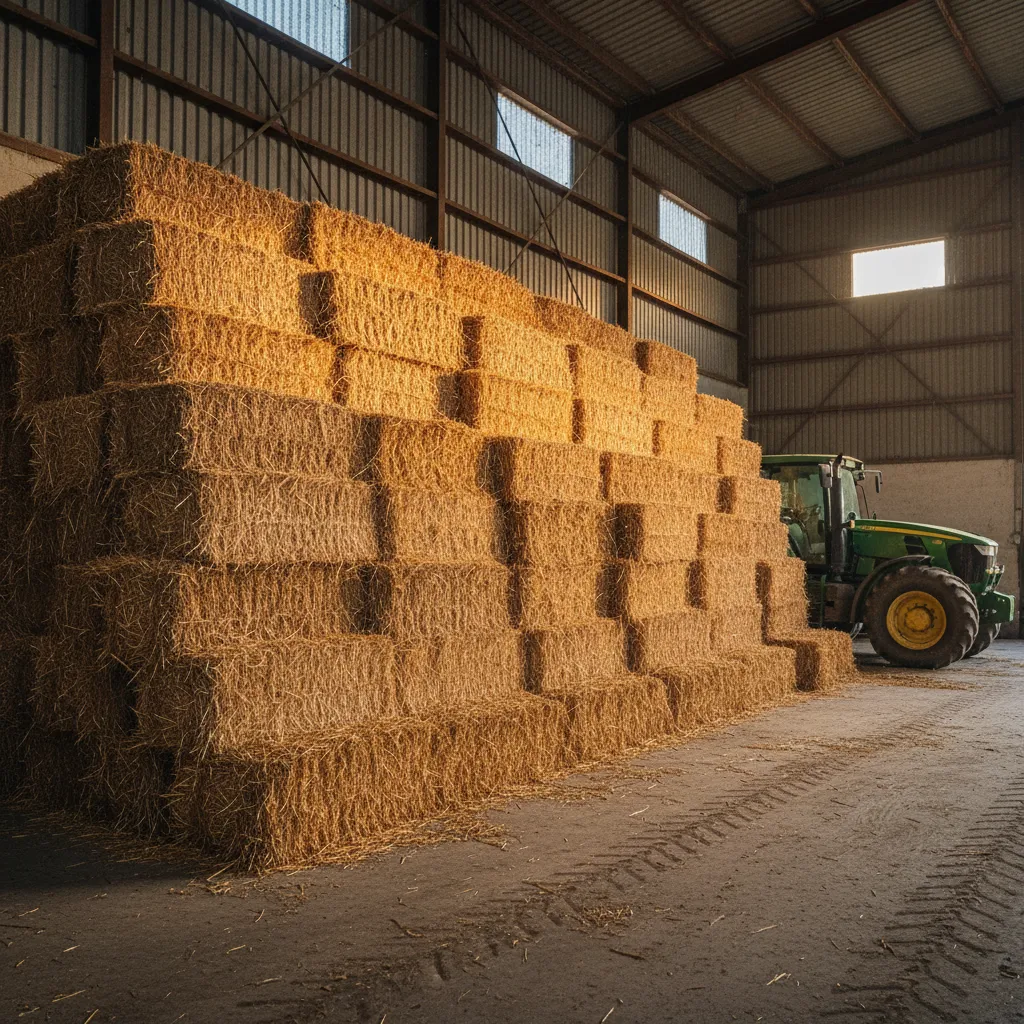
Straw is the cheapest substrate for mushroom growing, costing as little as $3-$5 for enough material to fill several 5-gallon buckets. A single small bale of wheat or oat straw from a feed store produces 20-40 pounds of hydrated substrate.
Cheapest substrates ranked by cost:
- Straw — $3-$8 per bale (enough for 4-6 bucket grows). Best for oyster mushrooms
- Cardboard — Free. Shred and pasteurize corrugated cardboard. Low nutrition but works for aggressive species like oyster mushrooms
- Used coffee grounds — Free from coffee shops. Mix with straw or coir at 20-25% ratio maximum
- Coco coir — $5-$8 for a 650g brick that expands to 8-10 liters. Enough for one large monotub
- Hardwood fuel pellets — $5-$8 per 40 lb bag. Enormous value — one bag lasts dozens of grows
- Wood chips from tree services — Often free if you ask a local arborist. Must be hardwood, fresh, and untreated
The absolute cheapest complete grow uses free cardboard or free coffee grounds mixed with purchased straw, pasteurized in a stock pot, and inoculated with $12-$15 of purchased grain spawn. Total cost under $20 for a full harvest of oyster mushrooms.
A DIY agar pouring station is simply a still air box optimized for pouring agar plates. You can build one for under $15 that gives you 90-95% clean plate success rates.
Basic setup:
- Large clear storage tote (50-70 quart) — flipped upside down with two 6-inch arm holes cut in the long side
- Smooth, flat work surface inside — a clean cutting board or sheet of acrylic keeps plates level during pouring
- Small elevated platform (an inverted container or brick) — to bring your work closer to the arm holes for comfort
Pouring station workflow:
- Wipe the inside of the tote with 70% isopropyl alcohol and let dry
- Place your sterilized agar media bottle (still liquid, above 45°C), stack of petri dishes, and an alcohol lamp or lighter inside
- Wait 5-10 minutes for air currents to settle
- Reach in through the arm holes and pour plates — lift each petri dish lid just enough to pour, then replace immediately
- Pour approximately 15-20 ml per 100mm dish (about 1/3 full)
- Let plates solidify undisturbed for 30-60 minutes inside the box
Pro tip: Place a damp towel inside the box before sanitizing — this adds weight to help settle airborne particles. Work slowly and deliberately. Every fast arm movement creates air currents that carry contaminants onto your open plates.
Yes, fractional sterilization (tyndallization) uses repeated atmospheric-pressure steaming sessions to achieve near-sterilization without any pressure. It works by exploiting the lifecycle of heat-resistant bacterial endospores.
The protocol:
- Day 1: Steam your substrate at 212°F (100°C) for 60-90 minutes using a large pot with a rack and tight lid. This kills all active organisms but leaves dormant endospores alive. Remove and store at room temperature (70-77°F) for 24 hours.
- Day 2: Steam again for 60-90 minutes. Endospores that germinated during the rest period are now vulnerable and killed. Rest another 24 hours.
- Day 3: Steam a third and final time. Nearly all endospores should have germinated and been killed across the three cycles.
Success tips:
- Keep rest temperature above 70°F — endospores germinate faster in warmth
- Use this method for supplemented sawdust, BRF jars, and agar — not ideal for grain spawn
- Expect a 10-20% contamination rate compared to under 5% with pressure cooking
- Some growers add a fourth steaming session for extra insurance
This method takes 3 days instead of 90 minutes, but it allows growers without a pressure cooker to work with supplemented substrates that cannot be simply pasteurized. It is less reliable than true pressure sterilization, so prepare extra jars to compensate for losses.
A grain spawn shaker helps you break up colonized grain jars at the 20-30% colonization mark, redistributing mycelium for faster full colonization. While most growers shake jars by hand, a simple tool makes the process faster and reduces the risk of dropping a glass jar.
DIY shaker options:
- Rubber mallet method (free): Hold the jar firmly and tap the bottom with a rubber mallet or the heel of your hand. Rotate and tap until all clumps break apart. Simple and effective.
- Rolled towel method (free): Wrap the jar in a towel for grip, then shake vigorously side-to-side for 10-15 seconds. The towel prevents slipping and cushions against accidental drops.
- Jar gripping pad ($2-$3): Cut a circle from a silicone pot holder or rubber shelf liner. Place it over the jar lid for a non-slip grip during shaking.
Break-and-shake technique:
- Wait until the jar is 20-30% colonized (white mycelium visible on roughly one-quarter of the grain)
- Shake vigorously until all clumps are broken and grain kernels move freely
- The jar will look mostly bare again — this is normal
- Re-colonization after shaking is dramatically faster because each separated kernel becomes its own inoculation point
Do not shake after 70% colonization — the mycelium network is well-established by that point and shaking provides little benefit while stressing the organism unnecessarily.
Many effective mushroom growing containers can be sourced for free if you know where to look. Mushrooms are not picky about their container — they care about humidity, air exchange, and substrate quality.
Free container sources:
- 5-gallon buckets — Bakeries, delis, and restaurants discard food-grade buckets daily. Ask at your local bakery for frosting or pickle buckets. Wash thoroughly.
- Cardboard boxes — Line with a trash bag for a disposable fruiting chamber. Works surprisingly well for a single flush of oyster mushrooms.
- Plastic storage containers — Check thrift stores, yard sales, and Facebook Marketplace. Clear totes work best.
- Laundry baskets — Line with a perforated trash bag for an open-air fruiting vessel.
- Milk crates — Line with a bag and fill with straw substrate for oyster mushroom production.
- Plastic bottles (2-liter soda bottles) — Cut in half for mini fruiting chambers for individual cakes.
- Takeout containers — Deli containers work as small monotubs for test grows.
What to avoid:
- Containers that previously held chemicals, cleaning products, or non-food substances
- Metal containers that rust in high humidity
- Containers you cannot clean or sanitize thoroughly
The best free container is the 5-gallon bakery bucket — it is food-grade, the perfect size for straw-based oyster mushroom grows, and most bakeries will give them away if you ask politely.
Mushrooms need only minimal light — about the brightness of a well-lit room — so a cheap lighting setup works perfectly. You do not need grow lights, full-spectrum panels, or anything designed for plants.
Cheapest options:
- Ambient window light (free): Place your grow near a north-facing window or any window with indirect light. This provides the 12-hour light cycle mushrooms need with zero cost. Avoid direct sunlight, which overheats your grow.
- Single LED bulb ($3-$5): A standard 6500K daylight LED bulb in a clip-on lamp or desk lamp aimed at your grow area. Put it on a basic $5 timer for 12 hours on, 12 hours off.
- LED strip lights ($8-$15): Adhesive-backed 6500K LED strips from Amazon. Stick them on a shelf above your grow or inside your Martha tent. Low power consumption (5-10 watts) and easy to install.
Why 6500K matters:
Mushrooms have blue-light photoreceptors that trigger primordia formation and guide fruit body development. The 6500K color temperature (cool white / daylight) contains the blue wavelengths mushrooms respond to. Warm white bulbs (2700-3000K) work less effectively.
Intensity is not important. If you can comfortably read a book at the location of your mushrooms, the light level is sufficient. More light does not produce more mushrooms. A single 9-watt LED bulb at 3 feet is plenty for a Martha tent or monotub setup.
True HEPA filtration costs $80-$150 for the filter alone, but budget growers can achieve surprisingly good results with cheaper alternatives. The goal is reducing airborne contaminant load, and even imperfect filtration helps significantly.
Budget filtration options:
- Still air box ($10-$15): Not filtration but equally effective for small-scale work. Eliminates air currents so contaminants settle instead of landing on your work. The single best investment for budget growers.
- Furnace filter box fan ($25-$35): Tape a MERV-13 furnace filter to the back of a 20-inch box fan. Run it in your work room for 30 minutes before starting sterile work. Reduces ambient particle count by 60-80%.
- HEPA room air purifier ($40-$80): Consumer air purifiers with true HEPA filters are much cheaper than building a flow hood. Run one in your work area to reduce ambient contamination. Not a replacement for a SAB or flow hood, but an excellent supplement.
What does NOT work as a flow hood alternative:
- Surgical masks taped over a fan — wrong filter media and no laminar flow
- Cloth or paper towel filters — pore size is far too large
- UV-C lights alone — only kill in direct line-of-sight, cannot replace filtration
The practical budget path: Use a still air box for transfers and agar work (90-95% success rate), and run a furnace-filter box fan in the room for 30 minutes beforehand to knock down ambient particle levels. This combination costs under $50 and outperforms many expensive setups when used correctly.
Autoclavable polypropylene grow bags can often be reused 2-3 times if handled carefully, saving $0.50-$1.50 per bag. The key is proper cleaning and inspection between uses.
Cleaning process:
- After harvest, empty all spent substrate from the bag
- Rinse the bag inside and out with hot water to remove debris
- Soak in a solution of 1 tablespoon bleach per gallon of water for 30 minutes
- Rinse thoroughly with clean water and let air dry completely
- Inspect the bag carefully before reuse
Inspect for these disqualifying defects:
- Any holes, tears, or thin spots (hold the bag up to light to check)
- Melted or warped areas near the seal line
- Filter patches that are clogged, torn, or peeling
- Discoloration that does not wash away (may indicate embedded contamination)
- Loss of flexibility — bags that feel stiff or brittle have degraded
Bags degrade with each autoclave cycle because the polypropylene weakens under repeated high-temperature exposure. After 2-3 uses, the plastic becomes brittle and prone to developing micro-tears that are invisible but allow contamination.
When reusing bags, always use the freshest bags for your most important grows and rotate older bags for less critical batches. If contamination rates increase, switch to new bags immediately.
Your kitchen contains dozens of tools that serve double duty for mushroom cultivation. Before buying specialized mycology equipment, check if you already own a suitable alternative.
Direct crossover items:
- Pressure cooker — The most important mycology tool is also a kitchen staple. Any stovetop model that reaches 15 PSI works.
- Instant-read thermometer — Essential for verifying pasteurization temperatures and checking substrate cooling
- Kitchen scale — Measuring grain, substrate, and spawn ratios by weight
- Mason jars — Standard canning jars are the universal grain spawn vessel
- Colander and strainer — Draining soaked and simmered grain
- Large stock pot — Pasteurizing straw and soaking grain
- Aluminum foil — Covering jar lids during sterilization
- Measuring cups and spoons — Portioning agar ingredients and substrate recipes
- Cutting board — Clean work surface inside a still air box
Less obvious crossovers:
- Cheese grater — Shredding cardboard for substrate
- Turkey baster — Transferring liquid culture without a syringe
- Coffee grinder — Grinding brown rice into flour for BRF cakes
- Canning funnel — Loading grain into jars without spilling
- Oven mitts — Handling hot pressure cookers and jars
- Wire cooling racks — Drying grain and elevating jars in the pressure cooker
Designate specific items for mycology if possible — cross-contamination between food prep and cultivation is unlikely but worth avoiding, especially if working with unknown wild cultures.
For $500, you can build a fully equipped home mycology lab capable of agar work, spawn production, bulk substrate preparation, and automated fruiting. This setup supports everything from isolating genetics to harvesting dried mushrooms.
Complete lab equipment list:
- Presto 23-quart pressure cooker: $85
- DIY laminar flow hood (HEPA filter + blower + plywood plenum): $250
- Grow tent (2x4 feet): $75
- Ultrasonic humidifier: $25
- Inkbird IHC-200 humidity controller: $35
- Govee Bluetooth thermometer/hygrometer: $12
- 12-inch impulse sealer: $35
- Excalibur or Nesco dehydrator: $65
- Scalpel handle + 100-pack blades: $12
- Alcohol lamp: $12
- Parafilm roll: $22
- Petri dishes (100-pack): $15
- Agar powder (100g): $10
- Light malt extract (1 lb): $8
- Quart mason jars (2 cases): $24
- Grain (50 lb whole oats): $15
- Coco coir bricks (5-pack): $12
- Unicorn bags (50-pack): $25
- Micropore tape, syringes, alcohol, misc: $25
Total: approximately $490
The flow hood is the single biggest expense but transforms your success rate from 90% (SAB) to 99%+. If you drop the flow hood and use a $12 SAB instead, the total drops to under $260 — still a fully functional lab, just with slightly more contamination risk during transfers.
Mushroom farming equipment ranges from basic kitchen tools for hobbyists to specialised commercial systems, depending on your scale. With 5,400 monthly searches worldwide, this is one of the most common questions from aspiring growers.
Hobby scale ($50-200):
- Still Air Box (SAB) — $12 DIY from a plastic tub
- Pressure cooker (23-quart Presto) — $80-110
- Spray bottle — $3
- Plastic tubs for monotubs — $10-15 each
- Thermometer/hygrometer — $12-15
- Micropore tape, rubbing alcohol, scalpel — $15
Serious hobbyist ($200-1,000):
- Everything above PLUS:
- DIY laminar flow hood — $200-400
- Martha tent or small grow tent — $50-100
- Ultrasonic humidifier + humidity controller — $50-60
- Impulse sealer for grow bags — $30-40
- Dehydrator — $50-80
Small commercial ($1,000-10,000):
- Commercial flow hood or clean room — $500-3,000
- Large autoclave or multiple pressure cookers — $300-2,000
- Dedicated grow room with HVAC — $500-5,000
- Industrial humidification system — $200-1,000
- Cold storage — $300-1,500
- Packaging equipment — $200-500
The single most impactful upgrade at any scale is a laminar flow hood — it reduces contamination from ~15% to under 2%, paying for itself within weeks of use.
Mushroom bags (grow bags) are specialised polypropylene bags designed for substrate preparation, sterilisation, and fruiting. With 4,400 monthly searches worldwide, they are essential equipment for any grower beyond the kit stage.
Types of mushroom bags:
- Filter patch bags — the most common. A microporous filter (0.2-0.5 micron) welded into the bag allows gas exchange while blocking contaminants. Used for grain spawn AND fruiting blocks
- Plain polypropylene bags — no filter. Must add your own gas exchange (polyfill through a hole, or micropore tape). Cheaper but higher contamination risk
- Unicorn bags — a popular brand name that has become generic. Type 3T and 14A are the most common sizes
- Gusseted bags — folded sides that expand when filled, allowing the bag to stand upright. Most commercial bags are gusseted
Choosing the right bag:
- For grain spawn: Use Type 3T (small, 3.5" gusset) or similar. Holds 2-5 lbs of grain
- For fruiting blocks: Use Type 14A (large, 4-5" gusset). Holds 5-10 lbs of substrate
- For all bags: Ensure they are rated for autoclave temperatures (121°C / 250°F)
Sealing: Use an impulse sealer — fold the top of the bag, remove excess air, and seal 2-3 inches above the substrate level. Leave the filter patch unblocked.
Cost: approximately $0.30-0.60 per bag when purchased in bulk (50-100 count).
Need more help? Dr. Myco can answer follow-up questions about budget & diy equipment based on thousands of real growing experiences.
Ask Dr. Myco